Changsha Falls Out of China's Top 20 City Economies, and the Internet Wants to Know Why
When the first three quarters' city GDP rankings appeared without Changsha, the viral question 'what happened to Changsha?' became a national debate about the ceiling of China's influencer-city model.
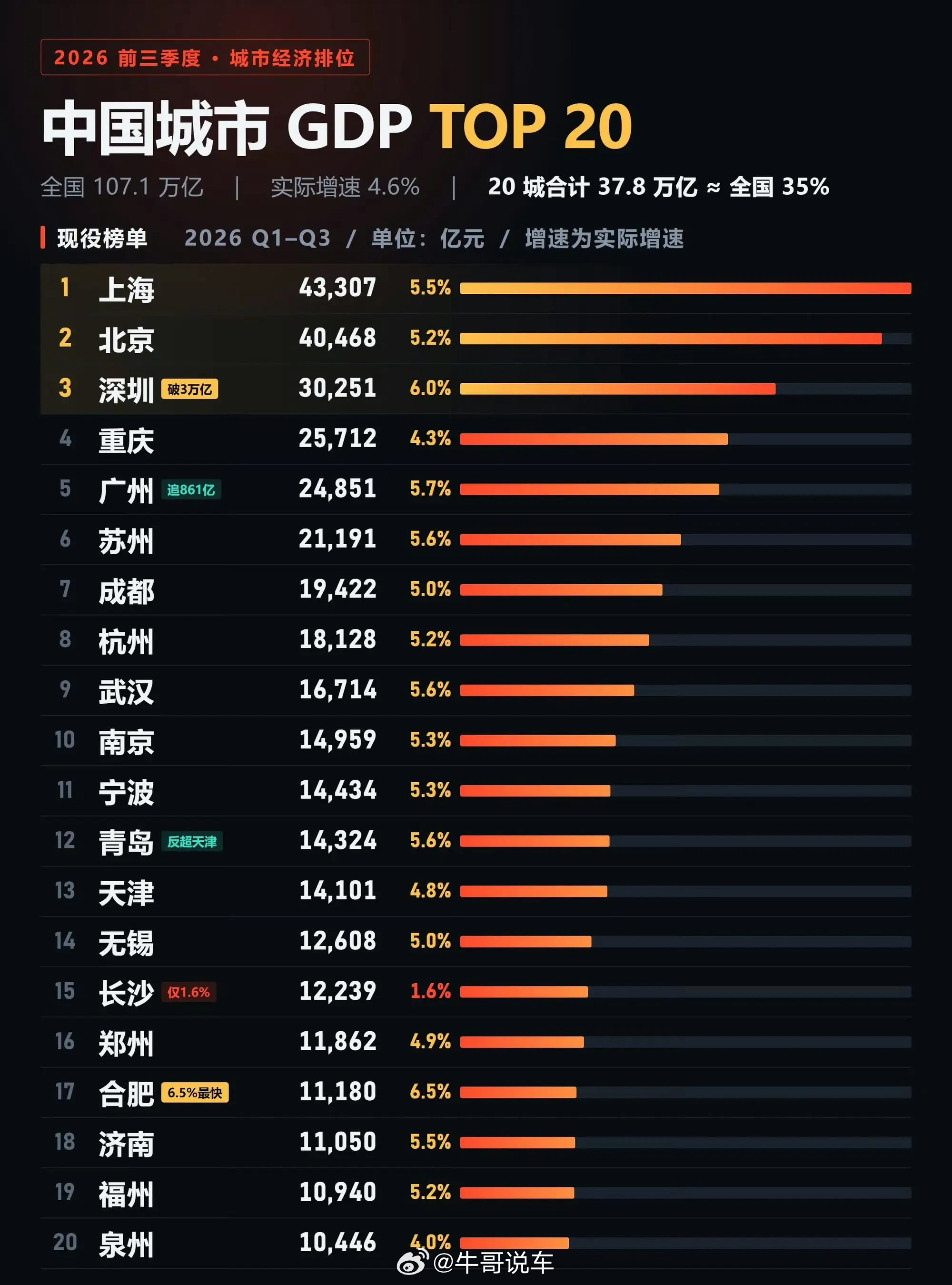
The first three quarters' city GDP rankings came out this week, and one omission jumped out of the chart before anyone had read the numbers: Changsha, the Hunan capital that spent a decade as China's model of an "internet-famous city," was gone from the top 20. "China's GDP top 20 cities are out. What happened to Changsha?" a blogger under the name Niu Ge Shuo Che asked in a post that drew more than 14,000 likes and 1,700 comments — and the question soon charted on Weibo in its own right.
The chart itself, circulated with the rankings from Shanghai and Beijing down to twentieth place, showed no collapse in Changsha's figures; the city had simply been overtaken, in a race where the bar keeps moving. But the reaction said something larger than one city's quarter.
The most-read answer came from Wang Weichen, a commentator better known for writing on sports business. Changsha's problem, he wrote, is industrial: its growth engine has long been construction machinery — the excavators and cranes of Sany and Zoomlion — and that business tracks infrastructure spending, a market that has been shrinking for years. Meanwhile, Changsha never caught the tech wave; and the strategy it chose instead, going viral as a consumer-entertainment city to stimulate spending, "can't support the growth rate, and can't create jobs either." His summary was bleak: "Housing is dirt cheap, but the work is 3,000-yuan-a-month 996 phone-banking jobs. At night the streets are full of people drinking away their frustration."
That is a harsh verdict on a city whose national reputation rests on the opposite qualities — cheap housing, late-night snack streets, milk-tea queues, a famously low cost of living that for years attracted young people priced out of Shenzhen and Shanghai. Changsha's bets on nightlife and entertainment made it the star of every "young people's favorite city" list. The rankings now suggest the model's ceiling: consumption-driven buzz generates footfall and short-video views, but not the industrial wages that move a city up a GDP table.
The debate matters beyond Hunan because so many of China's mid-sized cities have copied the playbook — a night-economy festival here, a viral landmark there. A city that cannot pay its graduates will not keep them, however photogenic its streets, and Changsha's slide is being read nationwide as the influencer-city era meets a slowing economy.