China Marks 15 Years as World’s Top Manufacturer, Targeting a High‑End, Green Industrial Future
China’s factories have reclaimed the top spot on the global stage for a fifteenth straight year, a milestone that officials and state media have been quick to celebrate. New figures released by the State Council Information Office and the Ministry of Industry and Information Technology show that the value added by Chinese manufacturing now accounts for roughly 30 percent of the world’s total – a share last measured in the early 2010s – and that the sector’s contribution to global manufacturing growth remains above the same 30‑percent threshold.
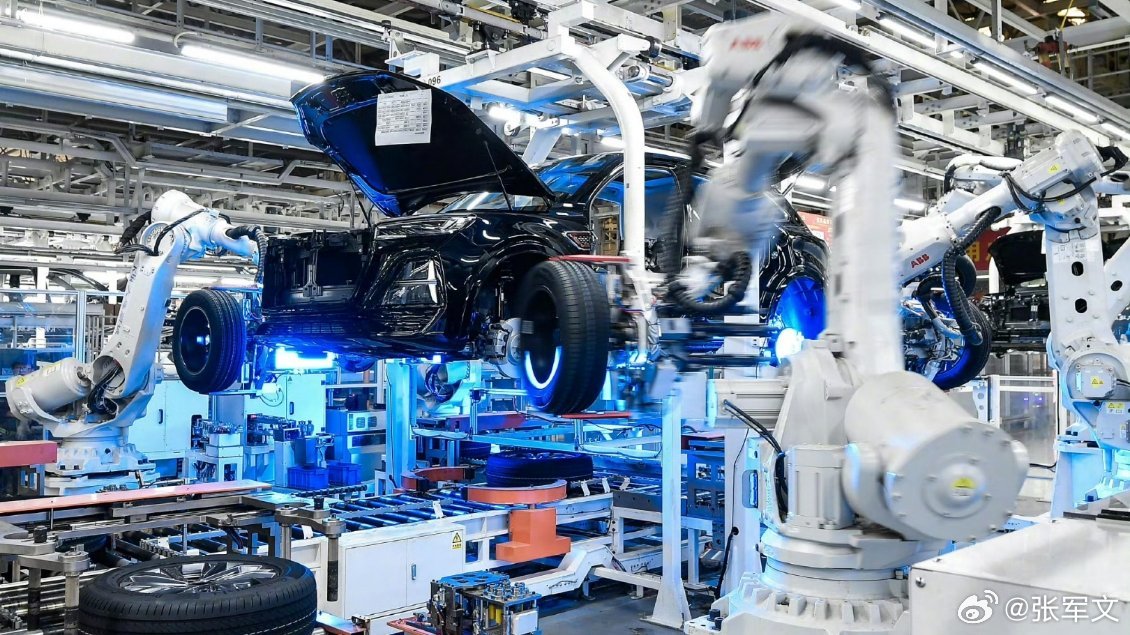
The numbers are more than a bragging right. According to the latest projections for the current “14th Five‑Year Plan” (2021‑2025), China’s manufacturing added‑value is expected to swell by an additional 8 trillion yuan (about $1.1 trillion) over the plan’s duration. That boost would cement the country’s role as the single biggest driver of worldwide industrial output, a claim that has reverberated across platforms such as Weibo, where users have rallied under the hashtag #我国制造业规模连续15年全球第一# to hail the achievement.
The online reaction is uniformly upbeat. Netizens post comments like “厉害👍” (“awesome”) and note the “continuous 15‑year record” with a mixture of pride and optimism. The sentiment reflects three intertwined narratives. First, there is a feeling of national accomplishment: the public sees the ranking as proof that China’s long‑term industrial strategy has paid off. Second, the data underscores China’s economic heft, with the 8 trillion‑yuan target and the 30‑percent share highlighting the country’s outsized influence on global supply chains. Third, the posts point to a transformation of the manufacturing base itself, emphasizing a shift toward “high‑end, intelligent, green, and integrated” production.
Industry leaders and policy‑makers have been steering that shift for more than a decade. The 2015 “Made in China 2025” roadmap laid out an ambitious plan to upgrade the nation’s factories, push high‑technology sectors, and reduce reliance on foreign equipment. The policies that followed – bolstered by the “13th Five‑Year Plan” and the decisive achievements of building a moderately prosperous society – set the stage for the 15‑year streak. In practice, the transformation is visible in sectors such as new‑energy vehicles, where China has led the world in both production and sales for five consecutive years, and in advanced equipment, artificial intelligence, new materials, and robotics, which together account for an ever‑growing slice of total industrial output.
The breadth of China’s industrial system also figures prominently in the discussion. Analysts note that the country now produces the vast majority of the 504 major industrial products tracked by the United Nations, and it boasts a complete, vertically integrated supply chain that can “bite” into any link from raw materials to finished goods. This depth, they argue, gives China an edge in weathering disruptions – a point reinforced by the pandemic’s test of global supply networks, where Chinese manufacturers kept factories running while many competitors faltered.
That depth also fuels a broader strategic re‑orientation. While the label “world’s factory” still applies in a quantitative sense, China is increasingly branding itself a “high‑end manufacturing hub.” Exports of high‑speed rail, telecommunications gear and shipbuilding equipment now carry a larger share of value and feature markedly higher technological content than they did a decade ago. The same trend is evident in “scale‑up” enterprises that have moved up the value chain, a development that policy documents describe as “moving towards professionalisation and the high‑end of the value chain.”
The public narrative on social media implicitly credits three pillars for the continued dominance: strong state support, corporate innovation, and the hard work of millions of factory workers. Phrases such as “国家政策的大力支持、企业的创新拼搏以及广大劳动者的辛勤付出” (“strong support from national policies, innovative efforts of enterprises, and the hard work of laborers”) appear repeatedly, underscoring a consensus that the feat is a collective triumph rather than a single‑entity success.
Beyond the numbers, the continued preeminence of Chinese manufacturing carries weighty economic, social and political implications. On the economic front, a robust industrial base provides a stable foundation for growth, creates employment for a sizable segment of the population and buffers the economy against external shocks. Socially, the sector’s size and stability are seen as key to maintaining living standards and advancing the “common prosperity” agenda championed by the leadership. Politically, holding a near‑third‑of‑global‑manufacturing share elevates China’s leverage in international trade talks, standards‑setting bodies and geopolitical negotiations, reinforcing its status as a major player on the world stage.
Looking ahead, the next phase of the plan emphasises the merger of manufacturing with services – a “production‑service fusion” that will see manufacturing firms offering high‑value, data‑driven services alongside physical goods. That push aims to further sharpen the sector’s competitiveness and lock in higher profit margins, while also supporting the government’s goal of a “green, intelligent, and resilient” industrial ecosystem.
In short, the fifteen‑year run at the summit of global manufacturing is more than a headline statistic. It reflects a concerted, multi‑decade effort that blends policy direction, technological upgrading, and a massive, coordinated workforce. As Chinese netizens continue to celebrate the achievement with pride and optimism, the world will be watching to see whether the nation can sustain its lead while steering its factories toward a more advanced, greener and more integrated future.