Myanmar Scam-Family Boss Apologizes On Camera in China's Crackdown Documentary
On the final nights of state television's documentary on the demolition of Myanmar's Kokang scam families, boss Bai Yingcang repented from the dock. Alongside his confession, the case ledger is coming into focus: nearly 29 billion yuan in fraud and gambling funds, eleven death sentences, and sixteen victims of whom families recovered only five bodies and one urn of ashes.
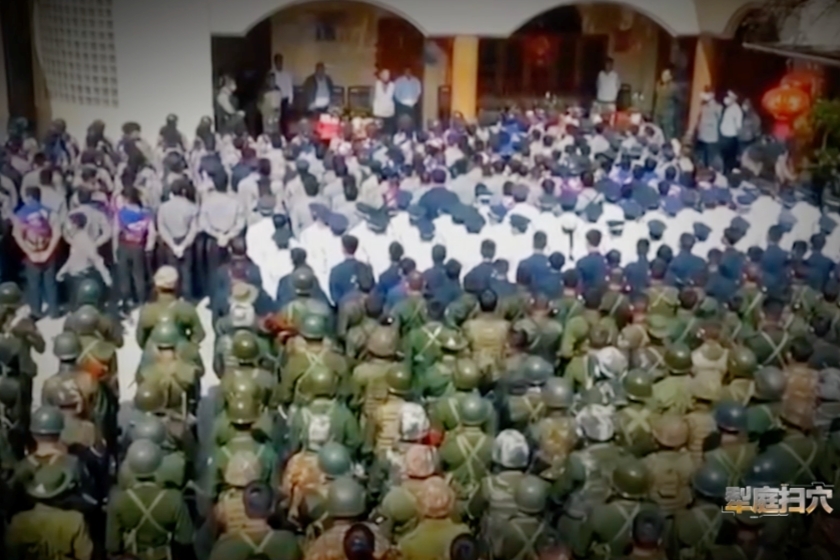
For three evenings this week, China Central Television's prime-time slot has belonged to the end of a three-year story. Myanmar Telecom Fraud: Annihilation Record (缅北电诈覆灭纪实) — a documentary co-produced by the Ministry of Public Security and state broadcaster CMG — aired its closing episodes from October 5 to 7, shutting the file on the Kokang crime families whose online-scam compounds held, and sometimes killed, thousands of Chinese victims.
Its most-quoted moment is not a raid but a confession. In court footage, Bai Yingcang, described in the broadcast as a principal of the Bai family crime group, delivers a repentance that has been clipped and re-clipped across Chinese platforms since. 'I hate my own ignorance, my own stupidity, my own unbridled greed and short-sightedness,' he says. 'I finally no longer have to live in fear every day, and finally no longer have to keep propping up a life I loathed but could not change. On behalf of my whole family, I want to apologize to the Chinese people and the Chinese government, because what my family did hurt tens of thousands of Chinese. I am truly sorry.'
The Bais were one of the 'four big families' of Kokang, the ethnic-Chinese enclave on Myanmar's border with Yunnan that became the capital of the scam industry. A Caixin feature published alongside the documentary traces the family's arc from border-militia dynasty to industrial-scale fraud — and to a Shenzhen courtroom, where the group's case received its first-instance verdict in November 2025.

The series is the closing act of a story this site has followed since the documentary began: executions of low-level scam workers and the secret graves they were buried in, and the survivor's account of being sold between compounds and losing a kidney. What the finale adds is the ledger. The parallel case against the Ming family, tried in the same Shenzhen court, involved nearly 29 billion yuan in fraud and gambling funds; Ming Guoping and ten others were sentenced to death, five more to death with reprieve, after 227 days of hearings — proceedings Chinese courts describe as the first time the country has exercised complete judicial jurisdiction over an overseas armed criminal group. The most sobering figure trending alongside the documentary is not the money: of sixteen victims in the case records, families recovered five bodies and one urn of ashes.
The repentance has not read as redemption. One widely shared commentary called it crocodile tears: if Bai were genuinely sorry, he would not have waited until the end of the road — not while families came apart and victims were beaten, sold, and worse.
The documentary also airs the warning its own finale cannot close. It recounts how Chinese police worked with Myanmar and Thailand to dismantle the KK park in Myawaddy and repatriate thousands of suspects — but as coverage through this year has shown, the compounds that replaced the Kokang families are already rebuilt and recruiting. Commentators on the nightly news reached the same conclusion: the file on Kokang's four families is shut; the industry it documented is regrowing just over the border. The reach ran past television, too — the second episode topped Bilibili's trending board while the case figures climbed Baidu's search rankings.