Why China's Schools Stopped Printing Homework, and Parents Started Paying
Homework now arrives at Chinese families as a file in a class chat group, and the cost of printing it — up to 300 yuan a semester for one subject — has set off a national argument about who should supply the paper.
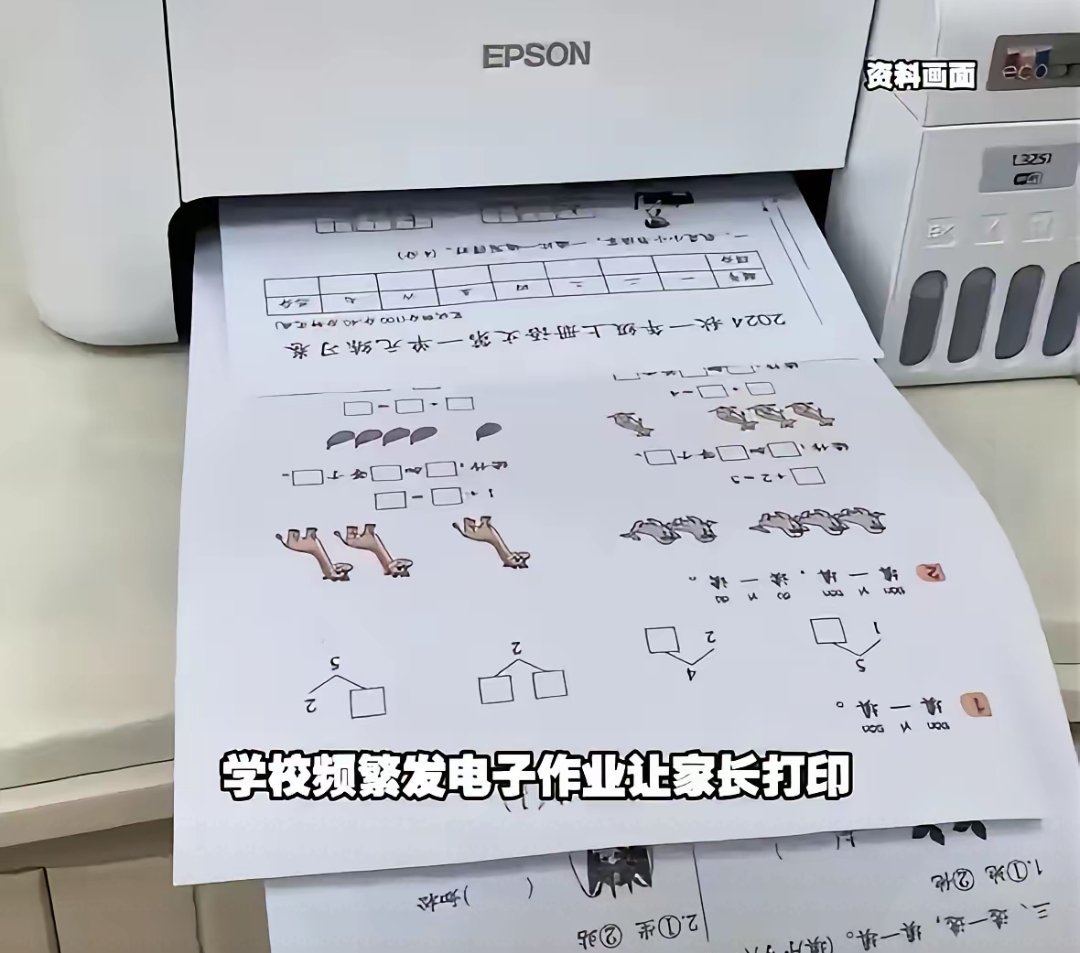
Homework in many Chinese primary schools no longer arrives on paper. It arrives as a file in the class's WeChat or DingTalk group, and from there the supply chain runs through the family: a parent downloads it, prints it, binds it, checks it, photographs the result and uploads it back. A Dahe Daily feature that lit up the topic this week tallied what that chain costs: a fourth-grader printing homework three or four times a week can spend as much as 300 yuan on a single subject in one semester, and 100 pages runs 50 yuan at a street print shop against 6.5 yuan on an online platform. The feature has been liked more than 5,000 times. "The school kit used to start with book covers," it observed; "now raising a child seems to start with a printer on standby."
The question its headline asked — why don't schools just print the worksheets themselves? — turned out to have a policy answer, and the argument is about that answer. Regulators, wary of kickbacks, forbid schools from ordering supplementary workbooks or collecting fees for materials. Dahe Daily's charge is that some schools have mutated a clean rule into an extreme: if buying paper is risky, hand families the electronic version and let them print. A good-intentioned regulation, it argued, has been repurposed as cost-shifting.
Teachers and parents on Weibo answered with the other half of the loop. One teacher-side commenter described the bind directly: under the "double reduction" regime that caps homework loads, schools cannot order extra workbooks, hold unapproved tests, or charge for anything — a comment liked several hundred times argued teachers send files to the group because every alternative is a rule violation waiting for a complaint. Another commenter recalled the origin moment: years ago a Guangzhou parent sued to the education bureau that school-printed sheets were "wasteful and burdensome," the bureau banned the practice, and schools nationwide followed out of fear of being reported.
On Zhihu, where the question drew its own thread, the framing widened to fairness — households without printers, and rural families with grandparents raising "left-behind children," pay the same homework in a different currency. Baidu's trending roundup of the story put it in its title: the printer has become standard equipment, so who assigned the invisible homework?
The market has already priced the paper at 6.5 yuan per hundred pages; what no one has settled is whose job it is. Until the anti-graft textbook rule and the homework-load rules acquire an answer for the last mile of paper, the worksheet will keep landing in the group chat — usually at night, usually to a parent.