Tomb Raiders Dug a 100-Meter Tunnel From an Abandoned Hotel to a Warring States Tomb
Police in Qingzhou, Shandong caught a tomb-robbing gang in the basement of a derelict hotel, at the end of a shaft-and-tunnel dig aimed at a protected Warring States tomb — the latest haul for a cultural-relics unit that has broken up more than 50 gangs in three years.
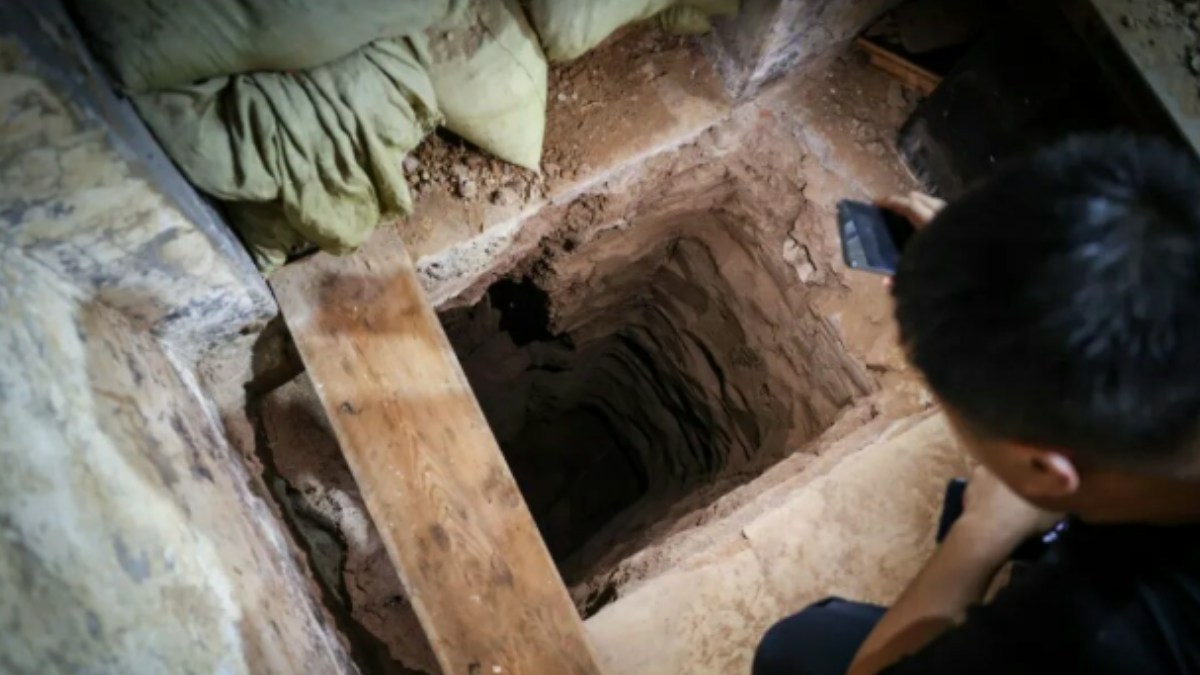
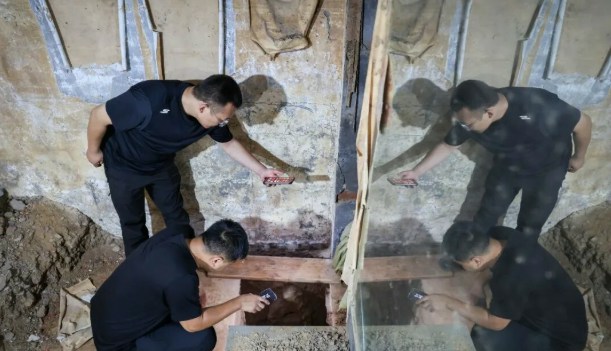
The scene read like the opening of one of China's tomb-raiding novels, except it was a police evidence log. In the basement of an abandoned hotel in the hills west of Qingzhou, in Shandong province, investigators found soil from a dig packed into bags and stacked nearly to the ceiling, a vertical shaft sunk seven meters through the floor, and a horizontal tunnel more than 100 meters long — aimed, with patient precision, at a Warring States-era tomb under state protection nearby.
The broadcaster Knews walked through the site this week, and its account of the catch is the rare kind that needs no embellishment. The gang had chosen the derelict hotel as cover precisely because nothing about it invites attention; they dug straight down, then turned toward the tomb, moving their spoil back up the shaft bag by bag. They were caught in the act by officers of Qingzhou's dedicated cultural-relics police unit — a squad whose officers, in the unit's own footage, spend their days wading through waist-high crops and brush along unmarked paths between burial mounds.
The case is a single exhibit in a three-year campaign. Qingzhou holds 906 protected cultural sites, scattered across fields, hills and village edges, and its relics unit has spent the campaign working through them: more than 60 cases solved, 174 suspects arrested and upwards of 50 tomb-robbing gangs broken up, with 305 relics recovered. The unit's patrol log, as the newspaper's report recorded it, reads as a map of the county's ancient dead — the Erwang Tomb and the Nanxin burial grounds among them, one already showing a collapsed raiders' shaft when officers arrived in August.
The Knews report reached for a word its audience would recognize: the gang, it said, was digging in order to "mojin" — touch gold. Readers of China's enormously popular tomb-raiding fiction know the term as the guild-craft of fictional heroes who raid graves with codes of honor. The reality on display in Qingzhou is the industry the fiction glosses over: engineering, concealment and a supply chain that turns Warring States bronze and Han dynasty jade into cash, and leaves the contexts that archaeologists read for history destroyed in the extraction.
That gap between romance and evidence has run through the site's coverage of the country's burial landscape — from the reconstructed face of a Qin prince killed in a royal purge, read from a skull pierced by a bronze arrowhead, to the Song dynasty stone heads looted a century ago and returned from Australia to the fields their bodies still stand in. A tunnel is the modern chapter of the same story: the market is international, the patience is professional, and the stuff being extracted cannot speak once it leaves the ground.
What happens to the gang comes next in court. What remains of the hotel basement — the shaft, the bags, the hundred meters of tunnel — will serve as the prosecution's central exhibit, and the 906 sites around Qingzhou stay under the same quiet patrol.