China's Kindergarten, Primary and Middle School Populations Have All Peaked
China's school-age population has begun to shrink: kindergarten, primary and middle school rolls have all passed their peaks, the country's economic planning agency said on Monday, and the government is now reshaping classrooms and school places for a smaller generation.
China's kindergarten, primary and middle school populations have all reached their peak, the country's economic planning agency said on Monday — and the government is now planning how to shrink the system without leaving the children behind.
The announcement came at a press conference held by the National Development and Reform Commission, the country's central planning body, on the subject of the next five-year plan's social policies. The agency's deputy head of social development, Huang Weiru, told reporters that kindergarten, primary and middle school rolls had all peaked nationally, while high school and university-age populations were still growing. That means the country's classrooms are now being pulled in two directions at once: primary and middle school enrolment will shrink, while high school and university places will need to expand.
The agency's response is threefold: optimize the allocation of preschool and compulsory education resources as the total number of children declines, add places at high schools and universities to meet the growing demand at those levels, and — because the decline is uneven — protect the right of children in both urban and rural areas to equal schooling.
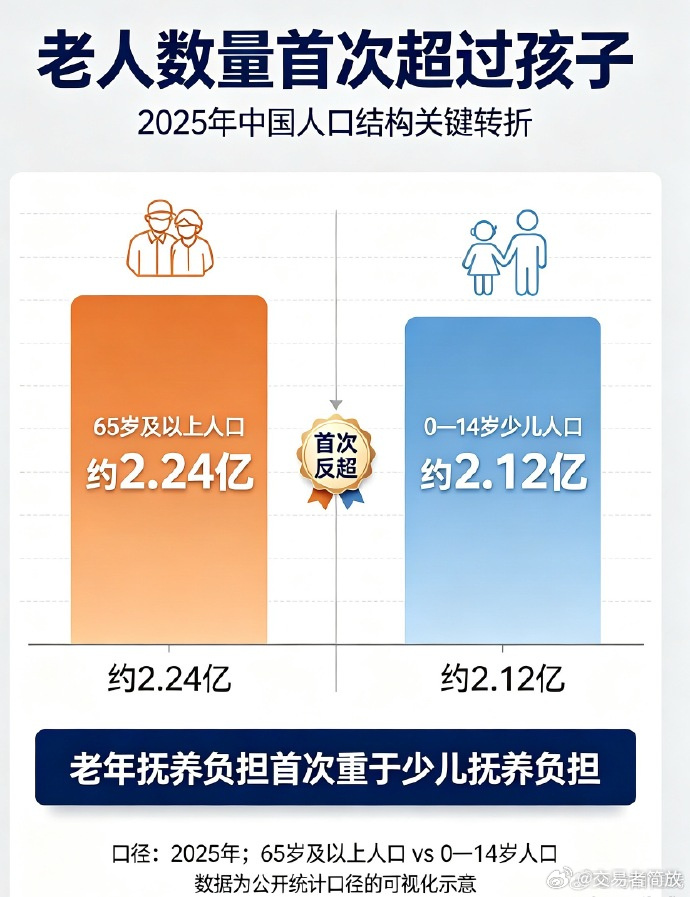
The numbers behind the announcement are stark. In 2025, China's population aged 65 and over reached about 224 million, while children aged 14 and under numbered about 212 million — the first time the elderly have outnumbered the children. The country's old-age dependency burden has surpassed the child dependency burden for the first time.
The practical consequences are already visible in the education system. Kindergartens have been closing or merging as the number of children declines; the same pressure will move up through primary and middle schools in the coming years. The agency said it will "optimize" resources — a phrase that in Chinese administrative practice means consolidating schools and redeploying teachers — while also expanding high school and university places, which are currently under-supplied relative to the demand from the growing cohort.
The shift is also a fiscal one. As the site's earlier coverage of China's statistical yearbook showed, the country recorded 7.92 million births in 2025 — the fewest in recent record — and a population that shrank by 3.39 million over the year, with the State Council ordering a new round of pro-natalist policy days later. Fewer children means fewer future workers, and the pension system's arithmetic is already being recalculated. The crossover between the elderly and the young is a milestone in that arithmetic: the ratio of people who need support to people who can provide it is now heavier on the old than on the young.
For the children in China's classrooms, the announcement means the supply of school places will be reorganized around them. For the country's teachers and school administrators, it means the coming decade's planning will be about shrinking, not expanding.