China's 'Flowerbed Corpse Case' Ends With a Death Sentence 28 Years After the Killing
A court in Luzhou, Sichuan has sentenced a woman to death for killing a friend over a 40,000-yuan debt in 1997 and burying her under a rooftop flowerbed — then living for 28 years under a new name and a new face. The victim's son says he will keep fighting for a heavier sentence.
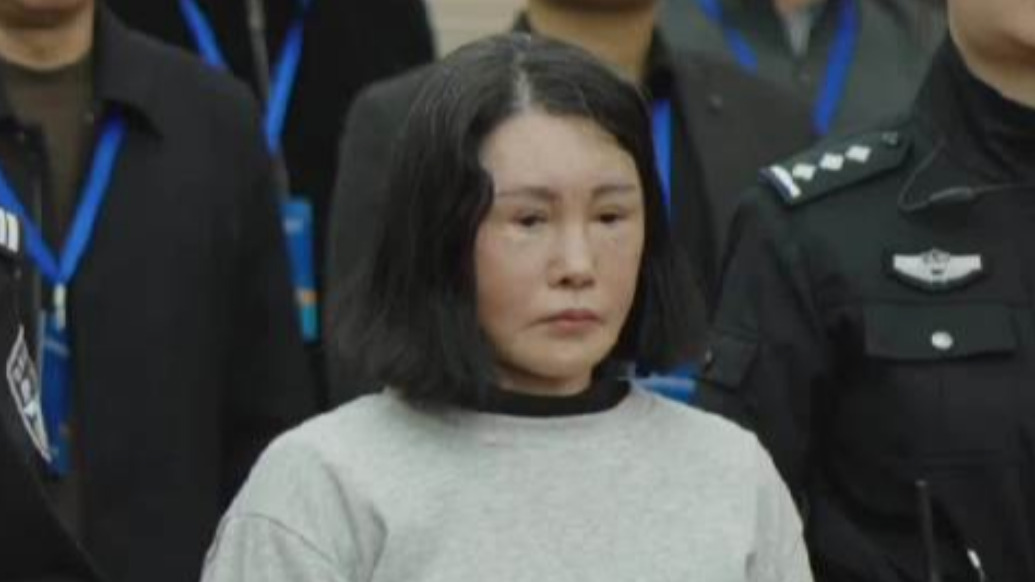
On Monday, a court in Luzhou, in China's southwestern Sichuan province, sentenced a woman to death by immediate execution for a murder committed in 1997, and a man to death with a two-year reprieve for carrying it out. The case had been unsolved for nearly three decades because the body was buried in a rooftop flowerbed — and because the killers had spent those years living under new names and, in the woman's case, a surgically changed face.
The court found that Chen and Yang killed Wu, a friend who had lent them 40,000 yuan and whom they had no intention of repaying, and buried her in the rooftop flowerbed where she lived. Then they vanished. Chen spent the following decades building an entirely new life: from 2008 to 2025, she used forged identity documents to obtain passports and travel permits for Hong Kong and Macau, book flights, buy train tickets, check into hotels, even purchase property — and repeatedly crossed borders into Hong Kong, Macau, South Korea and the United States. Only when the remains surfaced in the flowerbed in 2025 did the case reopen; both were arrested soon after.
State media published the killer's photograph shortly before the verdict: an old family portrait showing Chen beside a child, the kind of picture she had spent 28 years making sure no one could attach to her real name. In court on Monday she looked expressionless as the sentence was read. After her arrest, CCTV reported, she knelt at the scene of the crime, saying the dead woman had been her benefactor and that she had betrayed her.
The victim's son, Huang Ping, was ten years old when his mother disappeared on February 1, 1997 — a date he remembers exactly, because he had just had his birthday. After she vanished, he began skipping school to search for her, wandering the streets with nowhere in particular to go, and eventually dropped out of middle school entirely. His father said the boy's heart had "stayed at 10" ever since: the age at which he started looking for his mother, and never found her. On Monday, Huang Ping carried his mother's photograph into the courtroom, his arm wrapped in mourning cloth; afterwards he bowed repeatedly to the crowd outside and embraced one of the detectives who had worked the case.
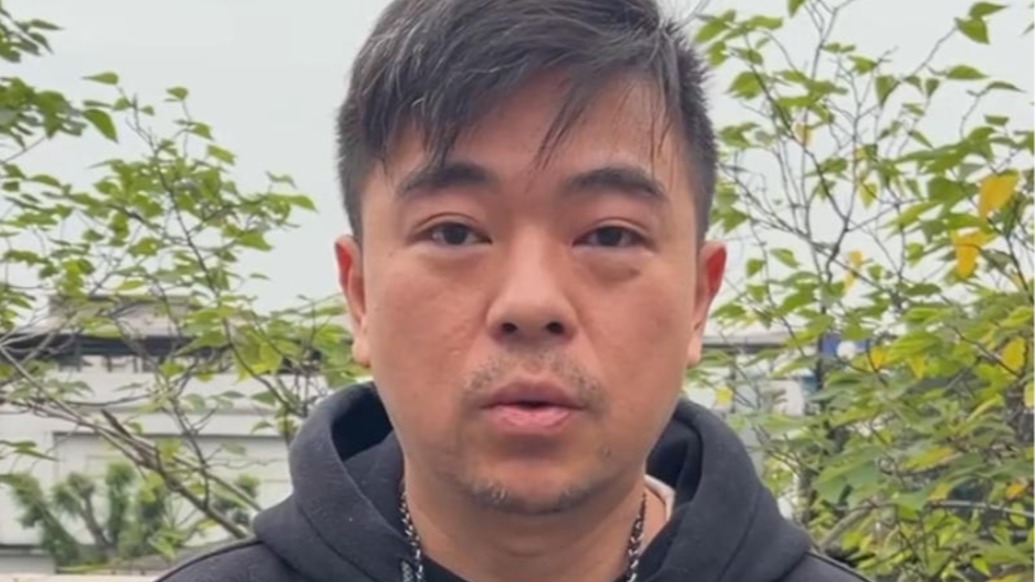
That contrast between the two childhoods became a story of its own: while Wu's son wandered and dropped out, Chen's child went on to graduate from university. Commenters read it as an accounting of what a crime costs that no sentence can repay.
The court also awarded 120,000 yuan in civil compensation — the same sum the killers' family had offered earlier as funeral money in a bid for forgiveness, which the victim's ex-husband refused three times. The money was beside the point for Huang Ping, whose statement on Weibo after the verdict ran longer than the courtroom silence it answered:
"Today's result: part of the justice has arrived. Chen got the heaviest sentence — death. That is a comfort to my mother. But there is still a gap between this and the outcome I wanted. Yang is the one who killed my mother, and a death sentence with a reprieve is not what my father and I wanted. I have decided to apply for a prosecution protest and continue through every legal step. I will not stop. Money was never what I wanted. What I have always wanted is only fairness: a life for a life."
On Weibo, where four separate trending topics carried the case through the day, reaction mixed relief with a darker recognition. One widely shared post reached for the idiom 农夫与蛇 — the farmer who saves a frozen snake, which bites him once it revives — and another advised readers not to let anyone know their financial affairs at all. On Baidu the story held five of the day's top searches; Zhihu's most-read legal thread debated how Chinese law treats an accomplice who did not strike the fatal blow.
The verdict is first-instance, so nothing about Monday is quite final. Whether the procuratorate takes up Huang Ping's request and seeks execution for the man who actually killed his mother is the question the flowerbed case now leaves open.