Ordering One Baby, Selling the Twin: Inside China's Underground Surrogacy Trade
Investigator Shangguan Zhengyi says China's illegal surrogacy agencies deliberately have surrogates carry twins so the 'extra' child can be sold to traffickers for about 160,000 yuan — and the trade now extends to selling falsified birth certificates that give bought children legal identities.
The claim that set off this week's most anguished discussion is bleakly simple: a client orders one baby, and the agency sells the other. Shangguan Zhengyi (上官正义), a volunteer investigator who has spent years undercover in China's illegal surrogacy market, wrote on Tuesday that agencies deliberately have surrogates carry two fetuses when a client has paid for one child — then hand one baby to the client and sell the surplus to traffickers for around 160,000 yuan, roughly 22,000 US dollars. In his post, he said an infiltration he began in April ended in August when he helped police arrest the trafficking ring and agency staff together, rescuing babies who were about to be sold.
Commercial surrogacy is banned in China — health regulations prohibit hospitals and medical staff from facilitating it in any form — but the market has simply moved underground, beyond licensing, screening or enforceable contracts. Shangguan's deeper point is where the evasion leads: agencies now engage in outright child trafficking and in selling birth certificates, the documents that give a bought baby a legal identity and household registration. The certificate, he wrote, is the laundering step (洗白) that turns a trafficked infant into somebody's documented son or daughter.
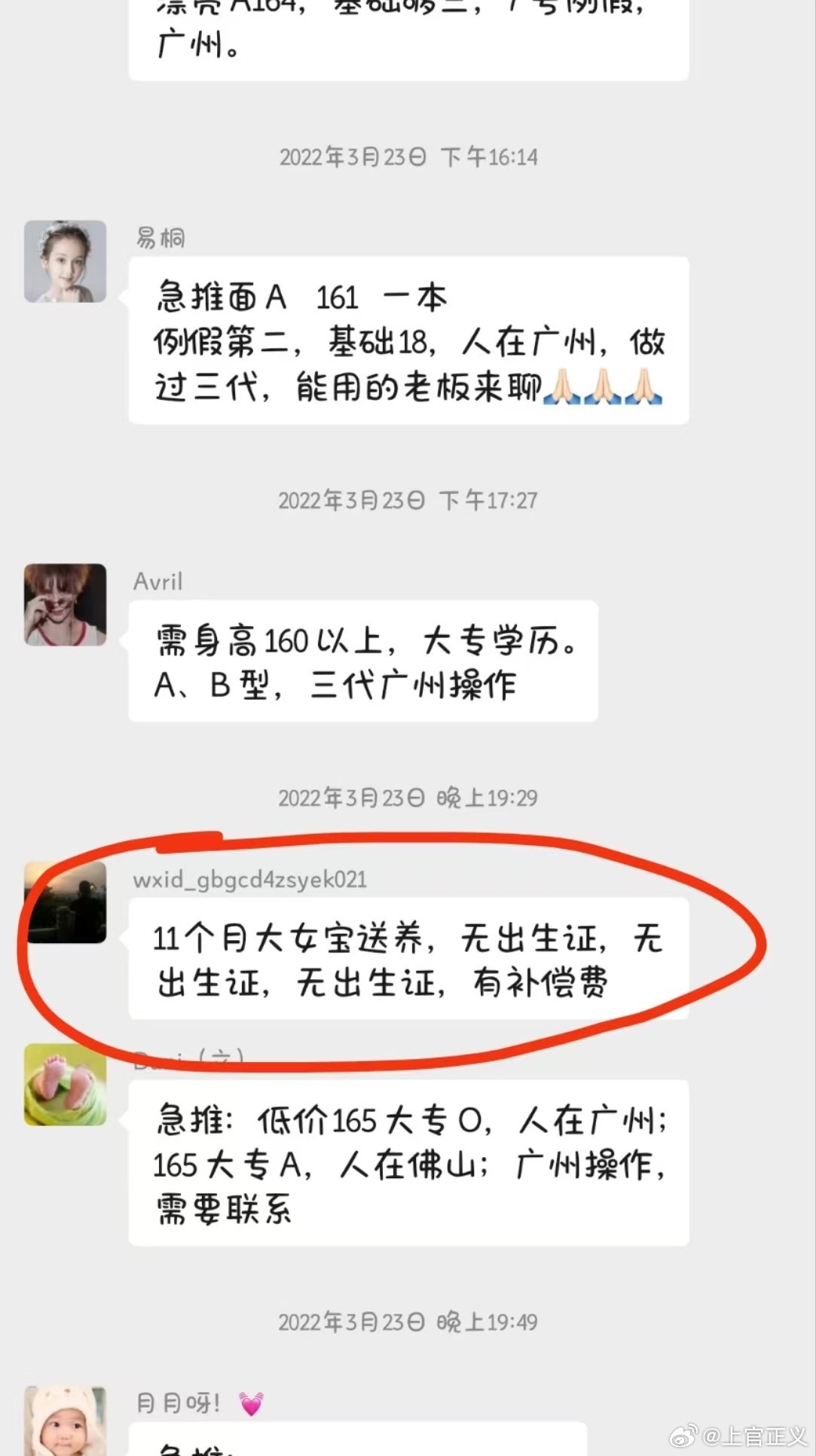
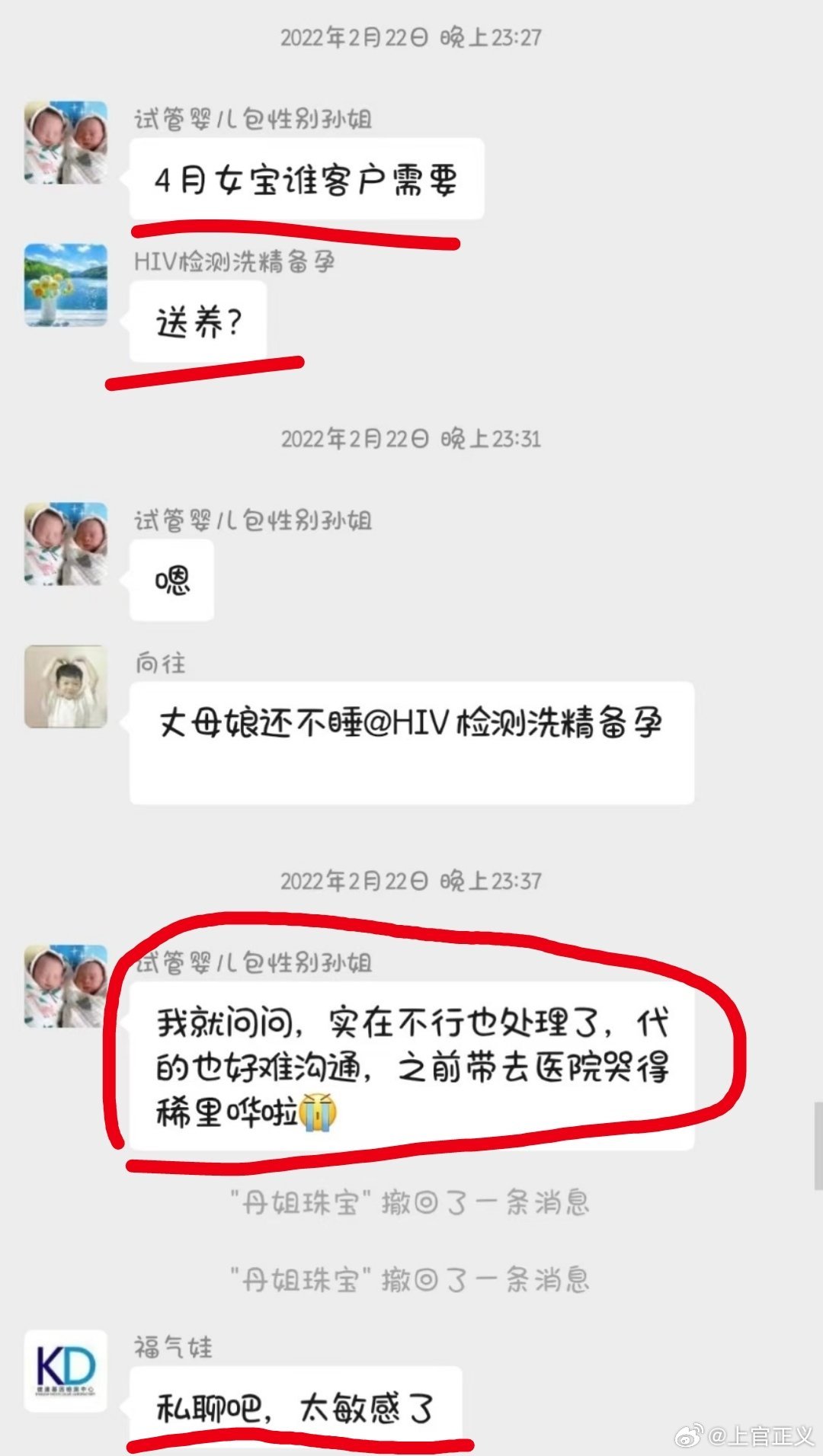
The evidence he has published over the years reads like an inventory of the market's manners. Screenshots from agency chat groups show an 11-month-old girl offered for "adoption" with the words "no birth certificate" repeated three times for emphasis, plus a "compensation fee" for whoever takes her. Other messages advertise due dates by month, twins and boy-girl pairs, and surrogates sorted by height, education and blood type; one network he traced ran through a broker nicknamed "Sister Sun" in Xinxiang, Henan.
Shangguan works this beat alone and pays for it: in his own telling, every exposure brings accusations that he "extorted" an agency that then reported him. Tuesday's post ended with a question to his readers — "Tell me, was what I did right?" (你们说,我做的对吗?) — and drew more than 5,000 likes within a day.
The story has reignited an argument that is older than this case. "Surrogacy is never just surrogacy," one commentator wrote; "to support surrogacy is to support human trafficking" (支持代孕,就是支持人口贩卖) — the blunt version of a debate China keeps having between rising infertility, falling births and the commodification of women's bodies. What happens in court will shape the argument's next chapter: if the August arrests are prosecuted as trafficking children, rather than as a regulatory offense, the case becomes the precedent China's anti-trafficking volunteers have been waiting for.