China's Delivery Platforms Burned 100 Billion Yuan in a Coupon War That Is Now Ending
Meituan, Ele.me and JD's delivery arms spent roughly 100 billion yuan on subsidies this year. The coupons are winding down — and the fight is shifting to premium services.
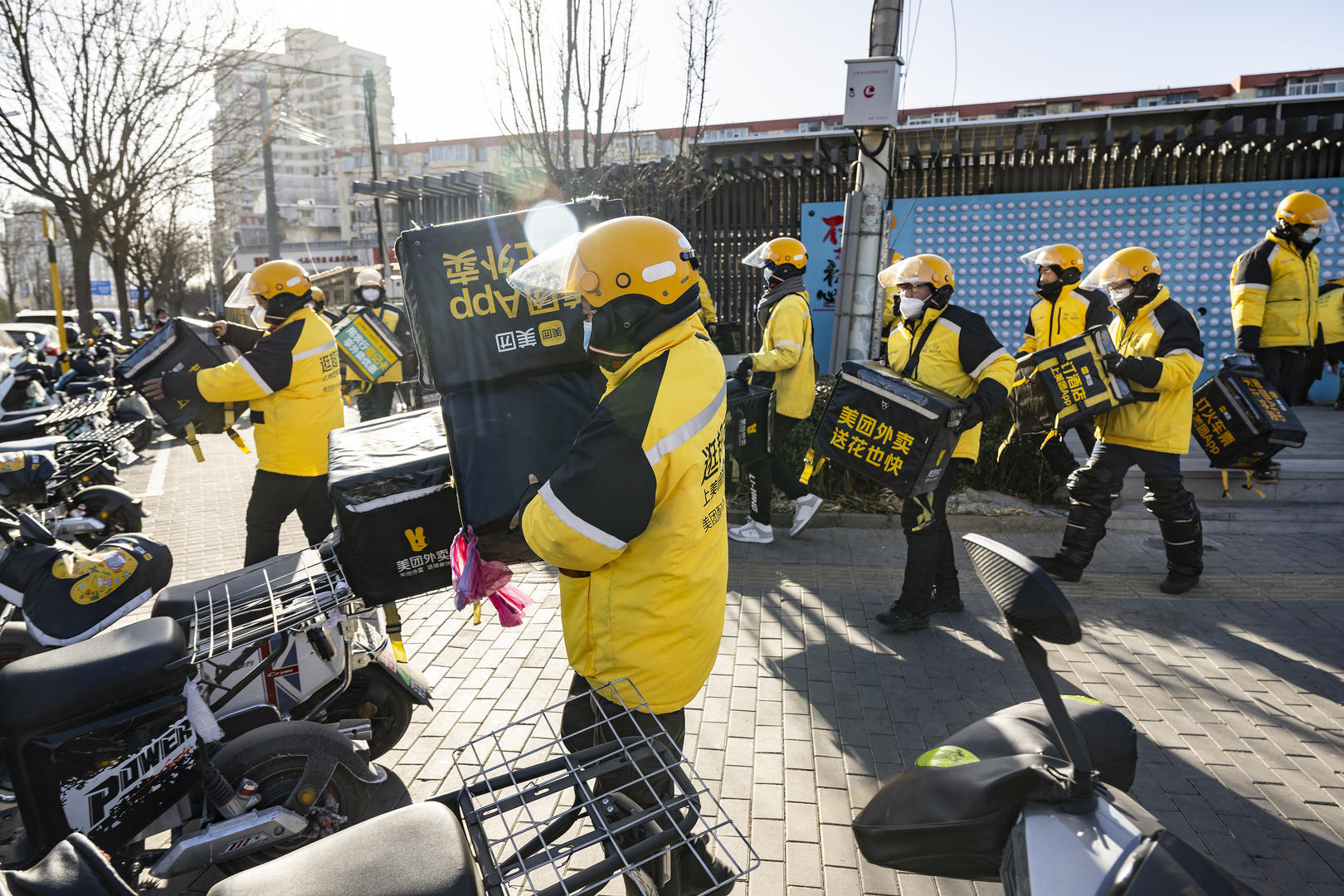
The three platforms fighting for China's food-delivery market have together burned through roughly 100 billion yuan — about 400 million yuan a day — in coupon subsidies this year, by the figures now circulating on the trending lists, and the war's endgame is arriving not with a victor but with a spreadsheet. The hashtag "the delivery war: three platforms out more than 100 billion" trended on Friday.
The subsidies reshaped habits fast. One user's post under the hashtag described the routine of millions: "I order two of three meals a day. I keep three apps and use whichever's discount is biggest." That is the war's whole economy — platforms paying to be the default, users happily playing them against each other, and every side knowing the coupons eventually stop.
The sharpest commentary is about what happens after. The finance blogger 帽子哥 laid out the reckoning: platforms bought user traffic and high-frequency payment habits, but the bill does not vanish; the question is who ends up eating the losses once subsidies end, and whether merchants' margins, riders' pay and the platforms' cash flow can all balance at once. "The scariest part," he wrote, "is subsidies stopping, consumers finding it expensive again, merchants discovering there's no profit, riders running harder, and the platforms' financial reports turning ugly. The whole industry pays for the growth story."
The first evidence of the pivot is already on the record. Securities firm CITIC said this week that the sector's competition has passed an inflection point, with platforms shifting from price wars toward efficiency and service — a research note carried by Yicai. And the platforms are moving upmarket: Taobao Shangou, Alibaba's instant-delivery arm, has been quietly testing a "Family Feast" high-end delivery service bringing fine-dining restaurants to homes, now covering 27 brands and more than 50 stores across five cities, as laid out in the Zhihu discussion that followed the launch.
For readers outside China, the episode is a case study in how Chinese platforms fight: not for months but for years, at hundred-billion scale, in a market where delivery is a daily habit rather than an occasional treat. The coupons are ending; the users trained to comparison-shop three apps for dinner are not.