Chinese Dress Sellers Are Strapping Gowns Shut to Stop 'Wear-Once' Returns
Tamper-evident ribbons, running from collar to hem, are the newest defence as China's womenswear sellers face return rates of 50 to 80 percent — and buyers who wear a dress to a wedding, then send it back with the tag reattached.
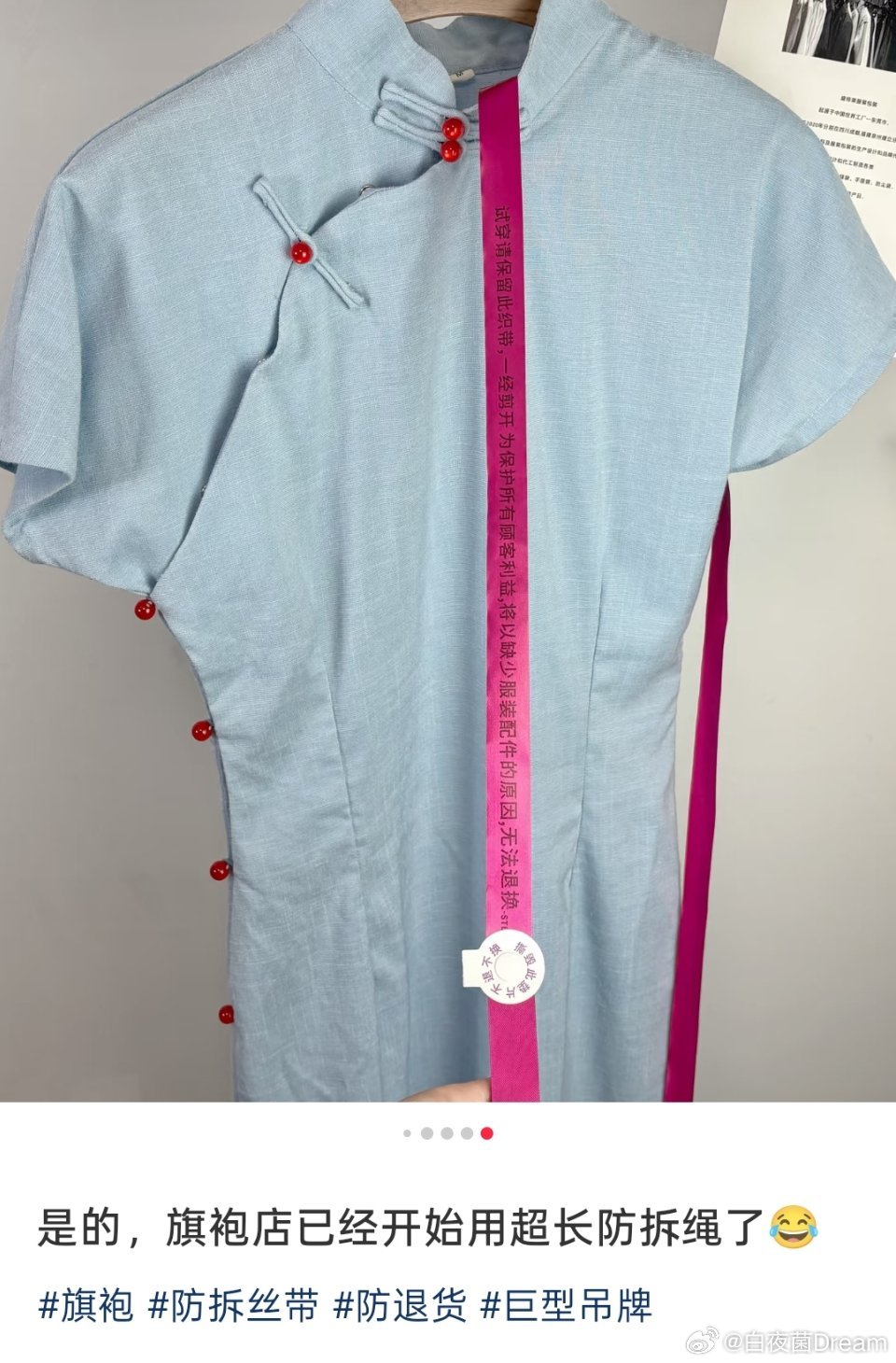
The dress arrives with a magenta ribbon running from collar to hem, and printed along the ribbon, in characters small but unmissable, the terms of the deal: this is a tamper strap. Once it is cut, the garment is yours — no returns, no exchanges.
The practice broke into China's top trending topics on September 30 under a heading that would have sounded absurd a few years ago: "the women's clothing trust market has collapsed." The post that set it off showed the ribbons appearing across whole storefronts — a step past the giant hangtags that womenswear sellers adopted earlier this year. "More effective than the giant hangtags," the poster wrote, "and merchants everywhere are copying it." It was liked more than 10,000 times.
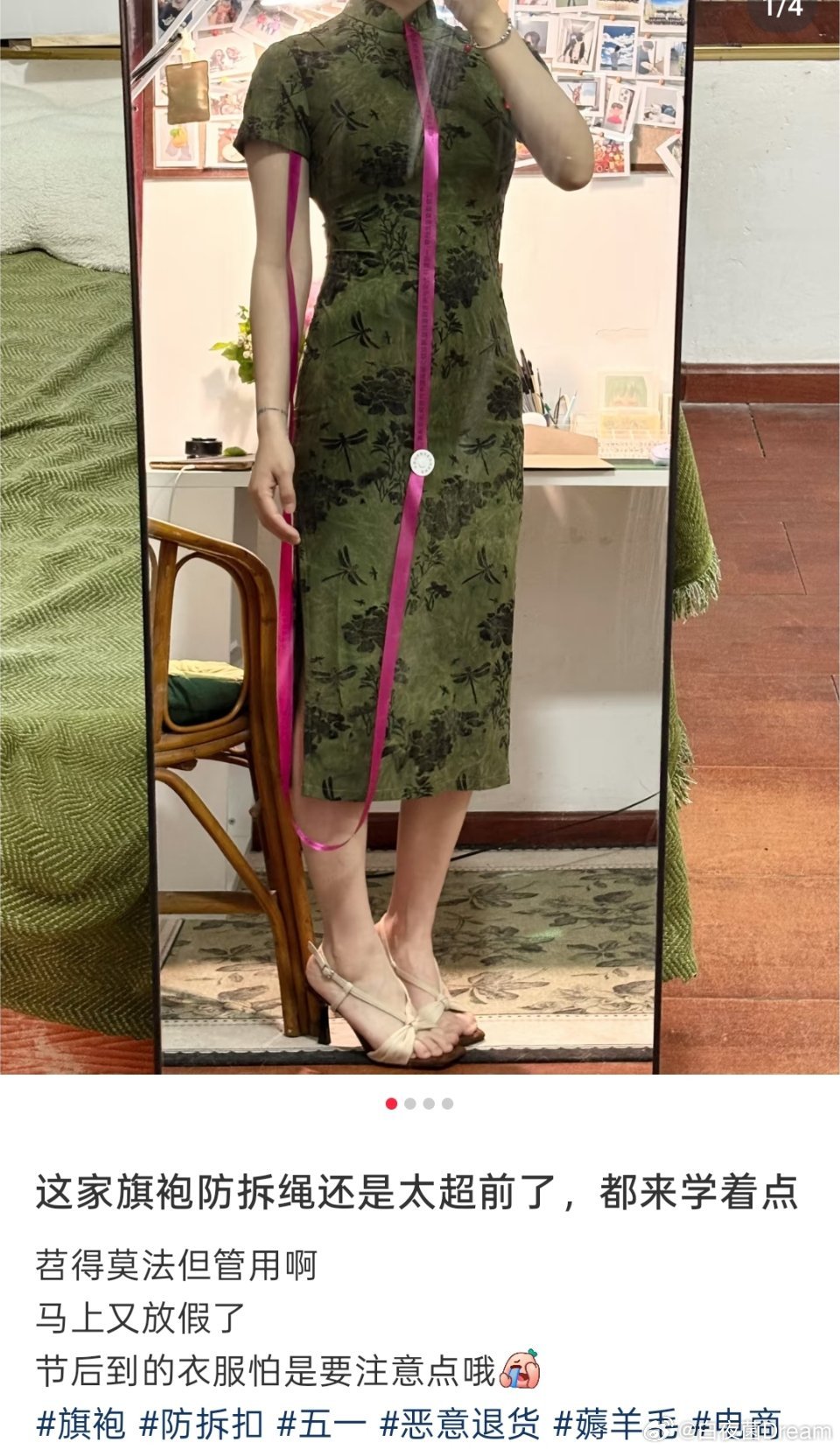
What the straps are defending against is an open secret in Chinese e-commerce. The seven-day no-questions-asked return policy, meant as consumer protection, has produced a subset of buyers who order a dress, wear it to a wedding, an interview or a holiday, then re-attach the tag and claim a refund. A commentary by Qianjiang TV cited return rates of 50 to 60 percent for ordinary online womenswear, climbing toward 80 percent for livestream sales, where impulse buying is easiest. Returned garments come back with foundation on the collar, a smell of hotpot in the lining, glitter from wedding-photo sets. There are cases of groups buying hanfu in bulk for a photo shoot and mailing every costume back; of business travellers ordering three suits and returning two.
The rules, sellers complain, leave them little recourse: a merchant cannot refuse a return unless it can prove the item was maliciously damaged. So the defence has turned physical — first the oversized hangtags, now the ribbons — and the escalation is the story's sharpest edge. The strap punishes honest buyers most: snap one accidentally while trying a dress on, and the return window is gone. It also assumes bad faith that often isn't there; a recurring complaint in the thread is that livestream filters flatter a "fairy dress" that arrives the wrong colour with loose threads, and the return is quality control, not greed. Jiangsu's provincial consumer council had already objected that the giant hangtags interfere with a buyer's ability to judge fit and fabric at all.
The same war has another front: days before the ribbons trended, a Chinese court jailed a man who punished merchants that refused his fake "refund-only" claims with waves of malicious orders — 2,700 orders across 900 stores. On the strap topic, one poster argued the deterrent would decay the way the hangtags did — once the embarrassment of cutting a ribbon fades, sellers will be back where they started, inventing the next device. "Honest merchants and sincere buyers are the ones left hurt," as another put it.
The Qianjiang commentary closed the loop: a tamper strap can lock in one return, but it cannot lock in trust that is draining away — what buyers need is goods that match the pictures, and clear rules on where a return right ends and a privilege begins. In the comment threads under the topic, men had a more modest request: a strap of their own, since, one wrote, they often need string to tie things up anyway.