China Opens an Investigation Into Pay-to-Enter Access at the FAST Telescope's Core
The Chinese Academy of Sciences has opened an investigation into reports that visitors paying for a hotel room — 2,688 yuan a night, or a 598-yuan 'experience' — could drive into the electromagnetic core zone of the FAST telescope, where phones are normally surrendered at the gate.
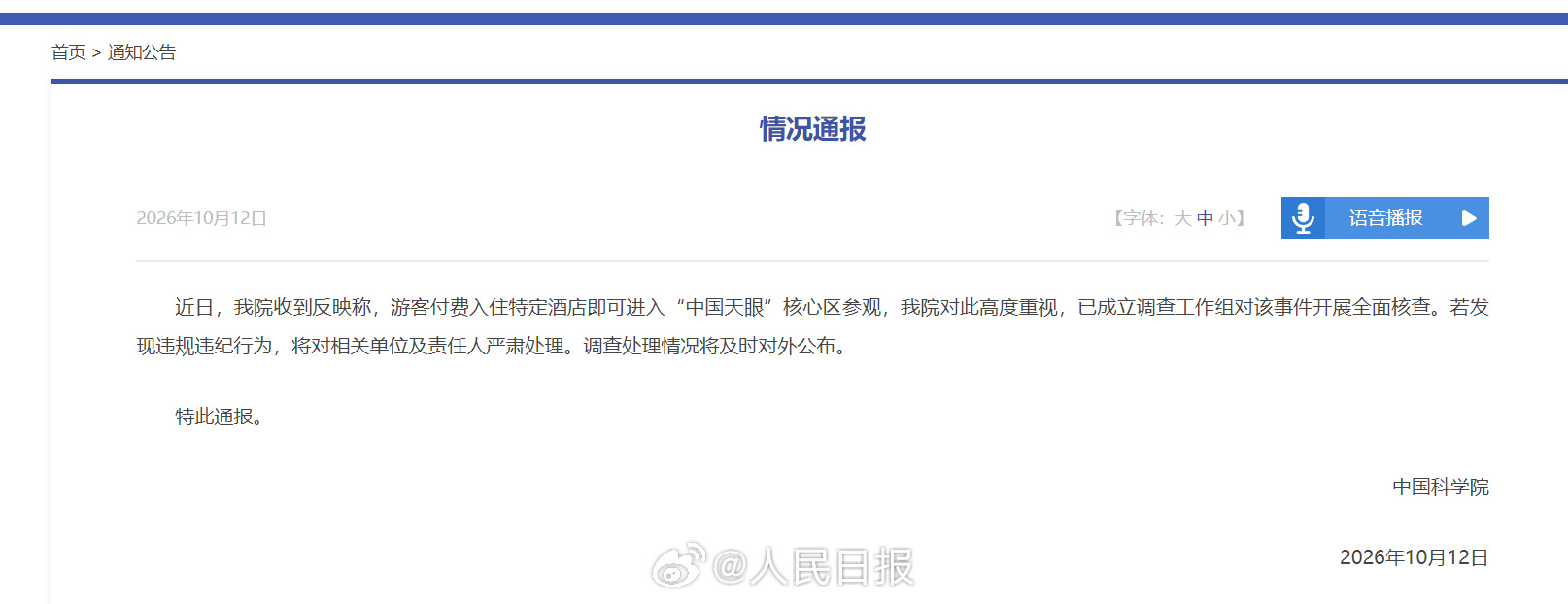
The Chinese Academy of Sciences announced on October 12 that it has formed a task force to investigate reports that visitors could pay their way into the core quiet zone of the "China Sky Eye" — the giant FAST radio telescope in the mountains of Guizhou — by booking a night at the right hotel.
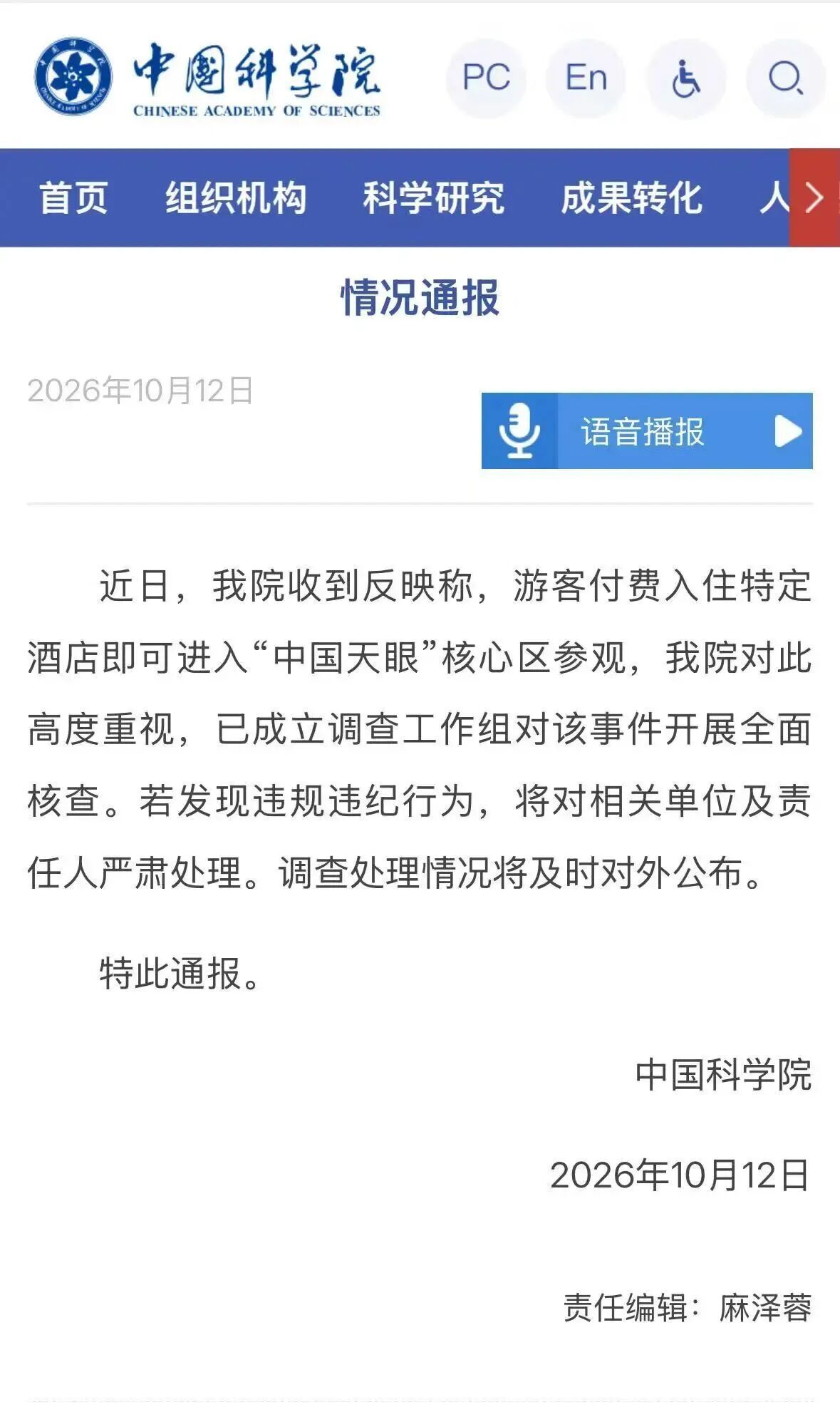
The notice, carried by People's Daily late on Monday evening and in CCTV's morning briefing the next day, said the academy took the matter "highly seriously" after receiving reports that guests paying to stay at a specific hotel near the telescope could enter the core area for a look around. If violations are found, it promised, the units and individuals responsible will be dealt with seriously, and the findings published.
The stakes are unusual. FAST is the world's largest single-dish radio telescope, and it works only because the valley around it is kept almost perfectly silent on the radio spectrum. Ordinary visitors surrender phones and other devices before boarding shuttle buses to a viewing platform some distance away; private cars and anything that emits a signal are barred from the core zone outright. The instrument is sensitive enough that, as one post put it, a phone signal is "hundreds to thousands of times stronger than the cosmic signals FAST is listening for" — trying to catch one next to the other, the writer said, is like looking for a firefly under a searchlight. The same post called the alleged arrangement a case of "turning a red line for scientific research into a tool for making money" (把科研红线变成了敛财工具).
What the academy is now investigating is how that red line was allegedly turned into a product. According to accounts that spread over the weekend, a hotel near the site sold access — a 2,688-yuan room, or a 598-yuan "experience" package — in exchange for which a guest's car could be registered past the checkpoints, phones and all. The listing has since been taken down.
As CCTV reported, the claim sat at number nine on Baidu's hot-search board with more than seven million hits, evidence that the story had broken well out of the Weibo bubble. Commentators pressed on accountability rather than tourism. One post, by a blogger writing as Li Mu, laid out the arithmetic: the telescope cost roughly one billion yuan of central-government money and is run by the National Astronomical Observatories under the academy. "Who set this up, and where did the money go?" the post asked.
There is a rule on the books for exactly this: Guizhou province has a protection regulation for the radio-quiet zone that forbids unauthorized vehicles and transmitters in the core area. So the open question is not whether the rules exist but who was selling access under them, and how long for. The task force says it will publish what it finds.