Five Years Without a 30th: The Lunar Calendar Phenomenon Explained
The phenomenon of having no "大年三十" (the 30th day of the last month of the lunar year) for five consecutive years is attributed to the arrangement of months in the Chinese lunar calendar. Each year's last month, known as "腊月" (lunar December), has only 29 days, making it a "小月" (small month). As a result, the last day of the year, "除夕" (New Year's Eve), directly precedes the first day of the new year, "大年初一" (New Year's Day), with no "大年三十" in between.
This occurrence is rooted in the definition of a month in the Chinese lunar calendar, which is based on the lunar cycle of approximately 29.53 days. To accommodate this cycle, lunar months can have either 29 or 30 days. When the last month of the year has only 29 days, the last day of the year falls on the 29th, and there is no 30th day. The motion of the moon, earth, and sun is not uniform, resulting in varying lengths of lunar months. Consequently, the occurrence of a "小月" in the last month of the year happens approximately every 3 to 5 years.
From 2025 to 2029, the last month of each year coincidentally has only 29 days, leading to the unusual situation of having no "大年三十" for five consecutive years. Although years with a "大年三十" are more common, the absence of this day for five years in a row is not unprecedented and reflects the unique characteristics of natural laws and the scientific basis of the lunar calendar. This phenomenon offers a deeper understanding of traditional Chinese calendaring and its intricacies.
The size of a lunar month is determined by the cyclical changes of the moon's phases, also known as a "synodic month". A synodic month has an average length of 29.53 days. Due to the varying relative motion of the moon, earth, and sun, this cycle is not fixed and can be either longer or shorter. As a result, the length of each lunar month can differ. To accommodate this cycle, lunar months can have either 29 days, known as a small month, or 30 days, known as a large month. This variation in month length is necessary to keep the lunar calendar in sync with the astronomical cycles of the moon.
The irregularity in the lunar cycle is due to the elliptical orbits of the moon and earth, causing the duration of a synodic month to fluctuate. The calculation of lunar months relies on precise astronomical observations and mathematical algorithms to determine whether a month should have 29 or 30 days. This complex system has been refined over centuries to ensure that the lunar calendar remains aligned with the solar year and the cycles of the moon. In years when the last month, known as the 12th month or 腊月, happens to be a small month with only 29 days, there will be no 大年三十, or 30th day of the 12th month.
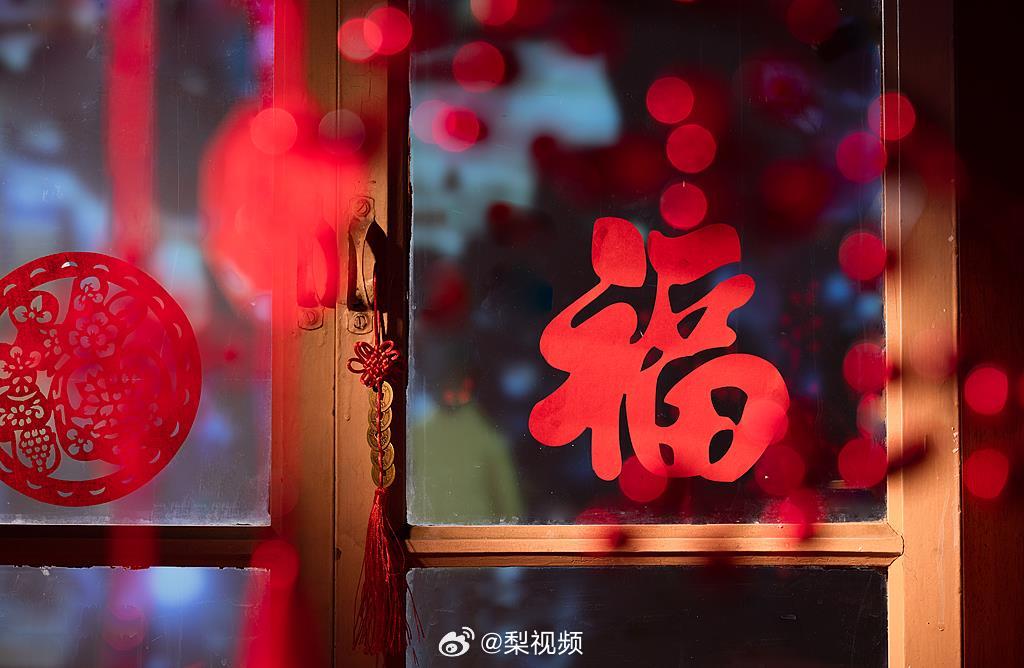
Despite the absence of the 30th day of the lunar month for five consecutive years, the traditional customs associated with New Year's Eve, also known as Chinese New Year's Eve or Chu Xi, remain unchanged. Families can still gather together, pay respects to their ancestors, and participate in various festivities such as staying up late to usher in the new year, hanging lanterns, and posting couplets. The traditional reunion dinner, a crucial part of the celebrations, will also continue unchanged. In essence, the lack of a 30th day in the lunar calendar does not disrupt the rich cultural heritage and time-honored practices that define this significant holiday.
Whether one considers the last day of the lunar year as the 29th or simply as New Year's Eve, the essence of the celebrations and the customs remains intact, allowing people to enjoy and observe this special occasion with their loved ones as they have always done. The phenomenon of having no "big New Year's Eve" (大年三十) for five consecutive years, from 2025 to 2029, is a rare but normal occurrence. This phenomenon arises from the unique characteristics of the lunar calendar, which is based on the cyclical changes of the moon's phases.
The lunar month, also known as the "synodic month," has an average length of 29.53 days, which is not an integer. As a result, the lunar calendar has to be adjusted to accommodate this non-integer length, resulting in either a 29-day or 30-day month. When the last month of the lunar year, known as 腊月 (Làyuè), has only 29 days, it means that there is no "big New Year's Eve" (大年三十). Although this phenomenon may seem unusual, it is actually a natural consequence of the lunar calendar's unique characteristics.
The fact that the lunar calendar is based on the moon's phases, which are influenced by the relative motion of the Earth, Moon, and Sun, means that the length of the lunar month can vary slightly from year to year. As a result, the occurrence of a 29-day or 30-day month is not fixed and can vary over time. The absence of "big New Year's Eve" for five consecutive years may have raised some concerns about how to celebrate the traditional Chinese New Year's Eve festivities.
However, as experts have pointed out, the traditional festivities and customs associated with the Chinese New Year's Eve can still be observed and celebrated, even if there is no "big New Year's Eve." The key is to focus on the traditional customs and practices that are associated with the last day of the lunar year, such as family reunions, ancestral worship, and traditional foods, rather than being fixated on the specific date of "big New Year's Eve." In conclusion, the phenomenon of having no "big New Year's Eve" for five consecutive years is a rare but normal occurrence that is a result of the unique characteristics of the lunar calendar.
By understanding and appreciating the scientific basis of the lunar calendar, we can gain a deeper appreciation for the traditional Chinese customs and practices that are associated with the Chinese New Year's Eve festivities. The phenomenon of having no "big New Year's Eve" for five consecutive years offers a unique opportunity to learn about and appreciate the intricacies of the lunar calendar and the cultural significance of the Chinese New Year's Eve celebrations.