Made to Pose Beneath the Word 'Shame': A Sichuan County's Teacher Photo Draws a State Media Rebuke
Teachers whose pupils scored lowest in a Sichuan county's exams were lined up on stage beneath a giant screen reading 'shame' — a photo officials confirm is real, an investigation is now examining, and CCTV says amounts to public humiliation that violates national policy.
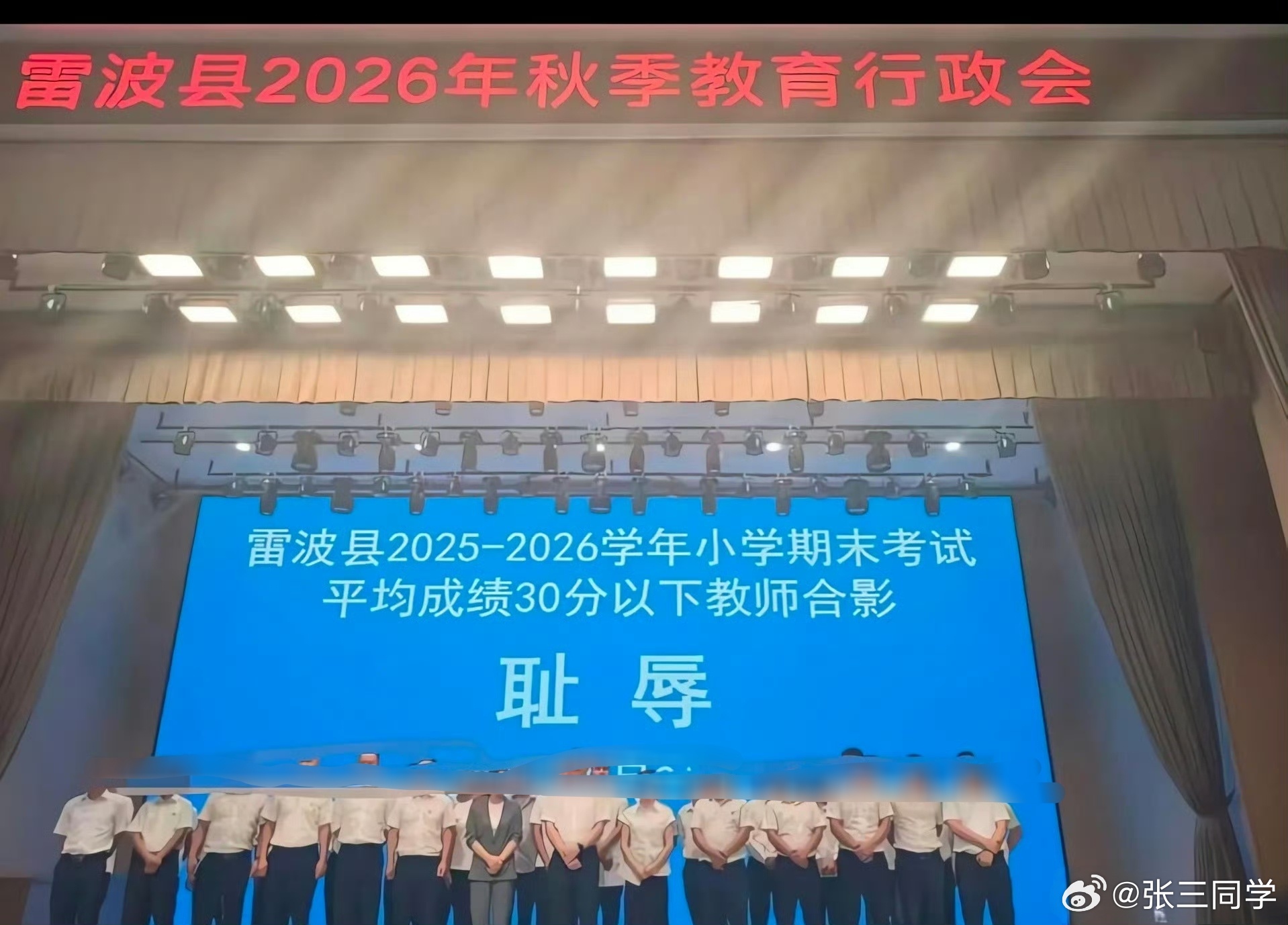
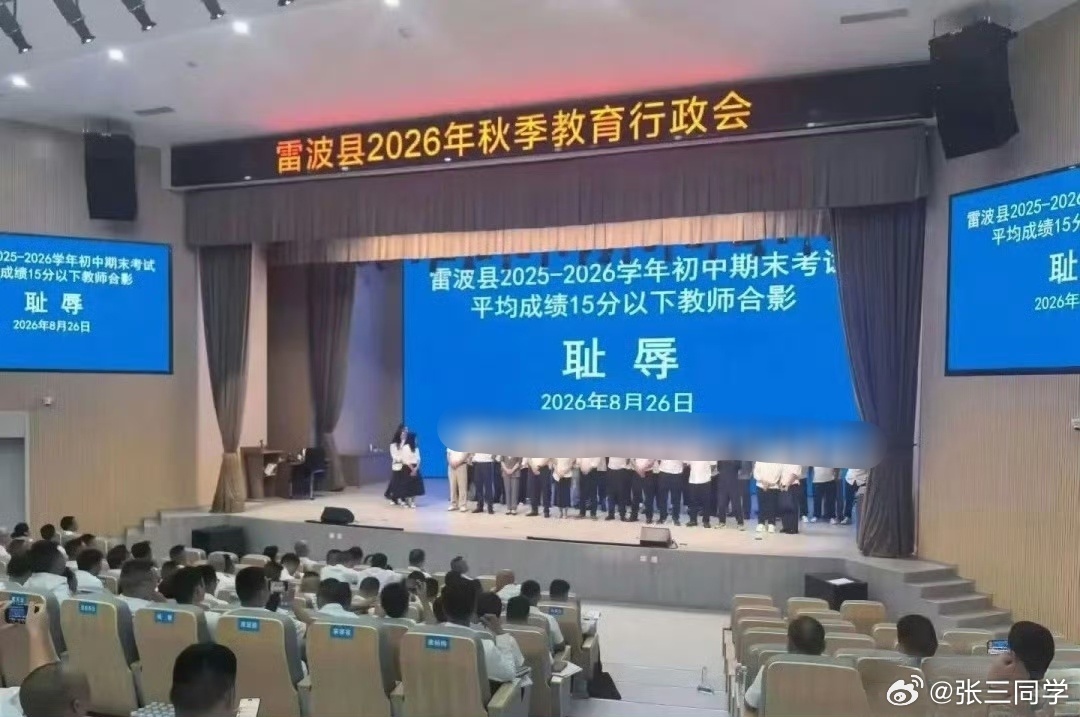
At a county education meeting in Leibo, in the mountains of Liangshan, Sichuan, dozens of teachers in white shirts and dark trousers were called up to the stage and lined up for a photograph. Behind them, a projection screen filled the hall: "Group photo of teachers whose junior-high final-exam average is below 15 points." Between the lines of text, two enormous characters dominated the screen — 耻辱, shame. A second photo showed the same treatment for primary-school teachers whose pupils averaged under 30.
That was how Leibo county opened its autumn education administrative conference on August 26. Three days later, after the pictures spread across Weibo and onto the Baidu and Zhihu trending boards, the prefecture's education bureau confirmed the photographs were genuine, not doctored, and said an investigation was under way — adding, in a remark widely quoted, that "when we saw the photos, we didn't understand them either."
The confrontation between classroom and conference hall is what has held the country's attention. State broadcasters weighed in within a day: a CCTV News commentary argued that "the premise of urging is respect; the basis of encouragement is trust," and that lining teachers up beneath the word shame was not motivation but "public humiliation." The commentary pointed out that the Ministry of Education's negative list for basic education, issued in March 2025, explicitly bans ranking or rewarding and punishing teachers by exam results — exactly what the screen announced.
There is also a factual loose end the investigation has yet to close. Local officials have not confirmed whether the averages on the screen measured the teachers' own work assessments or their students' raw exam results; the county education bureau would say only that the meeting was internal and details would come in a due-course statement.
What the averages could not show, residents of Liangshan know. Leibo is one of the counties the state designates for concentrated rural-revitalization support — its education base is thin by any measure, a legacy of poverty and remoteness. One teacher told how staff still trek into the mountains every term to persuade students to return to school, the standing work of "controlling dropouts and guaranteeing schooling" (控辍保学), and asked how leaders could "publicly humiliate teachers who have not an ounce of dignity left — this is education's real disgrace."
The story hit a nerve well beyond the county. It sat in Baidu's top five and on Zhihu's front page, where the argument was less about one screen than about accountability: many commenters insisted student scores reflect family circumstances, school resources and regional gaps as much as any individual teacher, and the prefecture's own spokesperson seemed to concede the point.
The prefecture has promised to trace who chose the word and how the decision was made. Until it reports, the number the county's meeting meant as a verdict — 15 points — hangs as a question about everything it left out.