When Memories Fade: The Disappearing Digital Legacies of Loved Ones
A recent incident has sparked a heated discussion among Chinese social media users after a netizen's post went viral, revealing that her father's WeChat account had suddenly disappeared nearly a decade after his passing. The netizen, who had been using her father's old chat records and posts as a way to cope with her grief, was devastated to find that his account was no longer accessible. This incident has resonated with many, who have shared similar experiences of losing access to loved ones' social media accounts after their passing.
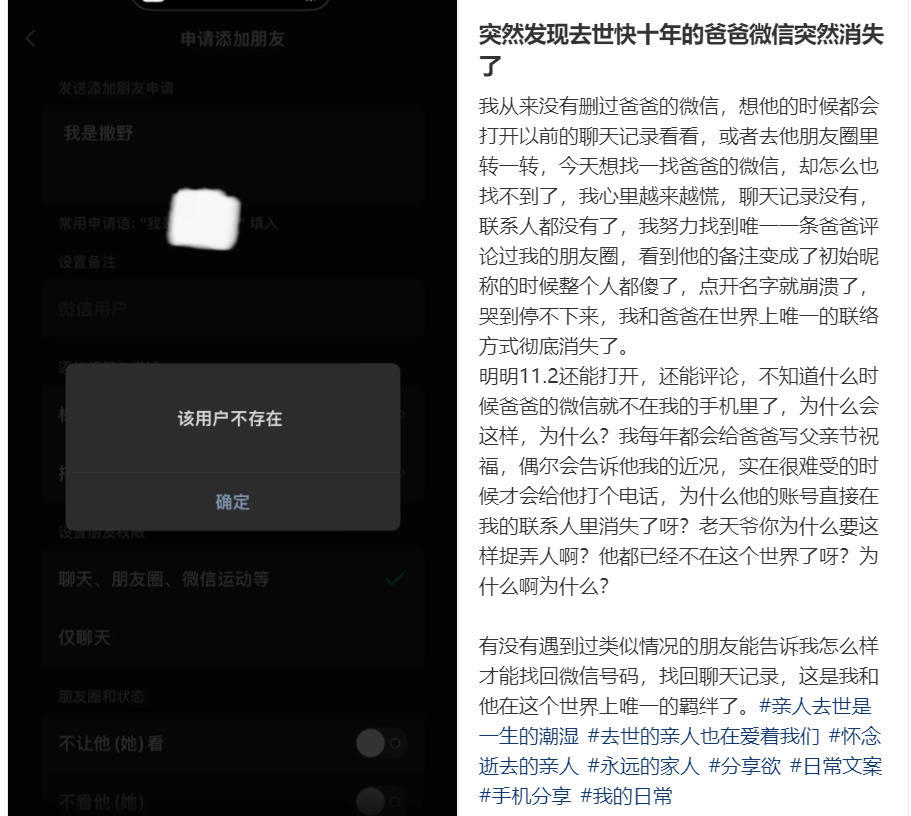
The netizen, who preferred to remain anonymous, shared that she would often open her father's old chat records or look at his posts on WeChat whenever she missed him. However, recently, she was unable to find his account, and when she finally located a post where he had commented, she discovered that his username had been changed to a default name. This realization led her to break down in tears, feeling as though her last connection to her father had been severed. WeChat's customer service team revealed that accounts that remain inactive for an extended period may be subject to deletion, unless they contain financial assets or other valuable data.
When confronted about the sudden disappearance of the deceased father's WeChat account, WeChat customer service personnel explained that accounts which remain inactive for an extended period are subject to reclamation, unless the account contains assets or properties. This policy is designed to ensure the security of users' accounts and optimize the system's resources. In the case of the netizen who lost access to their father's account, WeChat staff attempted to assist in recovering the account after noticing the post. Unfortunately, the account had already been reclaimed and could not be restored.
WeChat officials emphasized the importance of regularly logging into one's account to prevent such situations. They suggested that users maintain an active status on their accounts and periodically back up important data, such as videos, images, and files, to external storage devices. This ensures that even if an account is reclaimed, valuable information and memories can still be preserved. Moreover, WeChat's security center has addressed concerns regarding the reclamation of accounts, highlighting that if an account contains assets, it will be exempt from the reclamation process.
The incident has sparked a wave of emotional responses from netizens, with many expressing their sorrow and understanding. Numerous netizens have come out in support, calling on WeChat to implement a more compassionate approach to handling the accounts of deceased users. They suggest that the platform should provide a special mechanism for preserving the digital memories of loved ones who have passed away, allowing family and friends to hold on to cherished moments and conversations. The sentiment is echoed by many who have shared similar experiences of losing access to a loved one's digital presence.
As the digital landscape continues to evolve, it is becoming increasingly clear that social media platforms must adapt to meet the emotional and psychological needs of their users, providing a more humane and compassionate approach to handling the digital remnants of those who have passed on. Some argue that WeChat should adopt a similar approach to mobile phone numbers, which have a grace period during which the account can be recovered with relevant documentation. Others argue that WeChat should differentiate its account recycling policy for deceased users, offering special handling procedures to accommodate the needs of their families.
The discussion has highlighted the importance of digital legacy and the emotional value attached to online presences, especially in the context of deceased loved ones. As technology continues to evolve, it raises questions about how we manage and preserve our digital memories and connections. It remains to be seen how WeChat and other social media platforms will respond to the growing concern over digital legacy and account management after death. One thing is clear, however: the intersection of technology and mortality has raised important questions about how we manage our digital presence, and how we honor the memories of those who have passed away.