Musk Claims SoftBank Is Defaulting on Gas-Turbine Orders — Without Evidence
Elon Musk posted on Friday that SoftBank is defaulting on its gas-turbine orders, with no evidence and no reply from SoftBank. Chinese finance readers are treating it as the clearest statement yet that the constraint on the AI boom is electricity.
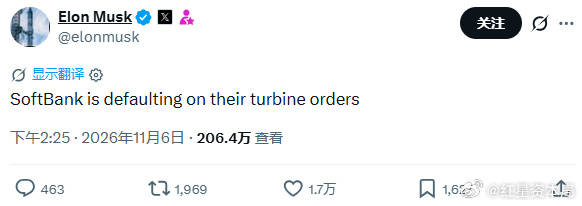
On Friday afternoon, Elon Musk posted a two-line accusation on X that has since been read more than two million times: "SoftBank is defaulting on their turbine orders." He was replying to a post by X user Katie Miller relaying a media report that ING was planning to sell a $500 million portfolio of data-center loans in one go — and the market read it as a shot at the most aggressive AI power buildout in the world.
The post carried no evidence. As of the weekend, SoftBank had not publicly responded, and none of the major turbine manufacturers had commented either. But Chinese finance readers took it seriously enough to chase it: SoftBank's five-year credit-default-swap spread — the market's measure of how risky a company's debt is — spiked to 466 basis points, its highest level since October 2022, according to the summaries compiled by Baidu's trending board.
The stakes are SoftBank's bet on AI power. The company has drawn up plans for a giant data-center complex in Ohio that would require 9.2 gigawatts of new gas-fired generation, and its clean-energy subsidiary SB Energy has publicly said it had locked in turbine capacity from suppliers including GE Vernova. Whether those orders are being honored is the question Musk's post put in play.
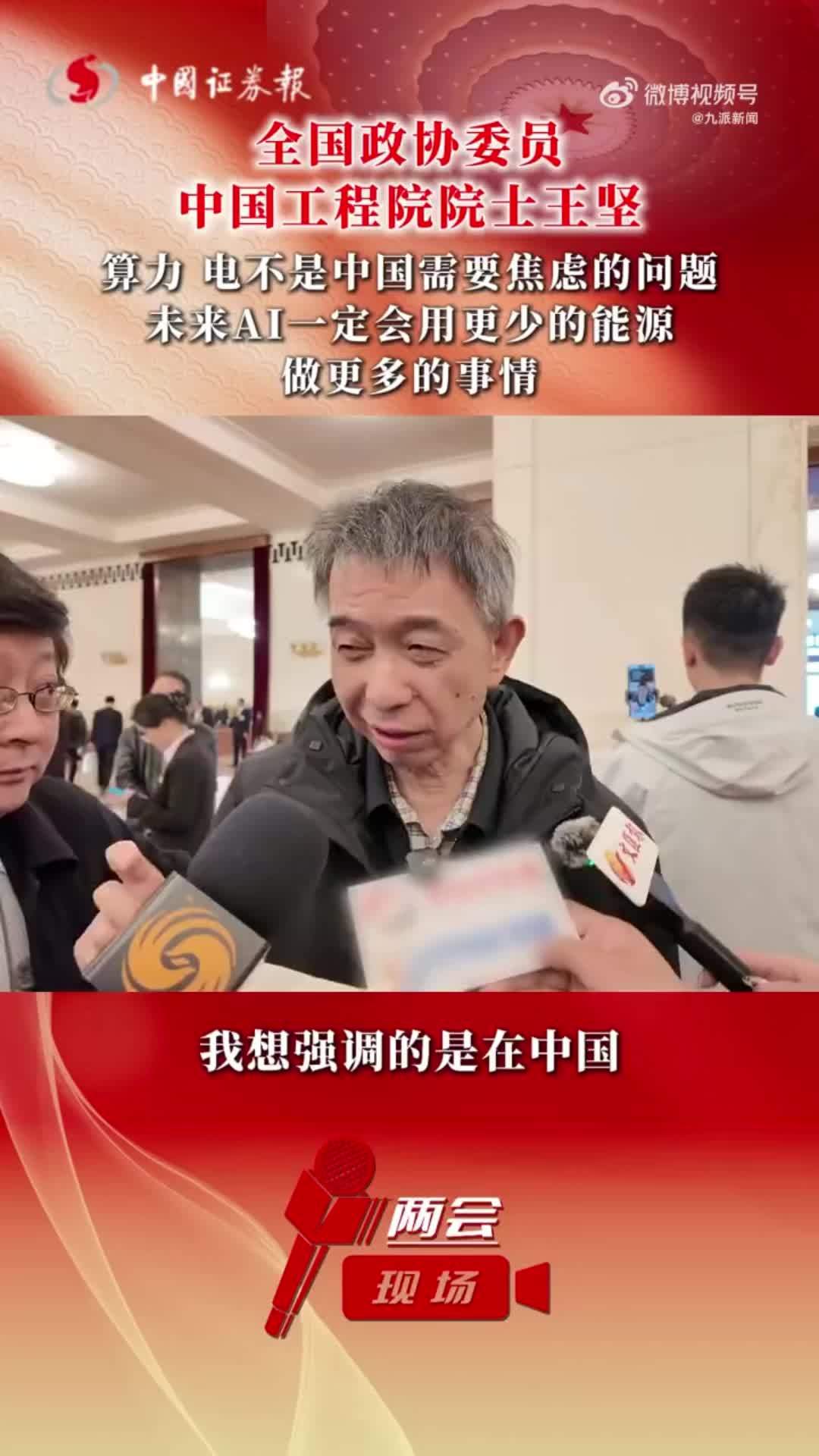
What made the story trend on Weibo, though, was less the accusation than the argument it fed. One widely shared post read it as a verdict on the electricity question: "Musk's point is that the constraint on American AI is electricity, and America cannot solve it." The same post drew a line to a Chinese debate from months ago. Wang Jian, the founder of Alibaba Cloud and an academician of the Chinese Academy of Engineering, had said in an interview that electricity is not a problem China needs to worry about — future AI will use less energy to do more. He was mocked for it at the time, the post notes: "there was a lot of that mockery back then." The Musk post, in this reading, is evidence that the American constraint is real and the Chinese one is not.
The claim is unverified. Red Star Capital Bureau, the finance desk of the Chengdu-based Red Star News, noted that Musk had not shown any internal documentation or supplier statement; its post drew more than 1,000 likes within hours. But the market reaction — and the silence from SoftBank — mean the question is not going away. Whether the AI buildout can keep its lights on is now a live question, and Chinese readers are arguing it as much as anyone.