Why a Supermarket Chain's Building Site Is Moving China's Civil Engineers
Pang Dong Lai's 6.5-billion-yuan Dream City complex is being livestreamed, barcode-tagged and paid on time — ordinary compliance with China's building code that has contractors and engineers asking why it took a grocer to deliver it.
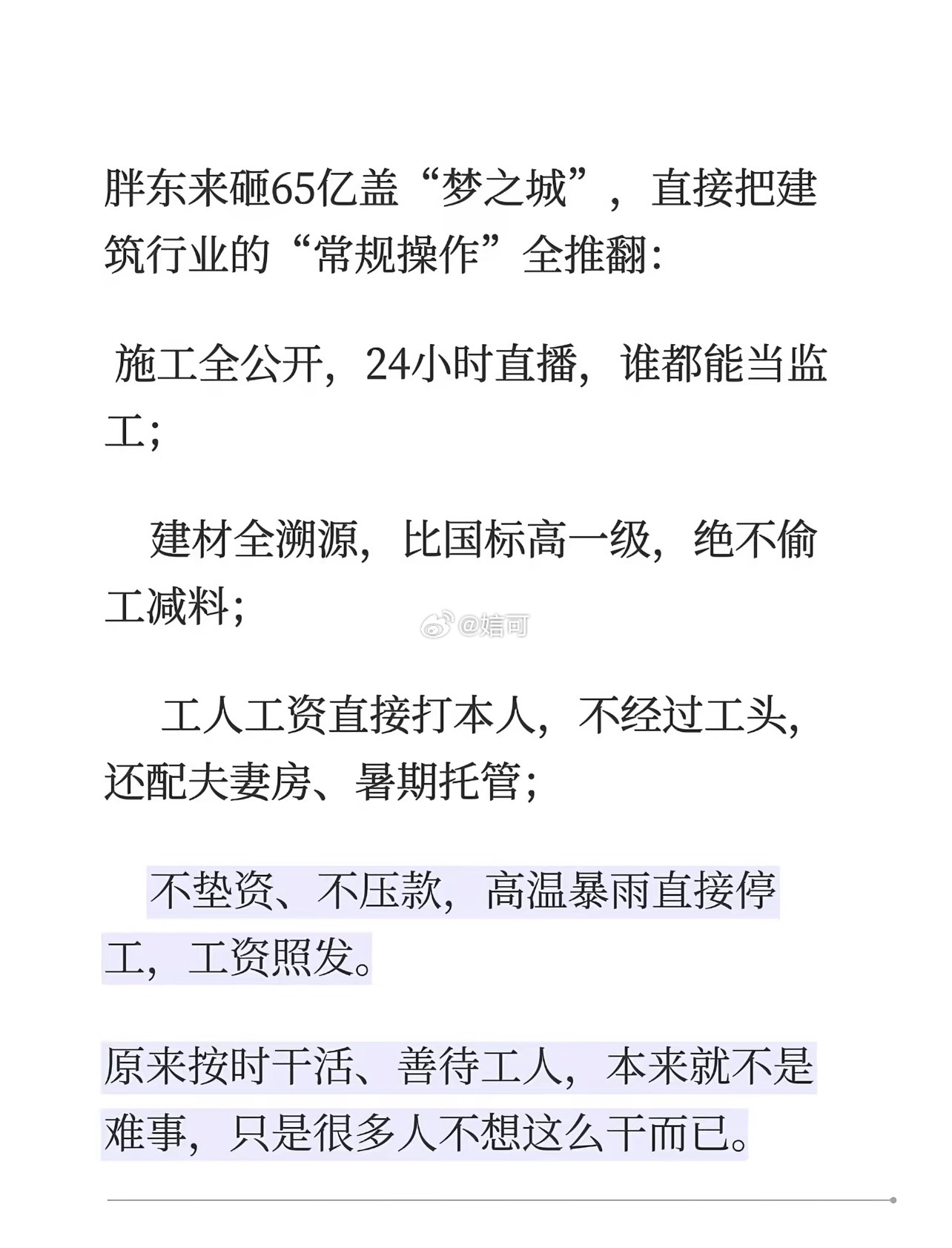
China's civil engineers are not easily moved, but this week many of them posted the same confession: they had finally seen a project that matches the textbook. A safety officer wrote that this was what he had been taught in school, years ago. An old site supervisor said everything checked out — "it all matches, it all matches." The subject of their astonishment is not a landmark tower but a shopping complex in Xuchang, Henan, being built by Pang Dong Lai, a supermarket chain, and the joke running through the trade is that the chain has no construction experience at all. It is merely, as one post put it, building to the national standard.
The Dream City project — a 6.5-billion-yuan complex the chain is funding itself — has turned its site into a public demonstration. Every bundle of rebar carries a traceable barcode. Construction is livestreamed around the clock, so that anyone who wants to supervise can. The developer reconciles accounts and pays as work progresses, instead of the industry habit of requiring contractors to front the money and wait. A legal office on site helps workers recover unpaid wages. The dormitories have air-conditioning, couples get their own rooms, workers' children are looked after over the summer, and when temperatures force a stoppage, the wages keep coming (the site practices, as one post tallied them).
Yu Donglai, the chain's founder, posted on Wednesday: world-class project design, interior design, acoustics and lighting — and, he wrote, the company would strive for China-first construction and site management, to make Dream City "a light of world business civilization."
The tears in the trade are not about technology. They are about what the national standard is supposed to mean and usually does not: on most Chinese sites, contractors front costs, payments drift for months, schedules are compressed, and safety margins are the first thing trimmed — a set of norms that has only sharpened as the property downturn squeezes everyone's cash flow. One post summarizing the reaction landed on the point: what moved engineers was not any black-box technique, but a developer that simply does not press payments, does not demand advances, does not chase deadlines blindly, leaves material margins intact and treats its front-line workers well. The industry had waited a long time for such a benchmark, the post said, and it took a grocer to set it (the reaction, in full).
The chain has a record of embarrassing other industries this way. It has already put new hires on four-year contracts it promises never to renew, and pays its staff 50,000 yuan for holding a 'zero bride price' wedding. A supermarket that follows the written rules — on payroll, on price tags, now on rebar — keeps making the rest of the economy look at its own. The question the week's laughter leaves hanging is why compliance reads as a miracle.