Five Dead in Taiyuan High-Rise Fire as Residents Watch Rescue From Their Windows
A fire tore through the Haocheng International Apartments on Taiyuan's Liuxiang South Road on Sunday evening, killing five of the 38 people sent to hospital. The building houses a hotel and, on its lower floors, training centres — the kind of mixed-use high-rise where Chinese cities keep counting their fire deaths.
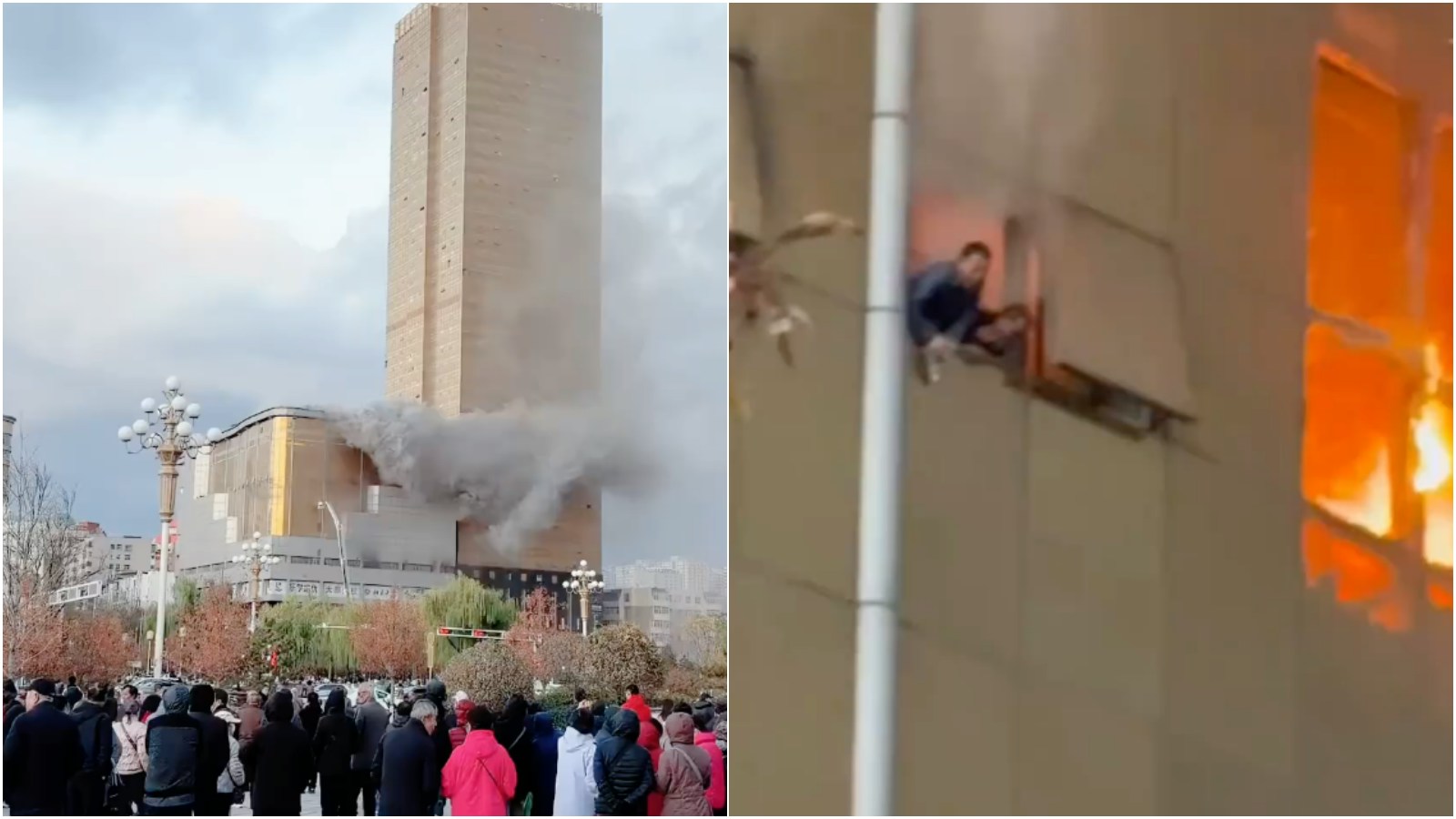
The fire started just before 5 p.m. on Sunday in the Haocheng International Apartments on Liuxiang South Road, a commercial strip in central Taiyuan's Yingze district. By 7 p.m. the flames were out; by 8:30 the search of the building had ended. Thirty-eight people were taken to hospital, and five of them died — the official count Xinhua reported shortly before 11 p.m. The cause is under investigation.
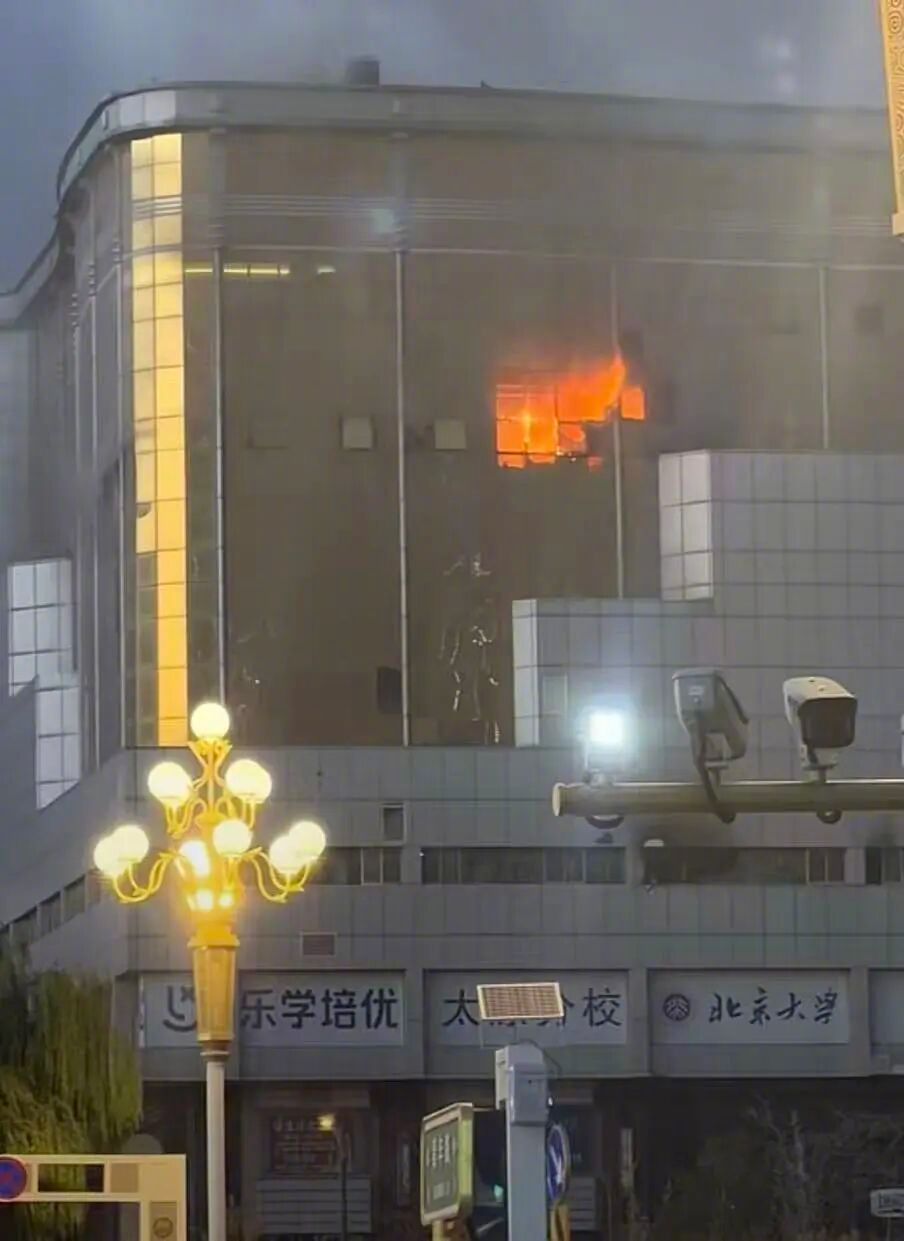
What the evening's footage showed was a fire that moved unpredictably. China News Weekly collected accounts from people who watched it: a man passing at 5:13 p.m. saw a single window burning before "suddenly the whole building was pouring black smoke." A resident across the street, who gave her name as Chuyao, watched the flames concentrate on the seventh and eighth floors and above — and noted that the building's lower floors are mostly training centres. An instructor at an art-exam prep school nearby described the firefighting as a sequence of relapses: the fire died down downstairs and flared upstairs; it was put out on one side and broke out on the other. Hong Kong's HK01 carried stills of two people leaning out of a window, calling for help as smoke covered part of the facade; state television later showed ladders raising against the building and a middle-aged man and a child being brought down from a window.
The building's mix of uses is the familiar ingredient. Taiyuan's local reporting has it housing a hotel — the state-run emergency response named the complex as an international apartment hotel — above a stack of after-school and exam-preparation academies, the businesses that occupy low-rent floors of Chinese commercial towers in every city. It is the same configuration behind many of the country's deadliest high-rise fires, and why the survivor counts, not just the death toll, became the day's second question: thirty-eight people reached hospital, and no official figure has yet been given for how many remained in the building overnight.
Taiyuan is a city of 5 million that has seen this before — a 2013 fire at a coal-company headquarters killed eight — and the questions now forming online are the ones that follow every such fire: how the alarm was raised, whether the training centres were licensed to occupy those floors, and why a building full of children's classrooms on a Sunday evening had no faster evacuation. The municipal government has promised an investigation into the cause. What it has not yet explained is the detail that haunted the eyewitness accounts: a fire that kept coming back after it was put out.