Indonesia Stops the Suspect in the Raja Ampat Turtle-Killing Video at the Airport
A man identified in Chinese media as Wei Shang, a diving instructor, was intercepted at an Indonesian airport trying to leave the country as the Raja Ampat regency filed formal evidence over the filmed shooting of a critically endangered hawksbill turtle. He denies being the man in the video.

The suspect in the filmed shooting of a hawksbill turtle in Indonesia's Raja Ampat islands now has a name. A man Chinese media identify as Wei Shang, about 36 and a veteran diving instructor, was intercepted at Makassar's Sultan Hasanuddin airport on Monday as he prepared to leave the country, immigration officials said, with plans to send him back to Raja Ampat the next day, where local police now hold a file on him.
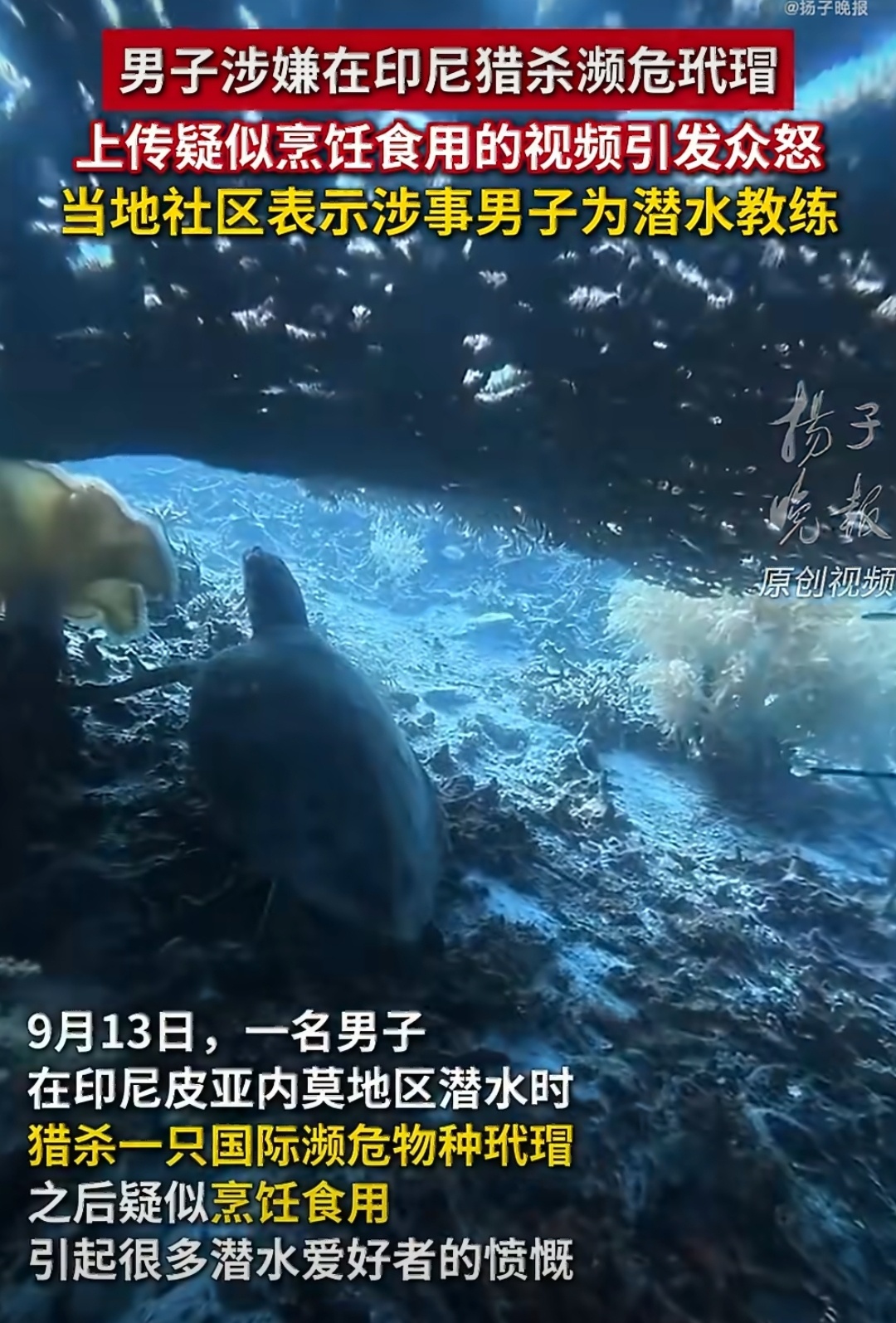
The paperwork tells the story of how seriously the regency is taking it. On Monday the indigenous Meos Mansar ranger patrols sent police a formal letter demanding legal action and detention; the same day, the Raja Ampat regency government wrote to immigration asking that the man be blocked from leaving. The evidence bundle attached to those letters includes dive photos and video, the suspected carcass and images of it being cooked, the man's dive-instructor certificate and witness statements.
When the video surfaced last week, it was Chinese divers who led the condemnation, and the suspect has now answered — sort of. In messages from his social accounts, which have since been restricted from logging in, he denied being the man in the video, said he was the victim of a cyberbullying campaign, and declined to answer further questions from reporters. The denial is itself a shift in the story: from an anonymous figure in blurred footage to a named man contesting the evidence while immigration holds him.
The unverified claims have kept pace with the facts. Weibo users dug up — and his former clients echoed — assertions that his instructor credentials had been stripped over a client complaint and that he held Vanuatu citizenship while long resident in Australia. None of that is confirmed; what is confirmed is the legal exposure. The hawksbill is critically endangered on the IUCN Red List, a CITES Appendix I species, and strictly protected in Indonesia. Chinese lawyers on Weibo have been quick to add the provision most commenters miss: because the suspect is a Chinese national, prosecutors at home could charge him under China's wildlife-crime law for an act committed abroad, a crime that carries a maximum sentence of more than ten years. "Serve his sentence in Indonesia, then come home and serve it again," one legal blogger wrote.
The case has also taught Chinese readers a vocabulary lesson. The word for hawksbill, 玳瑁 (dàimào), is uncommon enough that one news outlet ran a readers' quiz on its pronunciation, using the day's news as the pretext — a small measure of how far the story has traveled beyond the diving community that first flagged it. For Raja Ampat, whose marine tourism runs on the goodwill of exactly that community, the outcome of the case will be watched closely in both countries.