Sanrio Terminates the 'VIVANT' Collaboration, but the Apology Appeared Only in China
Hello Kitty's owner terminated its collaboration with the Japanese drama 'VIVANT' and apologized on October 28 — but the statement appeared only on Sanrio's Chinese accounts, and Chinese readers are asking whether the brand means it.
Hello Kitty's owner has cancelled one of its most contested collaborations, and the apology it issued is being read in China more carefully than the merchandise that caused the trouble.
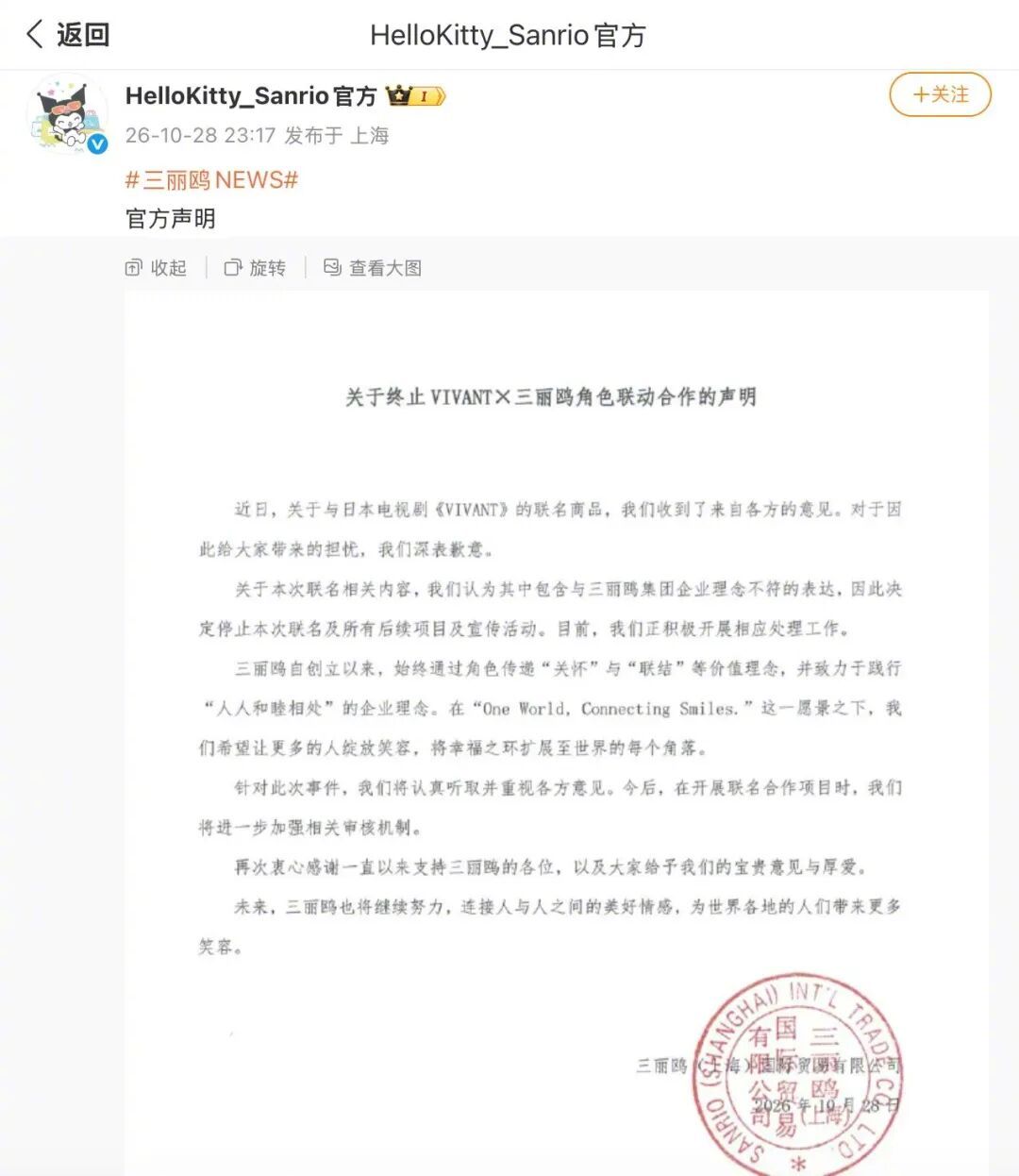
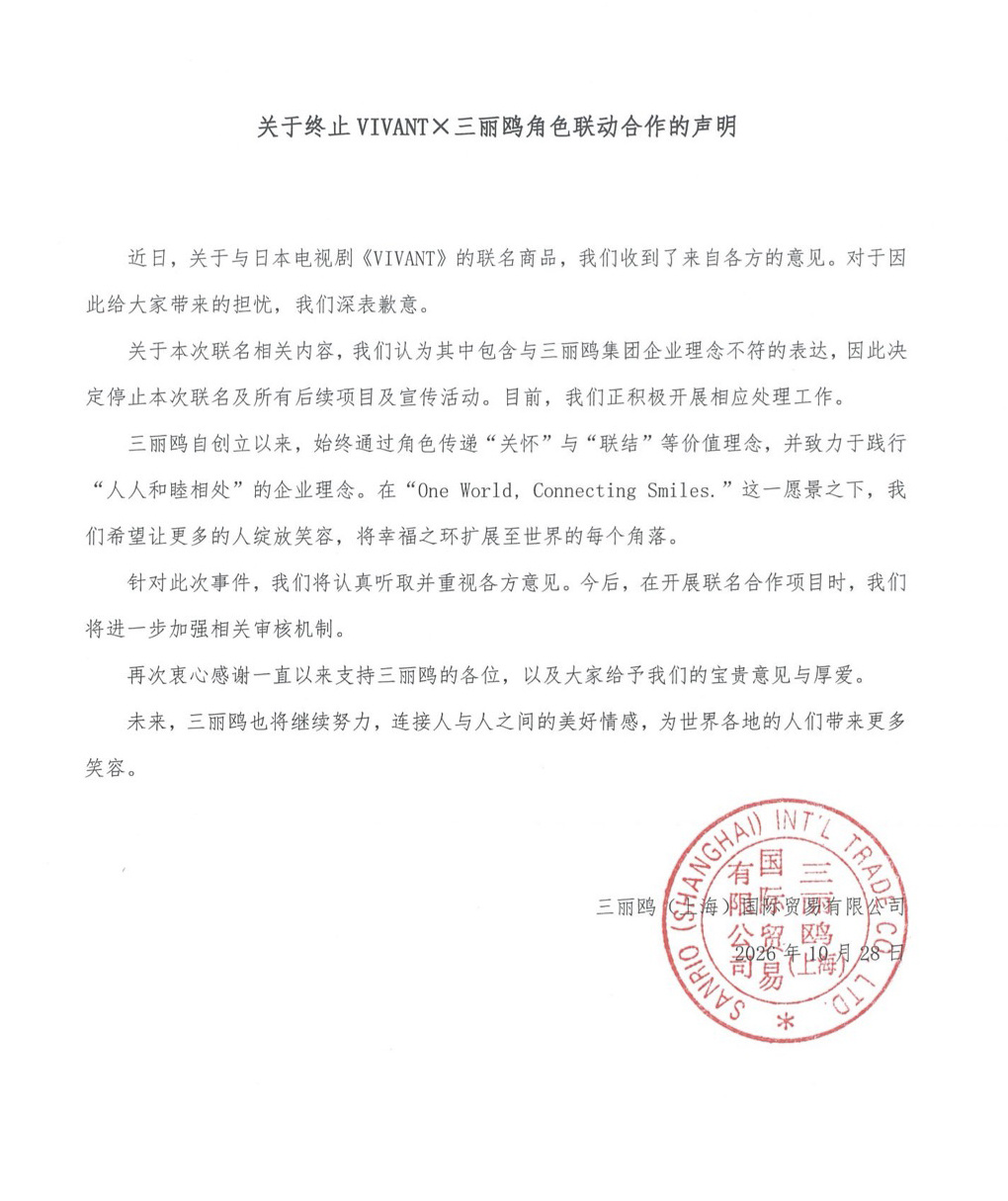
On the night of October 28, Sanrio (Shanghai) International Trading Co. posted a statement to its Chinese Weibo account: the character collaboration with the Japanese drama VIVANT contained "expressions inconsistent with the Sanrio Group's corporate philosophy," so the collaboration and all follow-up projects and promotional activities would end. The company apologized for the concern it had caused and promised to strengthen its review process for future tie-ups. The post was liked more than 36,000 times within hours.
The trouble began with the drama. VIVANT, a hit spy series on Japan's TBS, returned this year with a second season that Chinese viewers read as history inverted: Chinese characters recast as sadistic torturers, atrocities associated with the invading Imperial Japanese Army grafted onto Chinese roles, and the drama's self-defence-force agents positioned as the righteous avengers. From July, the show's merchandising had Hello Kitty, My Melody and Cinnamoroll dressed in its spy costumes — plush toys, keychains, a second batch already announced as set for release. We covered the backlash when it surfaced; what changed this week is that the brand has now formally cut the collaboration loose.
What Chinese consumers noticed next was where the apology did — and did not — appear. The statement went up only on Sanrio's Chinese accounts. Reporters checking Sanrio's Japanese headquarters site and its Japanese social channels found no trace of it, and on Baidu's hot-search board the episode trended as a "special-supply apology" (特供道歉) — a term once used for goods reserved for the privileged. TBS's own product pages for the collaboration have since gone dark.
Official media moved fast. An editorial carried on People's Daily's site under the headline "Hello Kitty Should Not Dance With Japan's Right Wing" argued that pop culture is Japan's advantage industry, and precisely for that reason a brand whose audience is overwhelmingly children and young consumers must draw a clear line against distorted war history. Shanghai-based outlet The Paper was blunter: "cute is not a fig leaf."
The stakes are commercial, not sentimental. China is Sanrio's critical overseas market — 781 million yuan in revenue in the first half of this year, a figure Chinese media cited from the company's own reporting. The blast radius reached gaming: Honor of Kings and other titles had already shipped Sanrio collaboration skins, which players now expect to become collector's items — "these skins may become unobtainable," as one player put it, urging brands to "stick to intangible-heritage collabs instead." Individual fans are doing their own accounting: one posted that she had plane tickets to Osaka and a Sanrio store visit planned, and was now hesitating to go — comparing the tone of this apology to the one Kylian Mbappé issued during his own China controversy, which Chinese readers spent days parsing for sincerity.
What the statement never does is say what was wrong. It refers to "expressions inconsistent with our corporate philosophy" without naming them, and to history only by implication. Whether the same words appear in Japan — and whether that second batch of merchandise ever ships anywhere — is the test Chinese consumers are now applying.