Savoring the Seasons: A Culinary Journey Through China's 24 Solar Terms
The twenty-four solar terms are an ancient Chinese division of the year, with each term having its corresponding traditional foods. These foods not only delight our taste buds but also carry auspicious meanings, wishing for a bountiful harvest and good fortune. As the seasons change, the foods also change, presenting unique seasonal characteristics. From the beginning of spring, people enjoy eating spring rolls and spring pancakes, which represent the arrival of spring and new beginnings. The spring rolls, also known as "春卷" (chūn juǎn), are believed to bring a fresh start and good luck throughout the year. Spring pancakes, or "春饼" (chūn bǐng), are thin pancakes filled with fresh vegetables, tender meat, and crispy sauce, symbolizing the vitality of spring and the hope for a new year filled with abundance and prosperity.
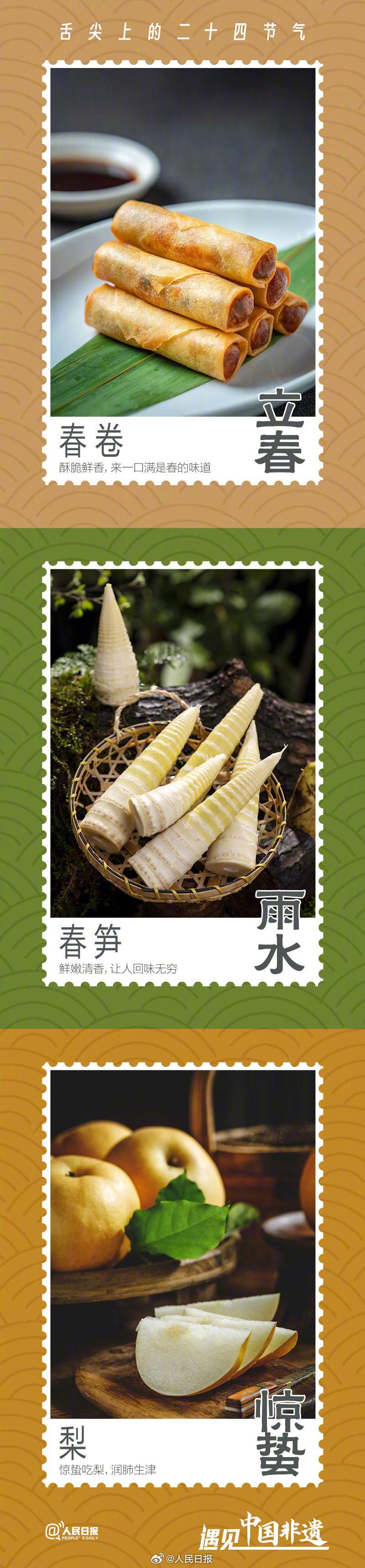
Egg dumplings, or "蛋饺" (dàn jiǎo), are a traditional dish in some regions, made with golden egg wrappers and savory meat fillings, signifying a year filled with good luck, happiness, and a bountiful harvest. In many places, people also eat a warm, steaming bowl of noodles, known as "立春面" (Lì Chūn miàn), on the beginning of spring, symbolizing the arrival of spring and wishing for a smooth and successful year ahead. As the seasons progress, the corresponding foods change. During the "小满" (grain full) season, people savor the sweetness of "枇杷" (loquat), while "秋分" (autumn equinox) is marked by the succulent taste of "螃蟹" (crabs). The "立冬" (beginning of winter) season brings the warmth of "羊汤" (mutton soup), a comforting and nourishing dish to ward off the cold.
Each solar term has its unique set of traditional foods, showcasing the diversity and richness of Chinese cuisine. From the spicy flavors of "驴打滚" (donkey rolls) during "惊蛰" (awakening of insects) to the cooling effects of "绿豆汤" (mung bean soup) during "小暑" (minor heat), every dish is carefully chosen to complement the season and bring people closer to nature. For instance, during the "立夏" (beginning of summer) season, people eat "立夏饭" (beginning of summer rice), a dish made with various ingredients such as bamboo shoots, peas, and meat, while during the "小满" (grain full) season, people enjoy "苦菜" (bitter vegetable) and "枇杷" (loquat). The "秋分" (autumn equinox) season is marked by the consumption of "螃蟹" (crabs) and "大闸蟹" (Chinese mitten crab), symbolizing the abundance of autumn.
As people continue to celebrate the solar terms and enjoy the corresponding foods, they are not only satisfying their taste buds but also carrying on a rich cultural tradition that reflects the harmony between human life and the rhythms of nature. The twenty-four solar terms have become a way for people to connect with their cultural heritage and appreciate the beauty of traditional Chinese cuisine. Whether it's the traditional dishes, the cooking techniques, or the cultural significance behind each solar term, every aspect of these classic dishes is a treasure worth appreciating and preserving. With the increasing popularity of the tradition, people are sharing their experiences and favorite dishes on social media, making the twenty-four solar terms a beloved and integral part of Chinese culture and heritage.
In recent years, some people have begun to follow the tradition of "躲春" (avoiding spring), which is believed to bring good luck and avoid misfortune. This tradition is especially observed by people born in the years of the snake, pig, tiger, and monkey. However, it is essential to note that this tradition is not based on scientific evidence and is primarily a cultural phenomenon. The correct way to "躲春" is to avoid going out or engaging in disputes during the hours surrounding the arrival of spring, and instead, focus on rest, meditation, and self-reflection.
The tradition of eating specific foods during the solar terms has gained popularity, with more people participating in the custom and sharing their experiences on social media. As the seasons change, people look forward to the corresponding foods, and the tradition of eating these foods has been passed down through generations, becoming an integral part of Chinese culture and heritage. People have also begun to appreciate the beauty of traditional Chinese cuisine and the cultural significance behind each solar term, making the twenty-four solar terms a way for people to connect with their cultural heritage.
On the first day of the sixth lunar month, people traditionally eat "立夏饭" (beginning of summer rice) and other dishes to mark the occasion. The twenty-four solar terms have been listed as an intangible cultural heritage, and their traditional customs and foods are gradually becoming a part of people's daily lives. As people prepare special dishes according to the season and the freshness of ingredients, they are not only enjoying delicious food but also carrying on a rich cultural tradition. In fact, each solar term has its corresponding cuisine, with dishes like spring pancakes, egg dumplings, and spring rolls symbolizing the arrival of spring and the hope for a new year, while summer dishes like cooling noodles and wontons provide a refreshing respite from the heat. Autumn dishes, such as red braised pork and stewed spare ribs, help to replenish the energy consumed during the summer, and winter dishes, like dumplings and lamb soup, provide warmth and comfort, all showcasing the diversity and richness of Chinese cuisine.