Skull Selfies and Bone Graffiti: How Some Chinese Medical Students Treat Their 'Silent Teachers'
Photos of a scrawled skeleton and a posed skull have put the treatment of China's donated cadavers back on Weibo, reviving a tally of unpunished incidents and a national debate over how medical schools teach reverence.
The line scrawled on the skeleton reads, roughly, "dead bones — and I still get to play with them" (死了骨头还要被我玩). A photograph of the specimen, taken during a medical school practical training class and posted to social media by what appears to be a student, went viral on Wednesday, dragging Chinese medical education back into an argument it has had repeatedly this decade: what happens to the people who donate their bodies, and what happens to the students who forget they are guests.
The new case has a twin. At a school in Changsha, Hunan, a first-year student in the 2026 cohort put a pair of glasses on a "silent teacher" — 大体老师, the honorific Chinese medicine uses for donated cadavers, also rendered as 无言良师, the wordless teachers — held the skull in his hand, posed for a photo and posted it to WeChat Moments. A classmate reported him. When reporters came asking, multiple departments of the school answered that they "didn't know" or were not "responsible for that part," according to Toutiao News' roundup, which has been liked nearly 15,000 times.
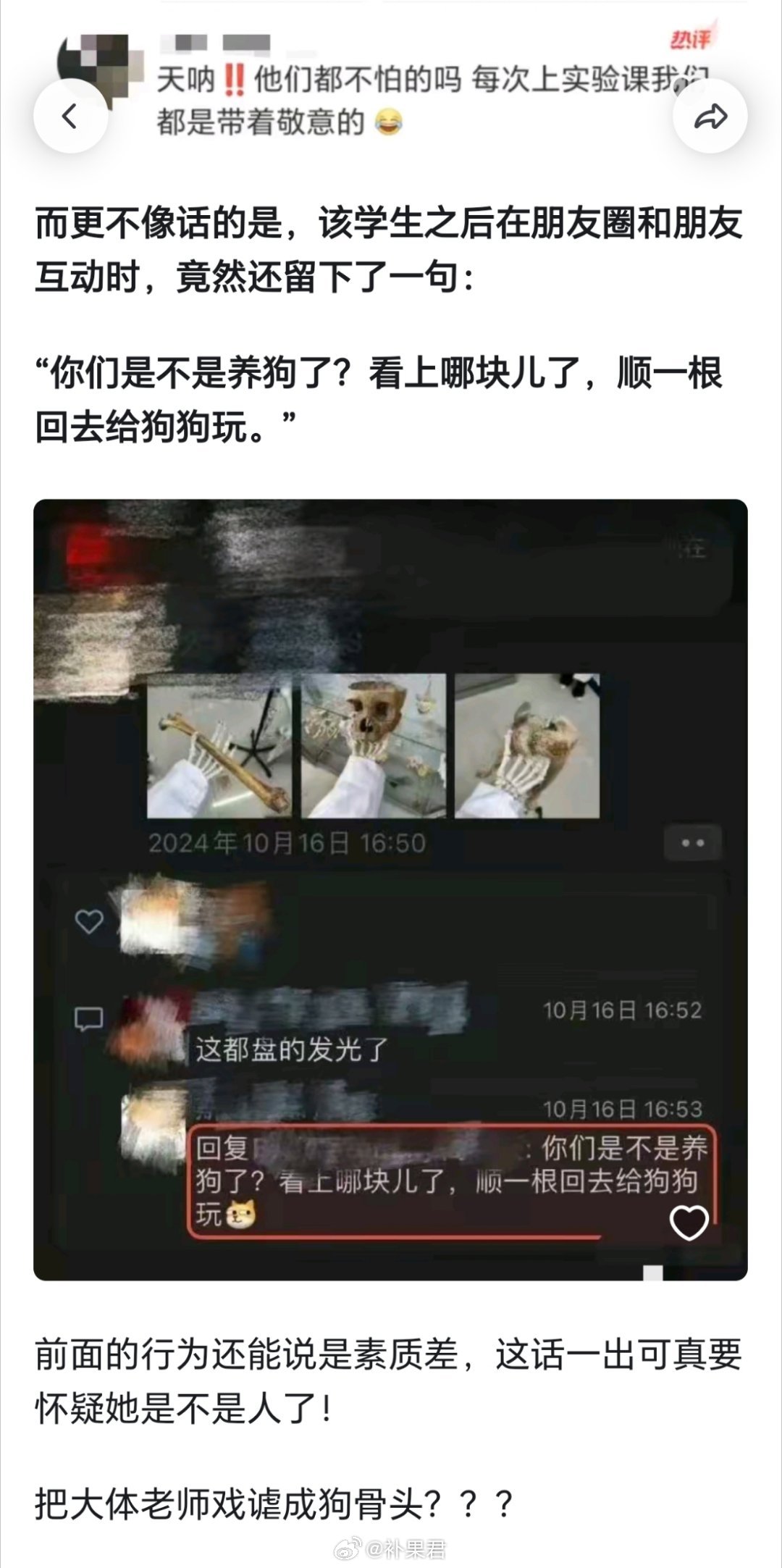
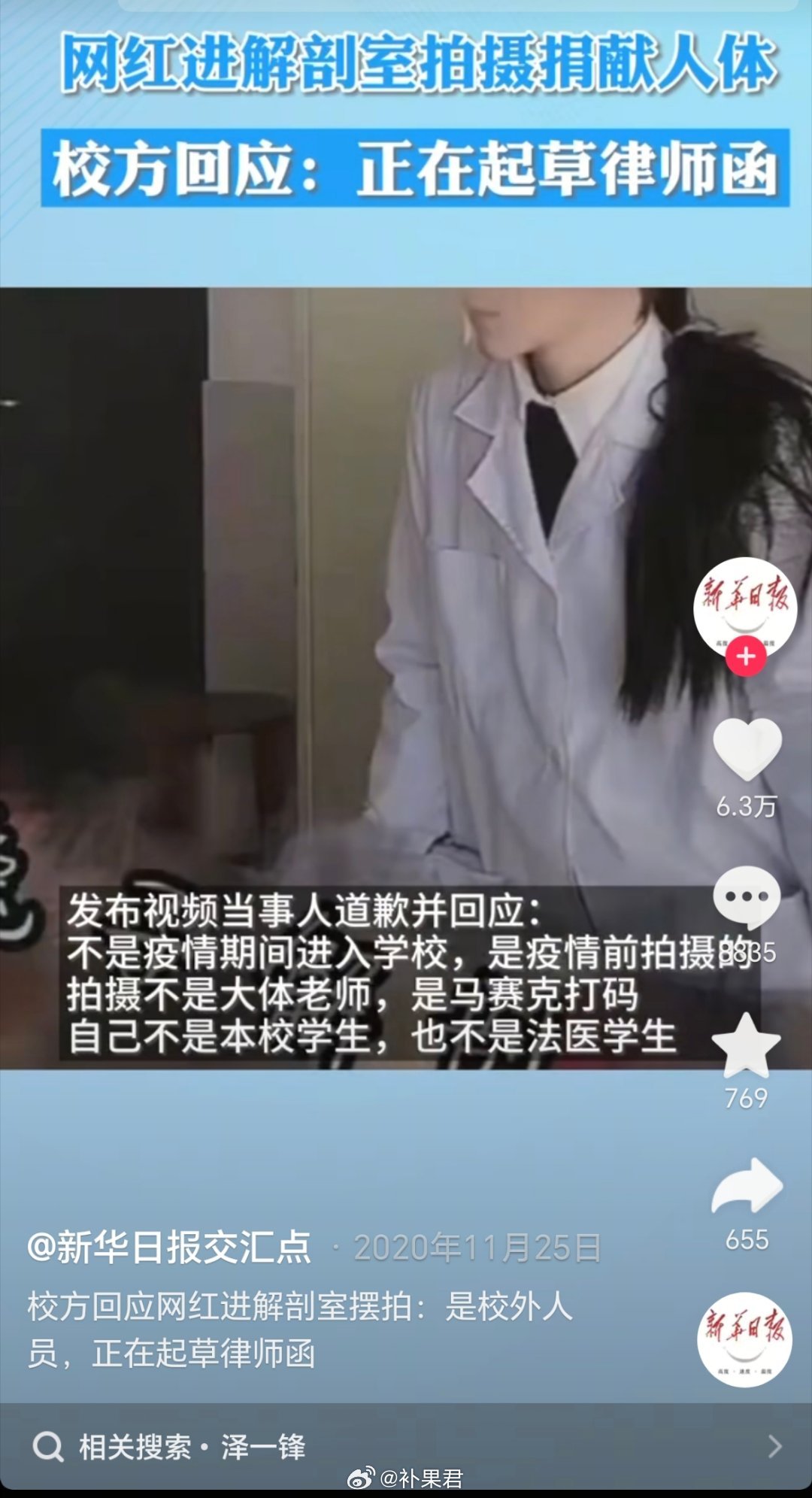
What makes the story land so hard is arithmetic. As of September this year, China had recorded more than 69,000 cumulative body donations — each one a family handing a relative to strangers on the promise that the body becomes a teacher. Medical schools ritualize the debt: the first dissection class opens with silence, bows, salutes. That is the backdrop against which a Weibo user who posts as Buguojun laid out the recent history — 2020, an influencer filming inside an anatomy lab for content; 2022, a medical student secretly photographing a cadaver's private parts and sharing the images to a QQ group where classmates joked and mocked; 2024, students at a medical university in Inner Mongolia posing with a skull online, with one replying to a friend "take one back for the dog to play with" (给狗带一根玩儿). "None of these had any effective follow-up," the post concludes. "It's chilling."
The counter-argument has its spokespeople too. Some posts argue that students are young, curious, and entitled to make mistakes; that the internet's ability to resurrect a photo from a private class is its own kind of violence. First Scene, a news account, put the mainstream response more bluntly: students may be curious and may err, "but they must not trample reverence underfoot" — the first lesson of medicine is learning to stand in awe of life.
What is genuinely at stake is the follow-up. Changsha's departments pled ignorance is the part of the story commenters keep returning to, because the Buguojun tally — four scandals, six years, no visible consequence in any of them — is what makes this round angrier than the last. The skulls get confiscated and the posts get deleted. The 69,000 families who signed the donation forms are still waiting to hear what their trust bought.