Taiwanese Celebrity Couple Falls Victim to $5 Million Insurance Scam
In a startling incident that has captured the attention of both the media and the public, Taiwanese actor Vic Chou, known as Zhou Yumin, and his wife, Yu Hongyuan, found themselves at the center of a high-profile fraud case. The couple was defrauded of approximately 7.75 million RMB (around 34.47 million TWD) by Yu Hongyuan's former close friend, Feng Yaohua, an insurance agent who leveraged her friendship to divert insurance payments for personal gain.
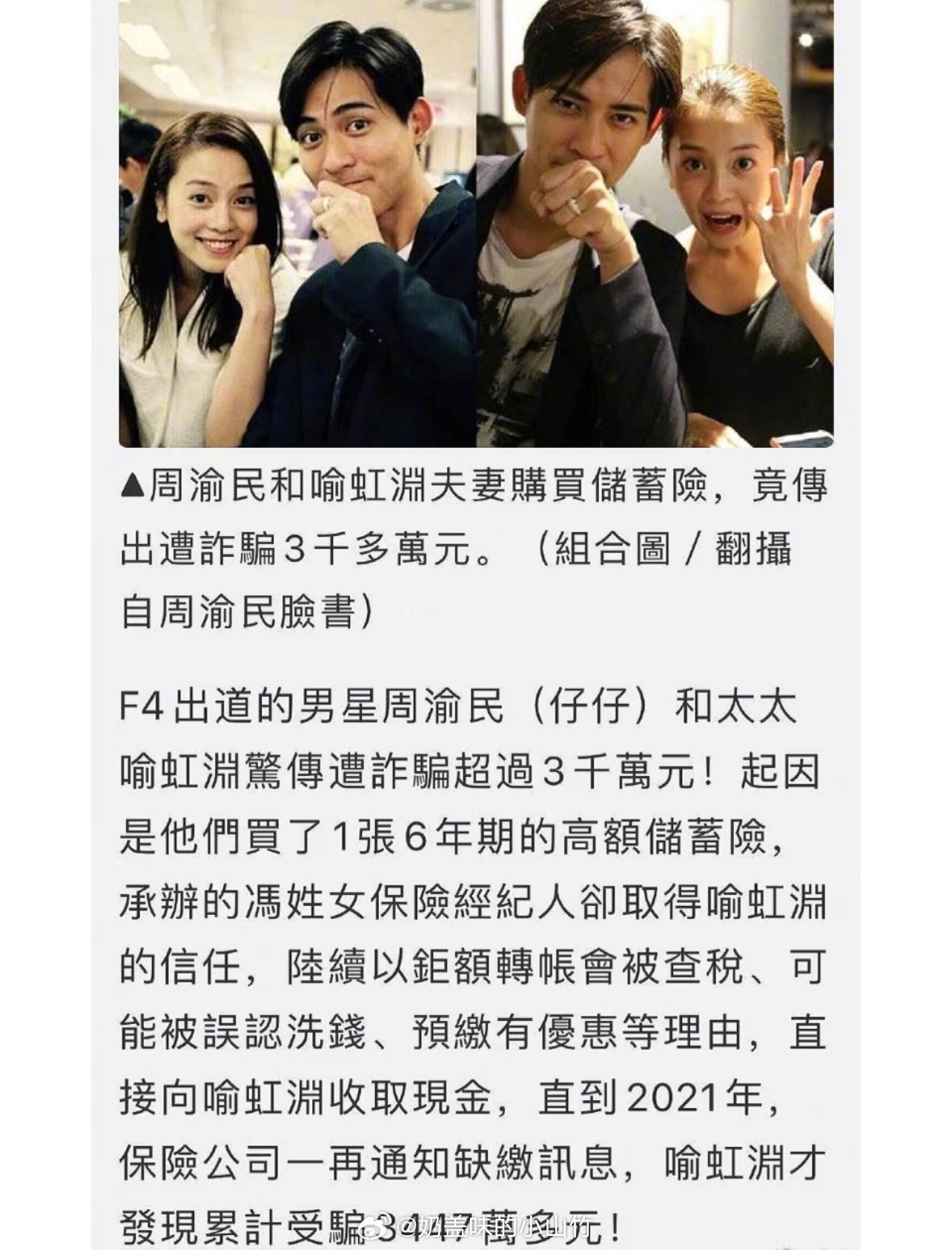
Feng Yaohua's betrayal of trust, involving a 6-year term savings insurance policy purchased in 2018, not only led to significant financial loss for the couple but also brought to light the vulnerabilities within the insurance industry and the broader societal implications of such fraud cases. The incident resonates with many due to the celebrity status of the victims, the significant amount of money involved, and the recent sentencing of Feng Yaohua to 2 years and 8 months in prison for fraud.
The case underscores the need for due diligence in financial transactions, even when dealing with trusted individuals, and highlights the potential pitfalls of blind trust in personal relationships. It also sparks a broader discussion on the importance of trust and financial prudence, especially in an era where financial scams are increasingly sophisticated.
The scam against Vic Chou and Yu Hongyuan not only highlights the personal betrayal by a close friend but also exposes significant loopholes and management deficiencies within the insurance industry. The ability of Feng Yaohua to misuse her position and divert funds without immediate detection raises concerns about agent misconduct, supervision, and the effectiveness of internal control systems within insurance companies.
Furthermore, the case points to a lack of sophistication among consumers regarding insurance processes, with the victims being persuaded by explanations of tax evasion and money laundering risks. This indicates a clear need for enhanced consumer education and awareness regarding legitimate payment channels and red flags for fraud.
The legal ramifications of the case, including the court's civil judgment ordering the insurance broker, her supervisor, and the insurance company to jointly compensate the couple, set a precedent for the responsibility of insurance entities in monitoring their agents and ensuring proper oversight. The incident is likely to prompt a review of consumer protection laws and could potentially lead to stronger protections for policyholders against fraud and misrepresentation.
On social media platforms like Weibo, the public reaction has been a mix of shock, sympathy, and criticism, with many expressing disbelief at the scale of the fraud and the betrayal by a trusted friend. While some comments criticize the couple for their perceived naivety, others argue that blaming the victims ignores the maliciousness of the fraudster and the sophistication of the deception.
In conclusion, the fraud case of Zhou Yumin and Yu Hongyuan serves as a critical lesson across multiple domains, emphasizing the importance of vigilance and proper financial protocols, regardless of personal relationships. It highlights structural vulnerabilities within the insurance industry and underscores the need for robust regulatory frameworks and enhanced consumer education to safeguard against financial fraud.