'Why Must I Work and Do the Housework Too?' A Viral Complaint Reopens China's Second-Shift Debate
A post asking why one person should have to hold a job and keep a home became one of Weibo's most-argued-over questions this week. The answer, for many Chinese women, is obvious — and so is the pushback.
Work is exhausting; so is housework; and no one, the post argued, should be made to do both. "If a person has to work, they shouldn't also have to do housework — and if they have to do housework, they shouldn't also have to work," the writer behind a Weibo account with a following wrote this week. "Why both? Why?" The complaint that followed was less about any single chore than about the arithmetic of daily life: every day the tasks arrive "N at a time," leaving no hour that belongs to oneself. The post drew more than 5,000 likes and carried the topic "why must I both work and do housework" (凭什么既要工作又要做家务) up Weibo's trending list.
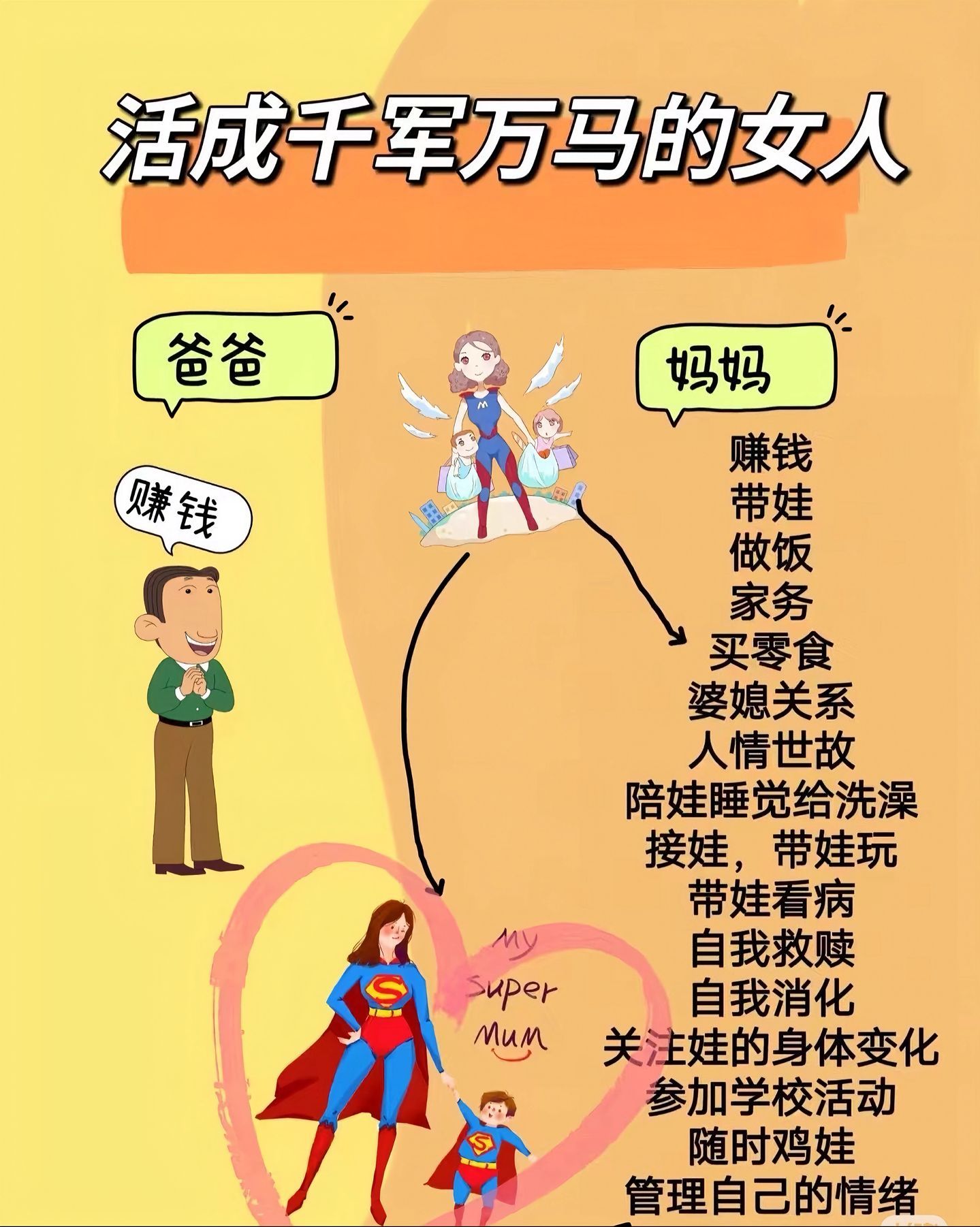
The topic struck a nerve because of who is understood to be asking. In most Chinese households both adults work, and the presumption that the second shift — the cooking, laundry and childcare that follow the paid one — lands on the woman remains strong enough that the replies said it out loud. "Who exactly invented mothers?" one post asked, in a line widely echoed: someone who "has to work hard and also wash, cook and raise the child — one person living as a small army of a thousand." An accompanying graphic gave the two parents unequal columns: the father's single entry read "making money," while the mother's list ran through childcare, cooking, housework and, last, "managing her own emotions."
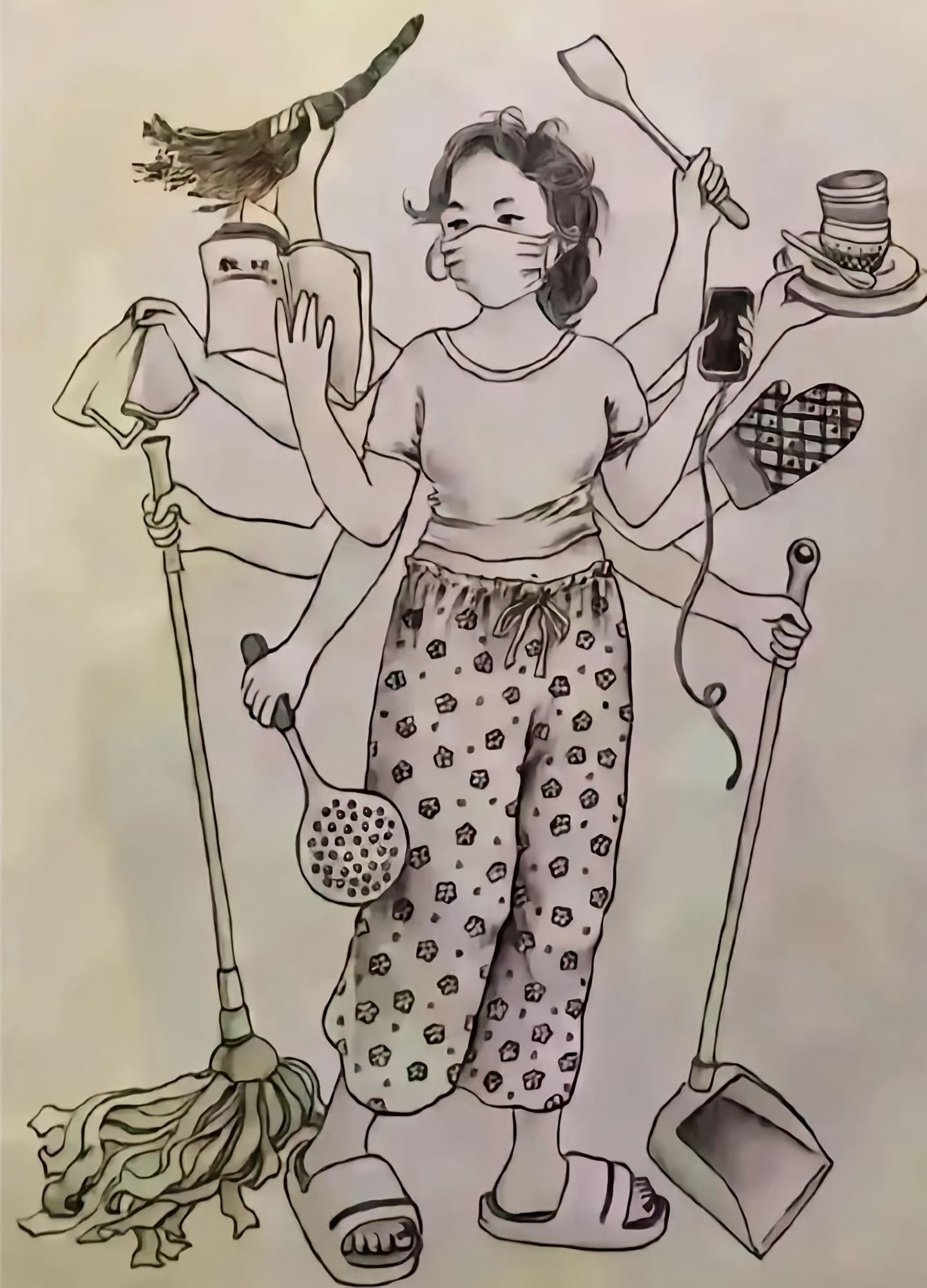
That image — a woman in pajamas and a face mask drawn as a six-armed deity, mop in one hand, spatula in another, smartphone in a third — is a familiar figure on the Chinese internet, a folk saint of the overloaded. It shares a lineage with the "supermum" infographics that circulate every few months, and with older slang like "widowed-style parenting," coined for fathers who are present in the household but absent from its work.
Not everyone accepted the premise. A popular legal-commentary account called the hashtag a "giant-baby" question — 巨婴, the slang for an adult who expects others to live his life around him. Everyone who lives anywhere does housework, the account argued; with two people under one roof, either one does it, the other does, or they split it, and someone living alone does it all himself. "What exactly is the 'why must I' here?" The riposte drew its own hundreds of likes, which is the shape of the argument: one side hears in the hashtag a demand for a fairer division of labor, the other an abdication of adult life.
The disagreement runs deeper than one trending topic. It surfaced again only days after Chinese social media warmed to an anti-consumerist rule of thumb — don't buy things that add to your workload — and it will outlast both posts, because the underlying conditions do not move quickly. With extended families often far away and paid help costly in the big cities where both partners must earn, most couples have no one to outsource the arithmetic to. The hashtag cannot settle who does the dishes; it can only note, with some exasperation, that the same person usually already is.