How a Rare Blood Type Settled a New Father's Paternity Doubt
A Shenzhen father of type AB and a mother of type A faced a newborn with type O blood — schoolbook evidence of infidelity. The hospital's answer was CisAB, a blood-type subtype rarer than 'panda blood' that fuses the A and B genes onto one chromosome and lets an AB parent pass on an O.
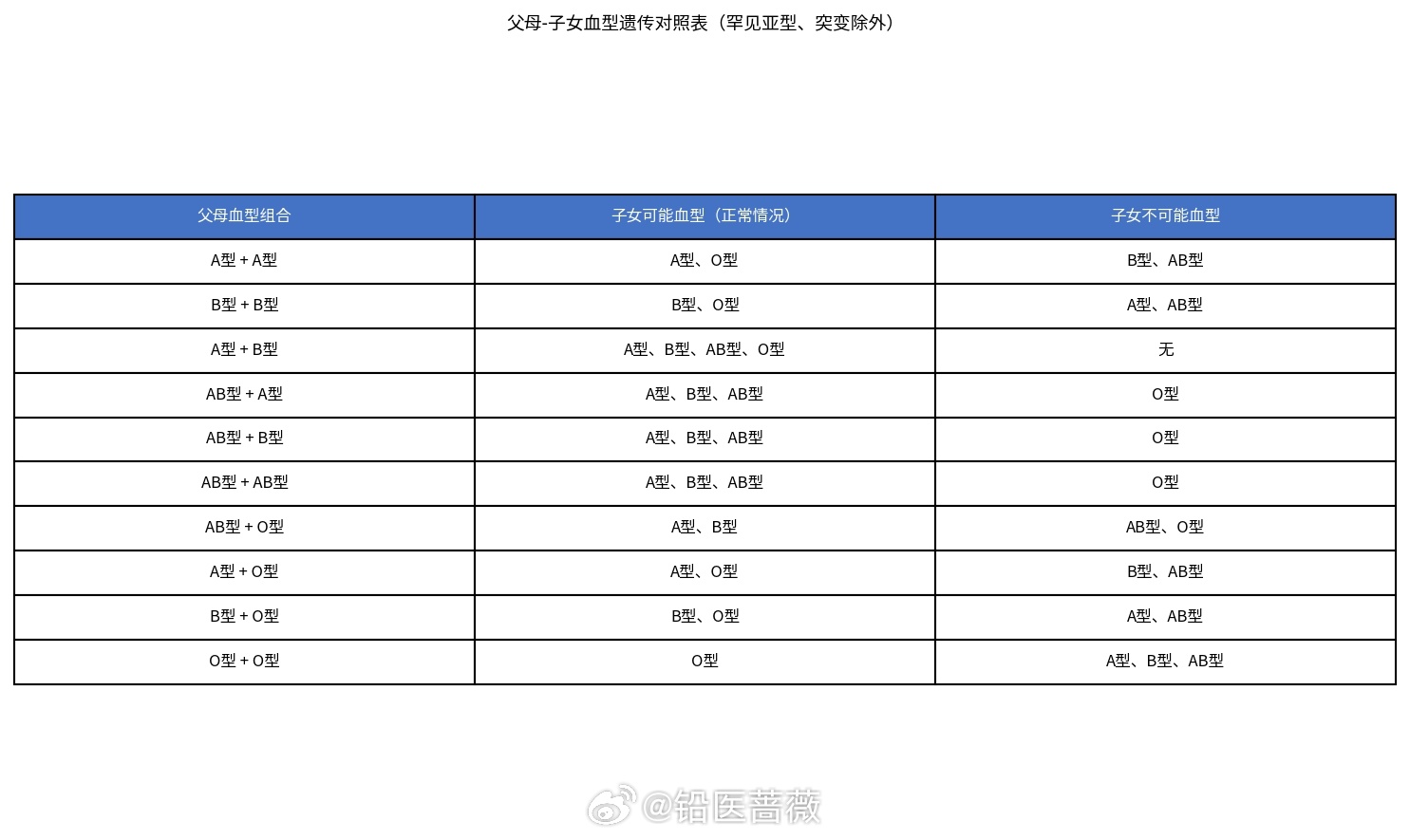
When a daughter was born to a couple in Shenzhen this week, the blood test read like a contradiction: the father, Mr. Wang, is type AB; the mother is type A; the baby is type O. The schoolbook chart every Chinese student memorises rules the combination out, and Mr. Wang reached the conclusion the chart implied — that the child was not his. He took her instead to Southern Medical University Shenzhen Hospital, where the laboratory supplied an answer that vindicated everyone: he is CisAB, a rare blood-type subtype that ordinary typing cannot see. The hospital's account of the case, reported by Haibao News, has been liked more than 4,000 times as of Saturday.
The genetics is a small lesson in how textbook diagrams compress reality. In an ordinary type-AB person, the A gene and the B gene sit on two separate chromosomes — the "trans" arrangement. In CisAB, both are fused onto a single chromosome, leaving the other chromosome free to carry a silent O. Mr. Wang's chromosomes read, in effect, "A+B" and "O"; he can pass the O along. His wife, type A but carrying an O allele, can do the same. The daughter received an O from each parent. The inheritance chart circulating on Weibo under the case carries a footnote that quietly covers the entire episode: rare subtypes and mutations excluded.
Rare is the operative word. A medical explainer that trended alongside the case put CisAB's frequency at roughly one person in 170,000 to 580,000 — scarcer than "panda blood", the Rh-negative type that serves as China's household shorthand for rare blood. CisAB is routinely misread as ordinary AB in standard testing, and confirming it takes gene sequencing or a family study. New variants are still being added to the international gene bank, which is part of why the case fascinated the medical posters who spent the day unpacking it.
The practical point the doctors wanted to land is not about paternity but transfusion. "CisAB is not a disease — just a natural variation of the blood-type gene," the hospital explained; "it is often mistaken for ordinary AB. If you ever need a transfusion, be sure to tell the doctor in advance that you are CisAB, to avoid the risk of haemolysis." A CisAB recipient's serum can carry weak anti-B antibodies, so a routine AB or B transfusion is the dangerous move; the safer choices are washed red cells from type O or A blood, or blood banked from the patient's own body ahead of surgery.
What made the story travel is the two sentences before the science. In China, where a commercial paternity-testing industry sits within reach of any anxious family, blood type has long served as the cheap folk proxy — a father who knows his own type can do the arithmetic in his head, and the arithmetic in this case said betrayal. The medical bloggers who rode the trend made that their explicit moral: "When blood types don't match, seek professional medical help first — not blind suspicion," one wrote in the passage that drew the most agreement.
The daughter, it goes without saying, is healthy, and the family's crisis dissolved into a laboratory printout. What remains is the footnote. The chart that nearly condemned this marriage — and still condemns thousands of misread results a year — now carries, in its fine print, the exception that saved this one.