The Diaper Scare That Wasn't: Regulators Clear China's Diapers, and Strip the Doctor Who Sounded the Alarm
Four ministries say 368 batches of Chinese baby diapers contain no formamide, reversing a June report that terrified parents — and the Shandong doctor who made the claim has lost his license for testing without consent and announcing unverified data.
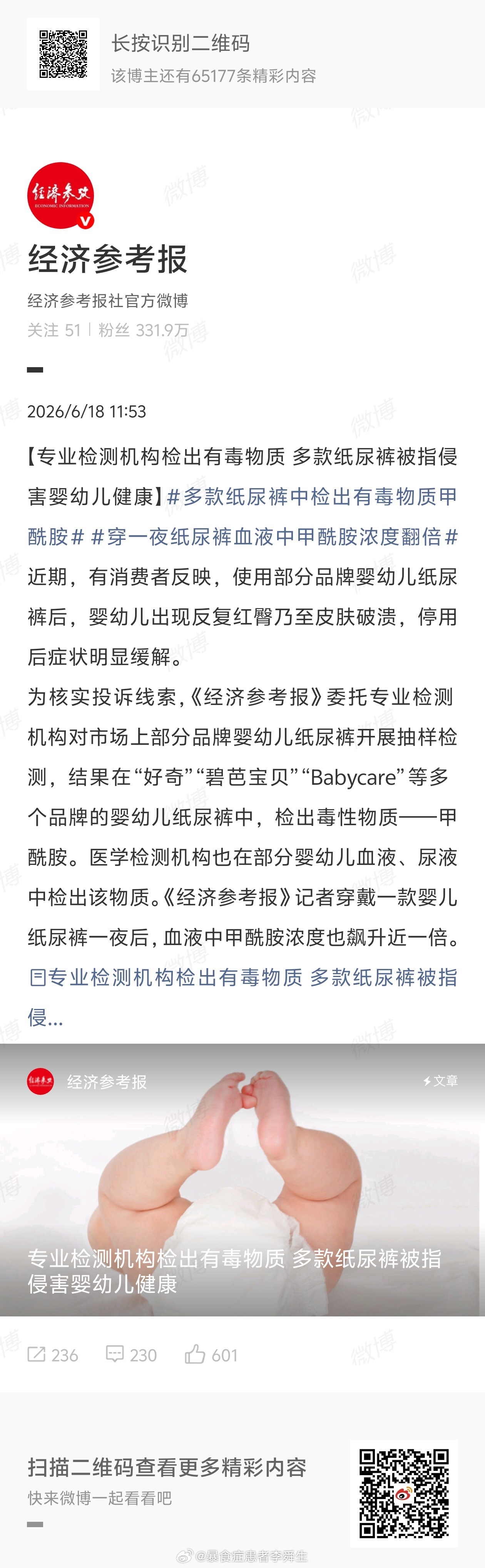
In June, a report by the state-run Economic Information Daily set off four months of fear among Chinese parents: tests had supposedly found formamide, an industrial chemical whose name has become shorthand for "toxic" in Chinese consumer scares, in baby diapers from brands including Huggies, Biba and Babycare, and a circulating hashtag claimed a baby's blood concentration of the chemical doubled after a single night in a nappy. On Thursday, the state's answer arrived, and it ran in the opposite direction: a joint investigation by four ministries found that not one of 368 diaper samples, spanning 180 brands and every one of China's 168 infant-diaper manufacturers, contained formamide.
The verdict came with a second half that has dominated the day's discussion: someone is being punished, and it is not a manufacturer. According to the Shandong provincial health commission's notice, the doctor behind the testing — surnamed Yu, a deputy chief physician at the Shandong Provincial Public Health Clinical Center — ran his diaper and blood-sample tests without ethics approval or patient consent, then released figures to the media before verifying them. His license to practise medicine has been revoked, he is barred from clinical research for five years, his professional title has been cut two grades, and he faces a year under Party discipline review. Five managers at his center were disciplined alongside him, from a formal talking-to to removal.
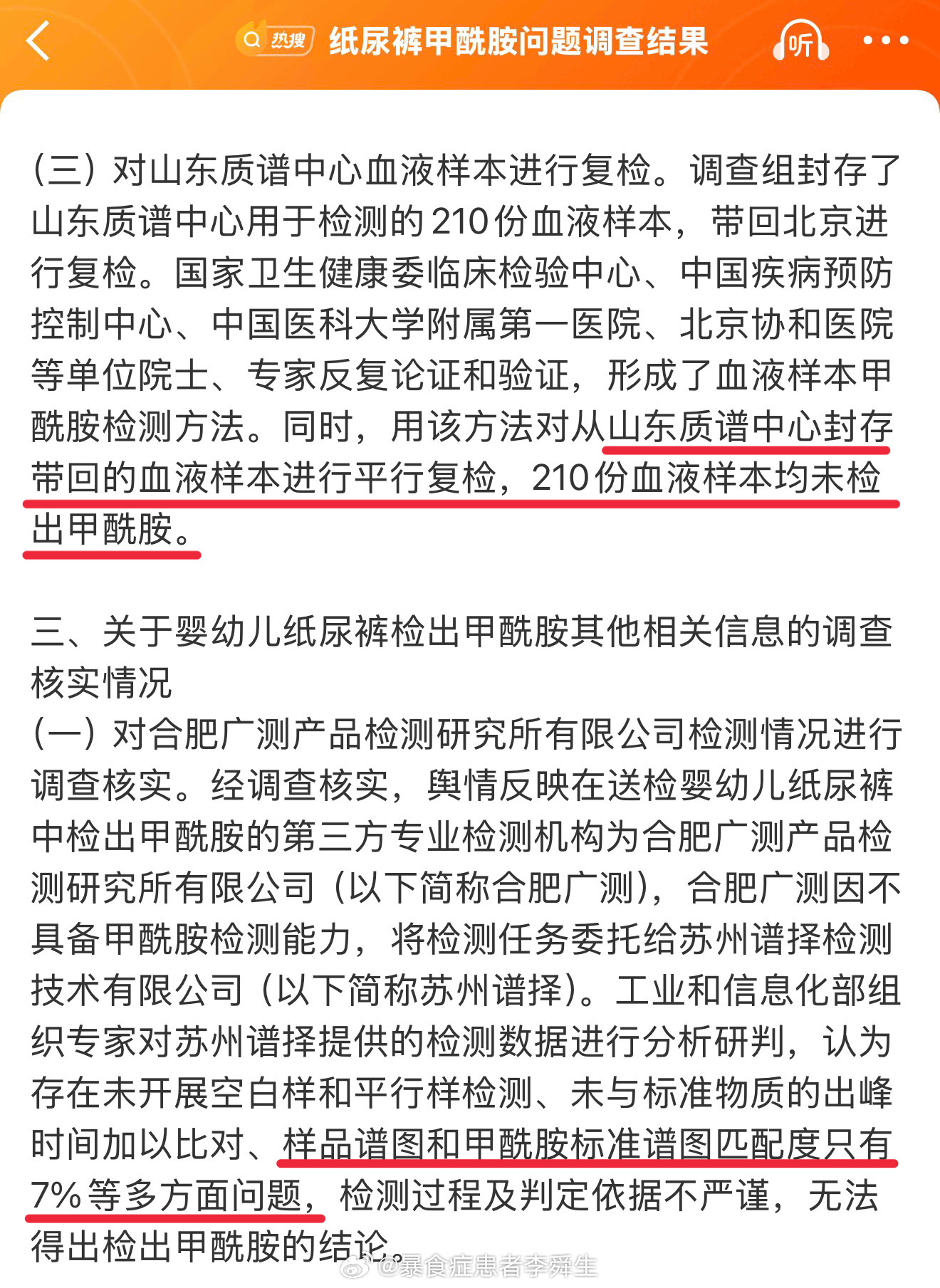
The technical findings, published with the announcement, dismantle the original scare piece by piece: retests of 210 archived blood samples turned up no formamide at all, and the spectral "positives" that started it all matched the formamide reference spectrum by just 7 percent — an artifact, the investigators concluded, of sloppy third-party laboratory work.
For an international reader, the intensity of the episode is easiest to understand through one fact of Chinese life: infant-product safety is the country's most sensitive consumer nerve, scarred by the 2008 melamine milk scandal that sickened some 300,000 infants. Any claim that a product touching a baby's skin or blood is toxic spreads at a speed no retraction can match — which is exactly why the penalty here is being read as a message.
The reading is contested. On Weibo, where the punishment notice trended for hours, some users welcomed a demonstration that unverified health scares carry a price, while others asked why the notice named only the doctor and his lab. "But I think the influencers and media who pushed this traffic also bear responsibility," one user wrote — the original June report carried a state outlet's masthead, after all. On Zhihu, where the verdict became one of the day's most-followed questions, the same distinction was being drawn: the doctor broke research-ethics rules that exist for good reasons, yet the fear he detonated was laundered through respectable media that face no sanction at all.
The notice ends with a pledge of stricter supervision of medical research. The harder question it leaves open — asked aloud, in so many words, under the trending topic — is who answers for the four months of parental panic, now that the man who started it has lost his license to practise.