What China's New Five-Year Health Blueprint Promises Patients
At the National Health Conference in Beijing on October 12–13, Xi Jinping set the course for the 15th Five-Year period and a State Council plan laid out 19 indicators and 24 tasks — from clinics closer to home to food safety — on the road to the "Healthy China" goal for 2035.
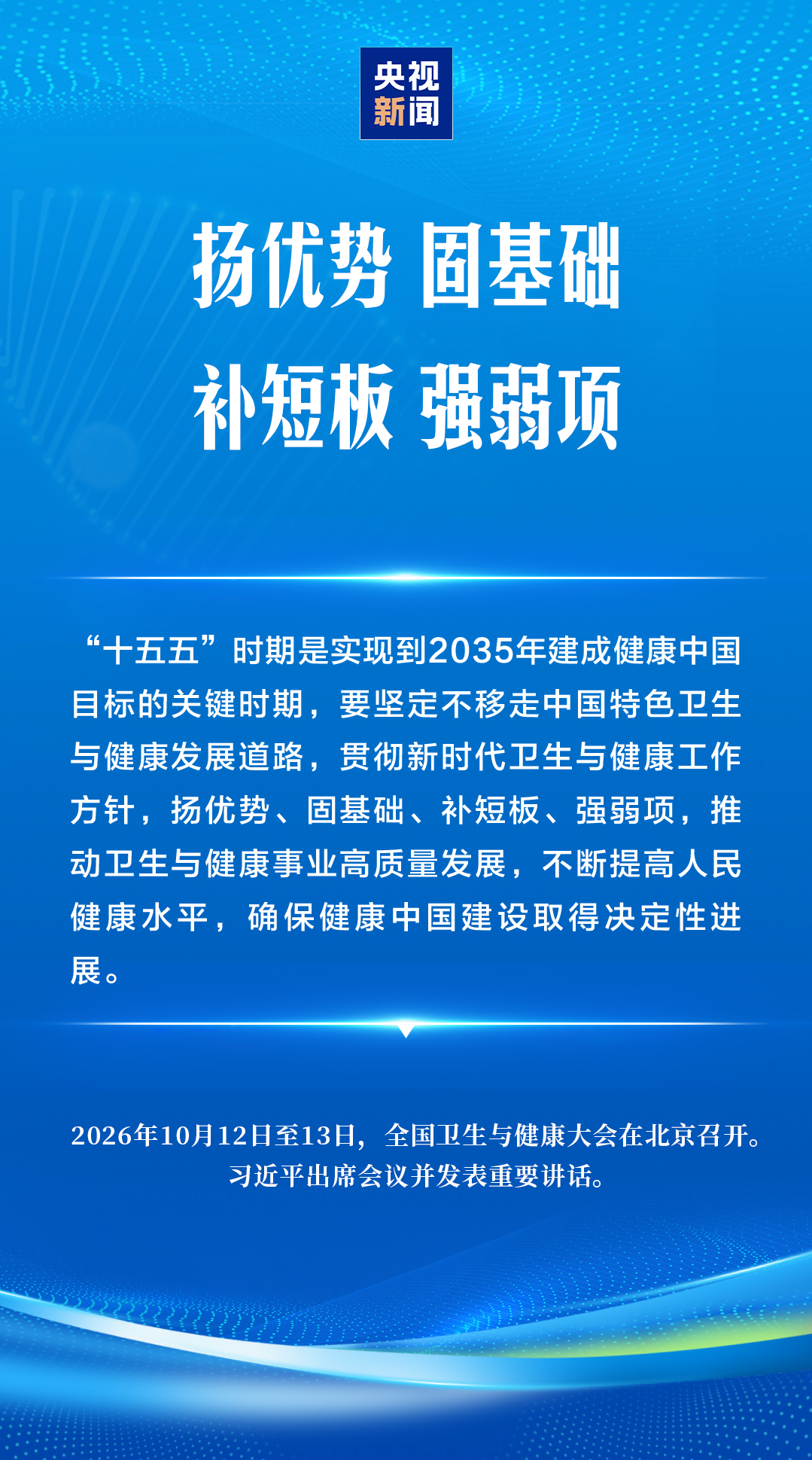
China's health policy for the next five years was set on October 12 and 13, when the National Health Conference convened in Beijing. Xi Jinping told the gathering that the 15th Five-Year period, running to 2030, is the decisive stretch toward the "Healthy China" goal set for 2035, and that the country must "unswervingly follow a path of health and health development with Chinese characteristics" — the phrase that sat at No. 1 on Weibo's trending list on Monday, pushed there by state broadcasters within minutes of the speech.
"The people's health is an important marker of whether a nation is prosperous and a country strong," Xi said (人民健康是民族昌盛和国家强盛的重要标志). The "Chinese characteristics" in the formula are concrete: a state-led system that state media credits with building the world's largest medical-service, disease-control and medical-insurance systems, with traditional Chinese medicine given a place beside them, and prevention placed ahead of treatment.
The meeting coincided with the State Council's publication of a National Health plan for the five years ahead: 19 headline indicators and 24 key tasks across five areas, by the summary circulating on Baidu's news boards. CCTV's explainer reduced the speech to six capabilities the system must build — health management and disease prevention and control among them — under a poster slogan that translates as "leverage strengths, consolidate foundations, shore up weak points."
For patients, the visible agenda is care close to home. CCTV paired the conference with a feature on Shanghai's rollout of paid clinic-companions who escort elderly patients through registration, tests and prescriptions, and Xi was quoted on food safety: "strengthen supervision and guard the safety of what is on the tip of the tongue" (守护好舌尖上的安全). Whether the system can staff that promise is a live question. As we covered last week, the resignation of a veteran pediatric nurse over night shifts left her hospital's complaints doubled, and many of the small clinics Chinese patients actually visit first keep their queues short with antibiotic-and-steroid drips that cure a fever overnight.
The plan's own benchmark is "decisive progress" toward Healthy China by 2030. The test it sets itself is one patients will feel directly: care nearer to home, and staffed well enough to last.