China Opens Civil Service Recruitment for 2027: 35,700 Jobs as Graduates Chase the 'Shore'
The 2027 national civil service exam cycle opened with 35,700 posts on offer — and against a private job market anxious enough that a graduate's 3,000-word account of her ruined-and-recovered first three years became the week's most shared reassurance.
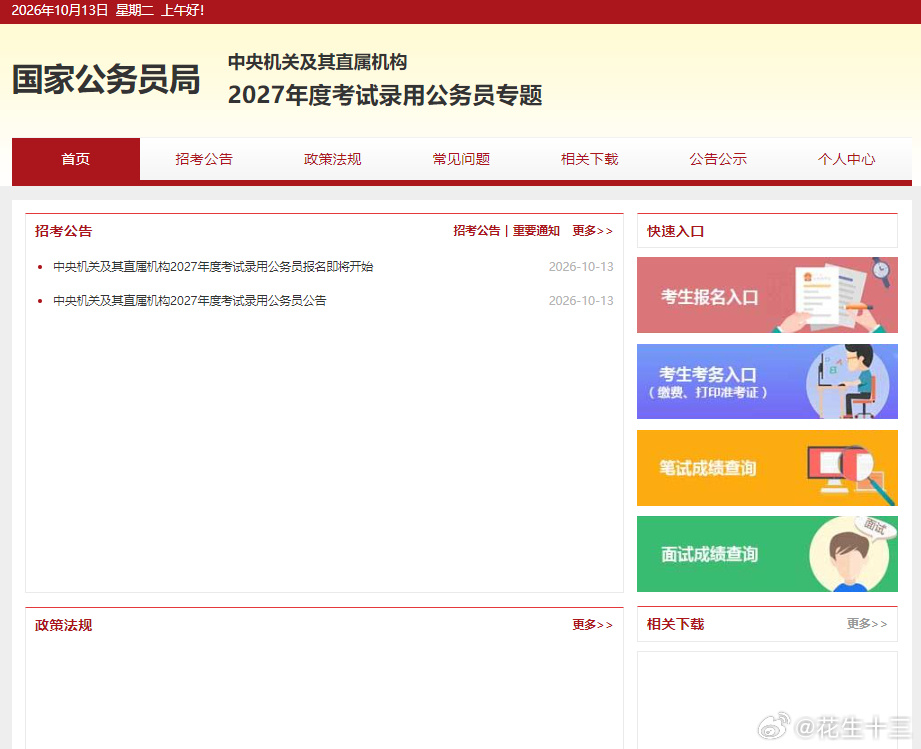
The notice that opened China's national civil service recruitment on Tuesday is a short document with one number that does all the work: 35,700. That is how many posts the central government and its agencies plan to fill through open competition in the 2027 cycle — an annual rite that turns autumn into a season of forms, job tables and score-line arithmetic. Registration runs October 15 to 24, the written exam falls on November 29, results are due in January 2027. Within hours, the announcement's post had the details pinned in exam-prep feeds, and the official recruitment portal itself was circulating as a screenshot.
The exam has a nickname-idiom every Chinese reader knows: passing it is shàng'àn, "landing ashore." The sea one leaves behind is the private job market — and this year's tide of commentary about landing is unusually honest about the swimming.
Test-prep firms posted minute-by-minute checklists the day the announcement dropped: download three documents, set calendar reminders, filter the job table by education, major and political affiliation, watch the "remarks" column for hidden tripwires like night shifts and fitness tests, submit mid-window rather than early, because an application rejected on qualification cannot be re-filed. Two cycles ago, more than 1.5 million people had registered by October 21, 2024, partway through that year's sign-up window — a figure prep accounts still recirculate as calibration. The competition ratio is the point: for a cohort that keeps growing, 35,700 openings are not many.
That is the backdrop against which the week's most affecting post landed. Under the tag "less than three years since graduation, life isn't ruined," a 2023 graduate of a second-tier teachers' college wrote out her three years: an internship at a company that turned out to sell art courses by trapping students in loan installments, three months' wages never paid; a slumlord dispute; a tutoring job that collapsed when the branch closed; a partner who blackmailed her with intimate photos; her father's heart attack; a stretch, she writes, when she cut her wrist and came close to jumping into the sea. She reported the extortion — the whole thing, she notes with surprise, took the police under an hour — moved into manufacturing, weathered a lung scare and a year out, and is now employed in a technical job with a partner and two cats. "Life can't be ruined, because we never had that many eggs to ruin in the first place," she jokes (人生不会完蛋的,因为我们压根没那么多蛋) — a pun that carried the post past 7,000 likes. The top reply reached for a reigning meme: the world is a ragtag stage crew (草台班子) — which really means, as the reply put it, that the world's tolerance for error is far higher than you imagine.
The same anxiety is being harvested. On Baidu's board this week sits a warning about brokers charging graduates 30,000 yuan for internships at big tech firms that come with no real work attached — a scam built on the exam's mirror image, desperation dressed as initiative. The site has covered the market's odder corners before, including graduates who now face AI interviewers before they face humans.
The exam's certainty — a state salary, a title, an ashore — is what the whole apparatus sells. The written exam falls on November 29. The open question the week's posts leave hanging is whether the shore is where this generation actually wants to land, or simply the only boat still taking passengers.