Seven SUVs, One Template: A Czech Critic's Paris Post Starts China's Copying Debate
A Czech car critic's post arguing that China's big electric SUVs at the Paris Motor Show are now copies of each other — not of Western cars — has turned into a week's argument on Weibo, complete with a Li Auto executive's deadpan reply: 'They're only copying one company.'
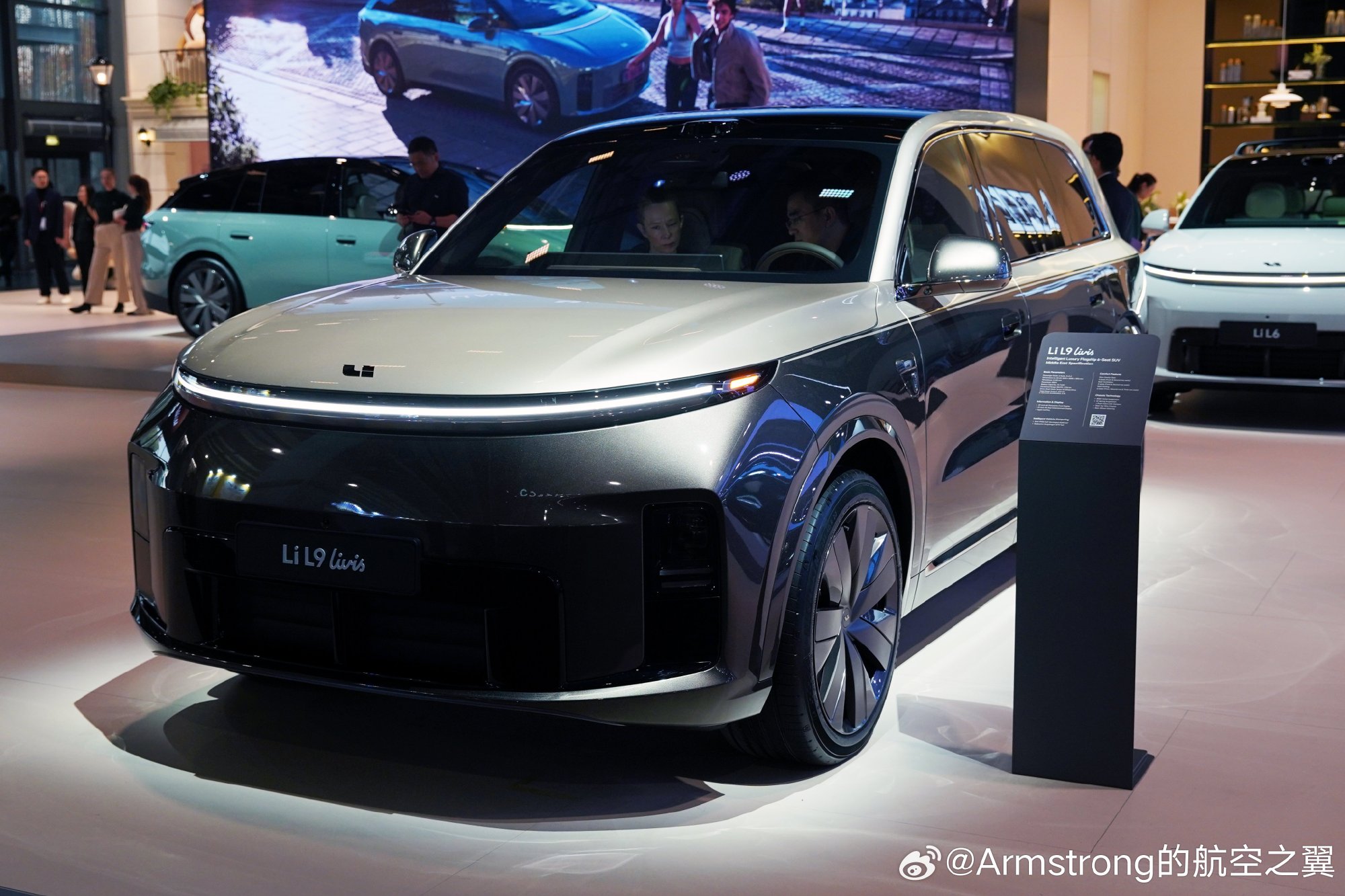
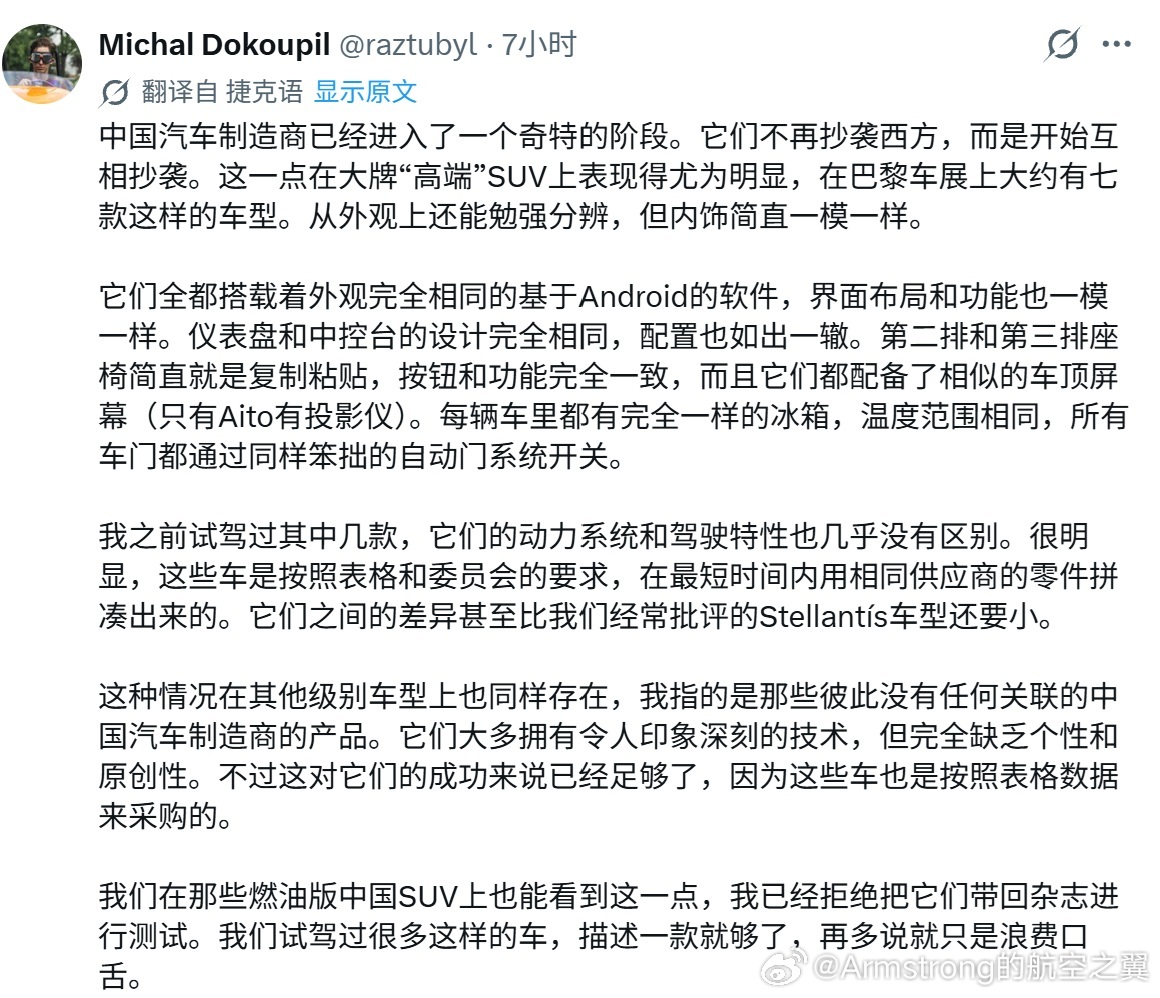
The critique that turned China's motoring Weibo into a week-long argument did not come from a Chinese rival or a Western incumbent, but from a Czech motoring writer. Michal Dokoupil's column, posted in Czech on X and machine-translated into Chinese by the aviation blogger Armstrong, argued that Chinese carmakers had entered "a strange phase": they no longer copy the West — they copy each other. At the Paris Motor Show, he counted seven near-identical Chinese "high-end" six-seat SUVs, with interiors so alike that their differences were smaller than those between models from a single Western group: the same Android-style interface, the same seat layout, the same roof screen, the same fridge, the same electric doors. They read, he wrote, as if assembled from a shared supplier catalogue to a spreadsheet specification. He had stopped testing Chinese combustion SUVs for his magazine altogether.
The reply that turned a foreign opinion piece into a domestic story came from within Li Auto, the company whose cars popularised the very formula being described. An executive known on Weibo as Ying Ge ("Hard Bro") reposted the item with a one-line correction: "It's not really copying each other — they're only copying one company" (也不是互相抄袭吧,只抄袭了一家). The joke, which he did not spell out, was transparent to every reader: his own employer is the template, the maker of the boxy six-seat SUV-with-a-fridge that much of the industry has spent two years chasing.
The industry commentary that followed was notably unsentimental. Zhu Yulong, one of China's most-read auto analysts, argued that the sameness is half supply chain and half demand: the same public-version components — Huawei's HarmonyOS cockpits, CATL batteries, ZF air suspension — are on sale to everyone, and every premium brand wants the same six seats, fridge and rear entertainment. "The shell is easy to copy," he wrote. "Chassis tuning and a car's overall feel cannot be copied. When this wave of sameness passes, what survives is real ability."
The counterargument came from the market, as another blogger put it: 60 brands showed cars in Paris and 25 of them were Chinese; Geely alone took five halls, and factories in Hungary and Spain are rising behind the display stands — traction that follows Chinese carmakers' expanding European beachhead. European readers under the post, he noted, mostly asked a simpler question: European cars cost more and offer less, so why buy them? Brussels has answered the same phenomenon with quotas, capping Chinese hybrid imports at 350,000 a year under a deal both sides called breathing room.
Dokoupil's harshest line — that the cars lack individuality — is precisely the accusation a maturing industry expects to outgrow. Chinese carmakers spent a decade being called copycats of German designs; being told they now imitate one another is, in a grim way, a promotion. The debate the post started is really about what comes next: whether China's crowded premium-EV field, having converged on one winning shape, can now afford to differentiate — or whether the fridge, the six seats and the roof screen are simply what a car is, from here on, everywhere.