Why Top Esports Keeps Losing Its Star to US Visa Interviews
ZUIAN's third US visa interview ended in refusal on Wednesday, and this time the Weibo conversation turned on the paperwork itself: Top Esports had applied three times for visitor visas rather than the athlete visa his profession requires, and is now paying American lawyers to file for one 'even if there's only a slim chance.'
The third time went the way of the first two. On Wednesday, ZUIAN's latest US visa interview ended in refusal — leaving Top Esports, one of the flagship teams of Chinese League of Legends, to play the World Championship without a player it has spent the autumn trying to bring along. The club had already turned to the veteran 369 to fill the gap after the second refusal, as we covered last week. What changed this week is that the Weibo conversation stopped being about bad luck and started being about paperwork.
A detail that had gone unremarked is now the story: posts circulating since Wednesday morning point out that TES applied three times for B visas — the American visitor category — rather than the P-class visa reserved for professional athletes. The trade-off, as one widely shared explainer set it out, was speed against fit. B visas are quick to arrange but live or die at the interview; competing on one means the player's salary stays paid at home in China, with only prize money collectible abroad. The P visa is the compliant route for a working athlete, but its pre-approval runs long — start it late, the post noted, and the tournament is over before the file clears. Three interviews, three refusals: the implicit theory making the rounds is that consular officers kept declining to treat a salaried professional as a visitor.
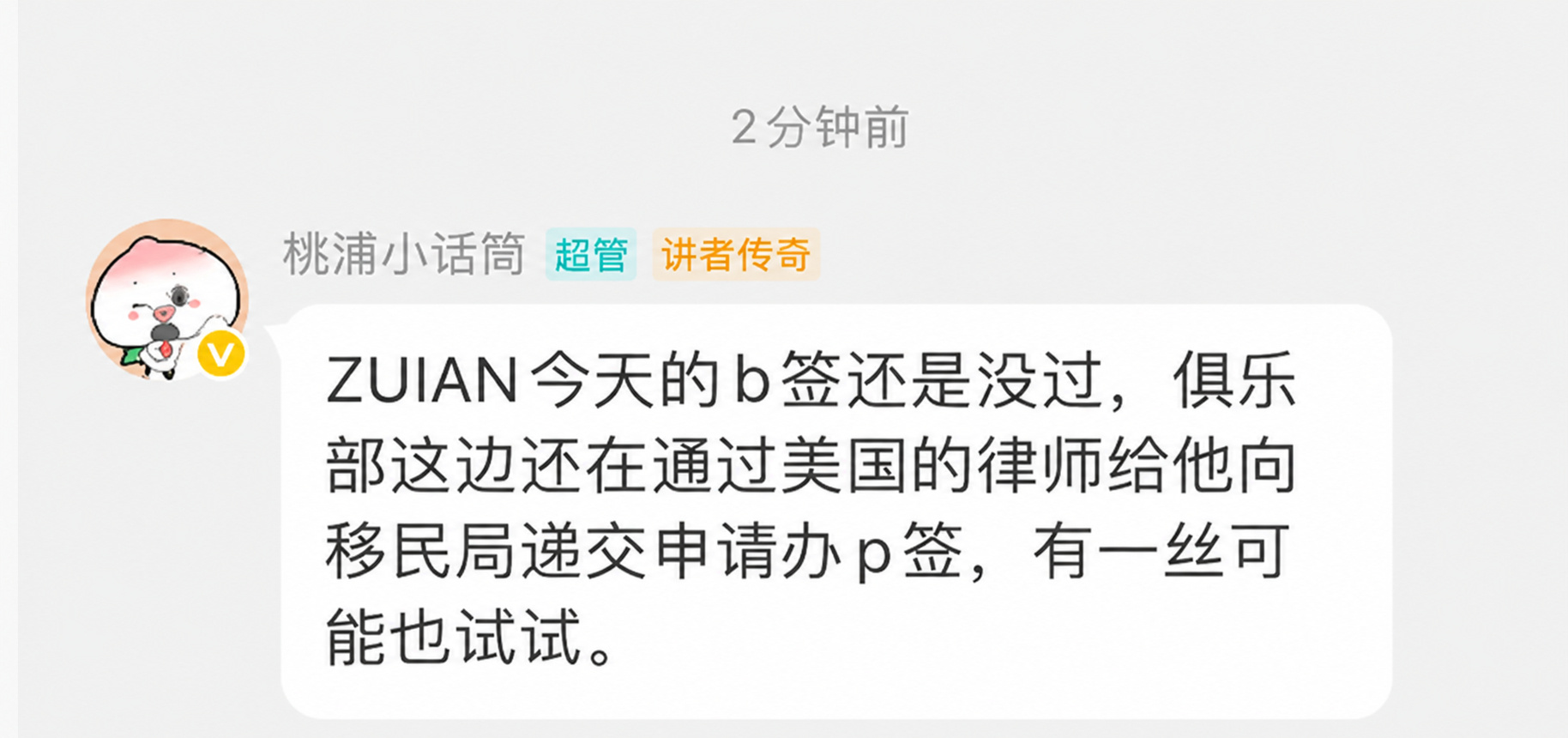
The club has now changed course, and the change is public. A screenshot of an esports insider's post, liked more than 2,800 times, reports that Wednesday's B-visa interview failed like the others, and that TES has American lawyers filing a P-visa petition with US immigration — "even if there's only a glimmer of a chance, we'll try." The same post relays the club's own assessment of the calendar: whatever happens with the petition, the earlier matches are already out of reach. TES's next game on the tournament schedule falls on October 24.
For fans the arithmetic is bleak. "ZUIAN is numb," one wrote, rating the P-visa odds "very, very slim" — and asking the question the refusals now force: whether he will manage to enter the United States at all. Three refusals on a record is not a footnote; consular officers see the history, and every future application starts from the question of what has changed.
The episode has wider company. Esports is one of China's showcase industries — an Asian Games medal event played before stadium crowds, franchises with corporate owners and millions of followers — and its calendar is global by design, with players crossing borders on short notice and in numbers. The B-for-P distinction that decided ZUIAN's autumn is exactly the kind of administrative detail a club can defer until it becomes the story. The petition is in. What the club cannot hurry is the answer — and three refusals now sit on ZUIAN's record for every future application to weigh.