Where the ¥250,000 Concert Tickets Come From: Inside the Gray Market Around Xiao Zhan's Nanjing Shows
Xiao Zhan's first solo tour put 22,020 tickets on sale in Nanjing against more than five million "want to see" registrations — and sold out in seconds, crashing the Damai platform. A Pear Video investigation has since mapped where the scalpers' tickets actually come from, and the answer points upstream of the fans: hired proxy-buyers, bot farms, and the industry's own internal allocations.
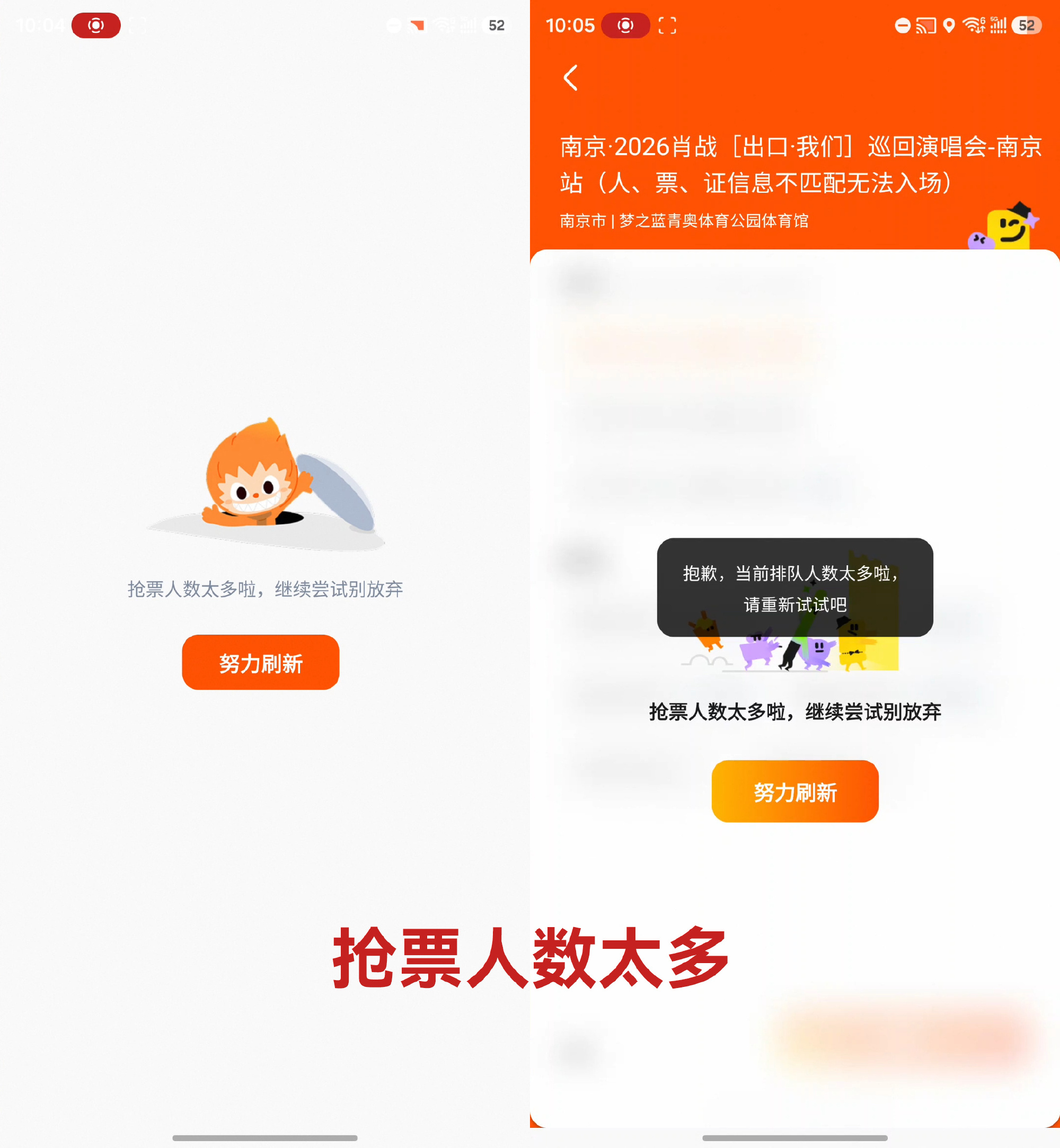
The sale opened at 10:05 on the morning of October 15, and Damai, the ticketing platform, barely survived the opening seconds. Both Nanjing dates of Xiao Zhan's "Exit · Us" (出口·我们) tour — his first solo concerts in a decade-long career, announced just two days earlier — vanished into "sold out" almost instantly, under a "want to see" counter that had climbed past five million. Through the crash, fans refreshing in the queue saw the same orange screen repeat itself: too many people grabbing tickets, please keep trying.
"Did the sale even have one second in which tickets existed? I never got close — just refreshing, over and over," one fan wrote afterwards. Even professionals struck out: another user noted that an acquaintance who buys and resells tickets for a living came away empty-handed too, and put the odds in the most local terms available — it felt harder than the national civil-service exam, China's byword for impossible competition. The arithmetic behind the despair: 22,020 tickets across two days at a venue that seats roughly 20,000, with the dearest seats listed at 1,960 yuan.
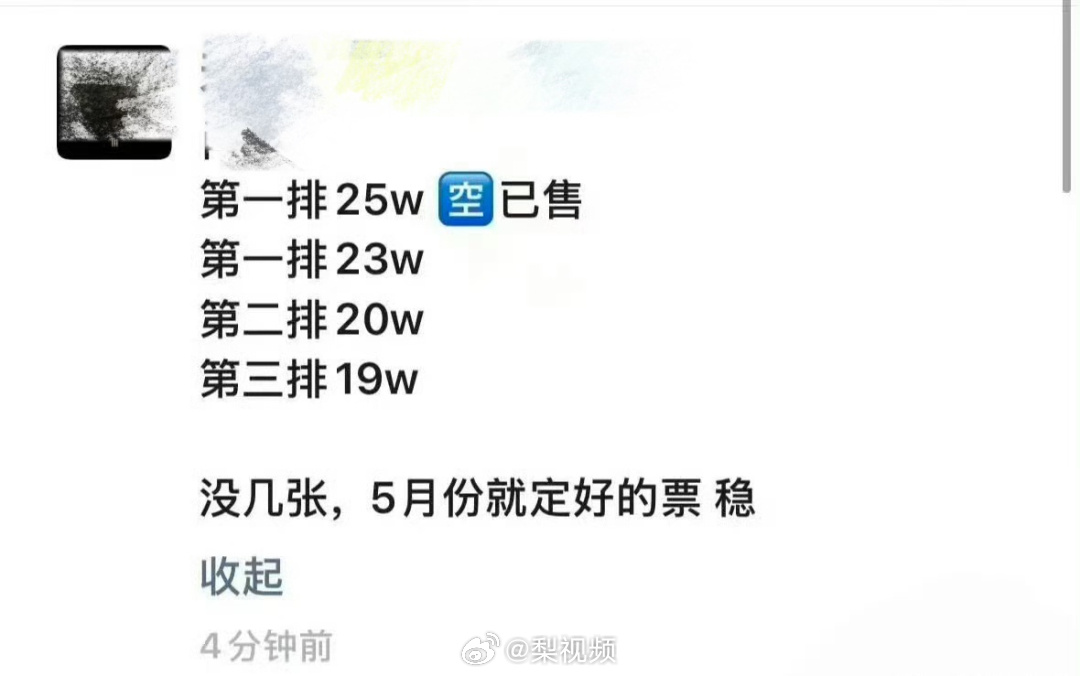
Then the gray market named its price. Screenshots circulating before the sale showed first-row seats listed at 250,000 yuan and already marked "sold," with the rows behind at 230,000, 200,000 and 190,000.
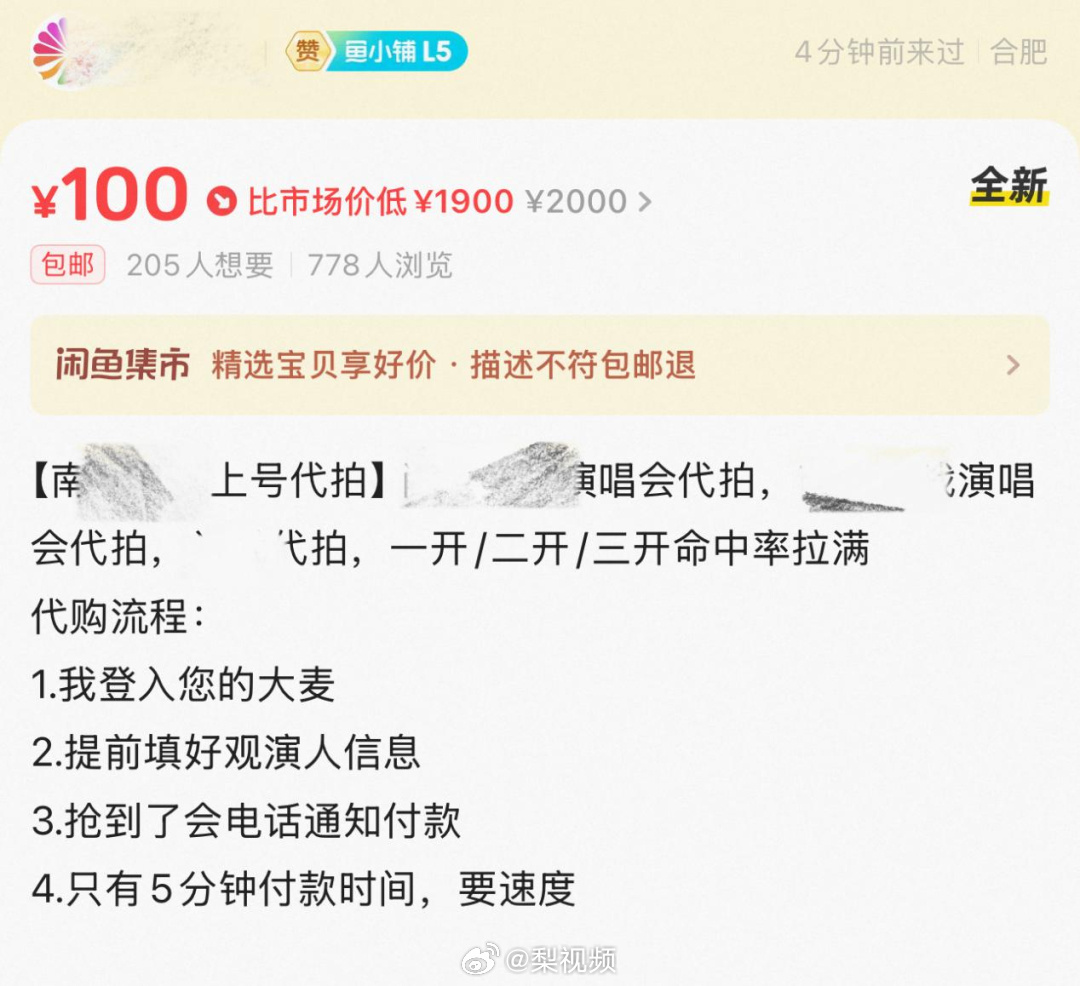
When Pear Video's reporters checked, sellers admitted the tags were mostly theatre — a first-row ticket actually changes hands for around 50,000 yuan, still twenty-five times face value. More revealing than the prices was the supply chain the investigation traced. One channel is "proxy purchasing": paid hands working buyers' accounts in group chats, or, as one scalper put it, "we just put the machines on it" when tickets drop — bots running against a queuing system.
The second channel is more embarrassing for the industry: the "entry ticket" (录入票), drawn from the roughly 15 percent of seats that are never publicly sold at all — allocations for sponsors, media and local partners. Sellers offer those at 11,500 to 32,000 yuan with a promise of "guaranteed issuance": the buyer supplies ID details, and the seat is registered under the buyer's own name before the doors open. Strong real-name rules are satisfied perfectly. The ticket was simply never on public sale to begin with.
That is the uncomfortable part for a tour that made transparency its selling point. Xiao Zhan's team pledged that 100 percent of Nanjing's tickets would go on public sale, with strict name-verification, a two-ticket limit and Damai's anti-scalper screening on top. Commentators this week argued that the pledge, however sincere, operates downstream of the real leak. "The root of the problem is opaque ticket sources," read one widely shared post, which called for internal allocations to be squeezed to a minimum, unsold blocks returned to public sale, and the whole chain made traceable; real-name checks and bot bans, on their own, treat symptoms. The same post carried a warning worth reprinting: anyone who swears they have inside channels is almost certainly running a scam. Angrier voices went further — official sale empty in a second, scalpers' stock plentiful; price it openly if you like, one wrote, but others should not be profiting from it, and someone in the chain ought to face a thorough investigation.
The frenzy has already minted its side industries. Hotels in Nanjing repriced around the concert dates before a single ticket went on sale. And Xiao Zhan's own pipeline moved to monetise the grief: the official account of his upcoming drama "Small-Town Remedy" (小城良方) posted an invitation to "the heartbroken" — a meme of a three-wheeled cart arriving to collect them — and drew more than 100,000 likes, the most-engaged post of the day's trending list. The drama casts him as a surgeon exiled to a small-town clinic, and a CCTV clip of the character screaming at a hospital door — "rotten place, rotten hospital, rotten door!" — did the rest.
The 250,000-yuan listings, then, were bluster; the machine farms and the internal fifteen percent are not. Both were operating before this sale, and nothing announced since suggests they have stopped. Regulators already require strong real-name ticketing for large shows; they have not yet required the internal allocation to shrink — and until they do, the gray market's inventory is replenished upstream of anything a fan can verify.