Weight-Loss Jabs, Medical Spa, Hyrox: China's Middle-Aged Men Adopt the 'Rejuvenation Trio'
The gendered script that had Chinese women carrying the cost of looking young is breaking down: men in their forties are spending tens of thousands of yuan on GLP-1 injections, cosmetic procedures and fitness races — and coining a vocabulary for it.
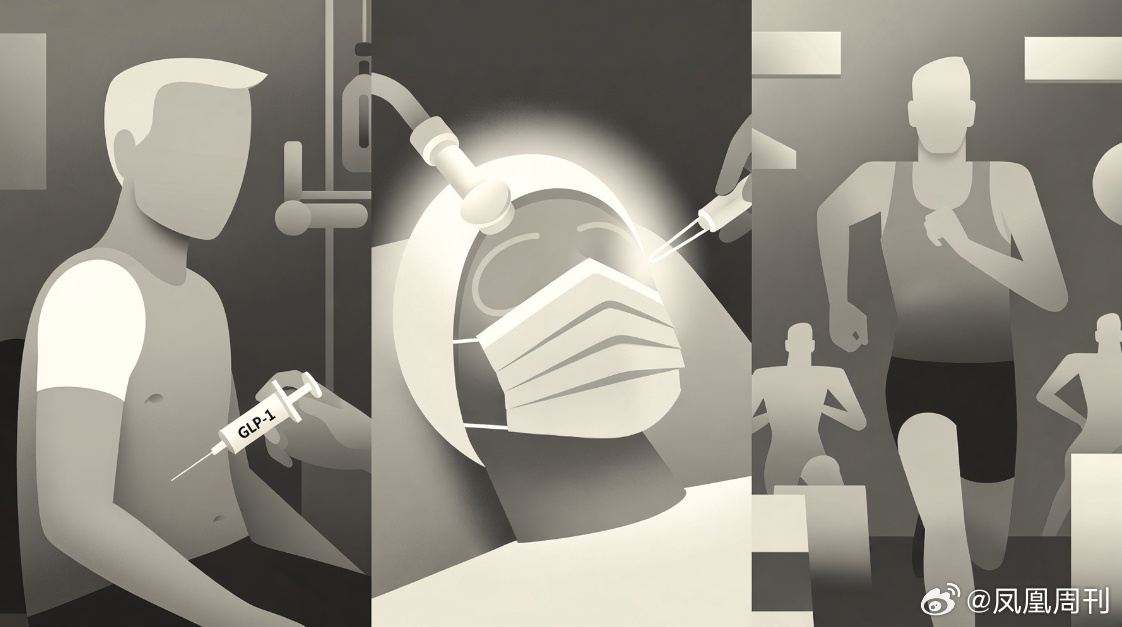
To put a middle-aged Chinese man back together, the joke runs, you need three steps and three purchases. First the weight-loss injection, the starting point; then the cosmetic procedures, the process; then Hyrox, the fitness race where the result gets verified. The package has a name — the "rejuvenation trio" (回春三件套) — and it has spent the past week moving from gym locker-room talk onto Baidu's trending board, where the item pushing it described middle-aged men "serving beauty duty" (服美役) for the first time.
The language is the story. "Beauty duty" is a slang coinage Chinese women have used for years to describe the unpaid, compulsory-feeling labour of maintaining appearances — the sense of conscription rather than choice. Watching men enlist is new enough that commenters greet it with a mix of mockery and satisfaction. The market data says the enlistment is real: the industry's 2025 white paper puts men's share of medical-aesthetics customers at 29 percent, up from 14 percent in 2022, with many spending tens of thousands of yuan a year.
The celebrity scaffolding is distinctly of this moment. The Baidu item cites Elon Musk's public accounting of "fasting plus semaglutide" for his own slimming; at home, the most quoted convert is Luo Yonghao, the entrepreneur-turned-livestreamer, who told a podcast that the drug changed his appetite so completely that a meal which once took two or three bowls of rice now ends after one. Phoenix Weekly's feature noted the euphemism nearly every male subject used: they are not "losing weight", which sounds vain, they are doing "weight management" (体重管理) — the same reflex that has men calling the clinic a "men's grooming studio". 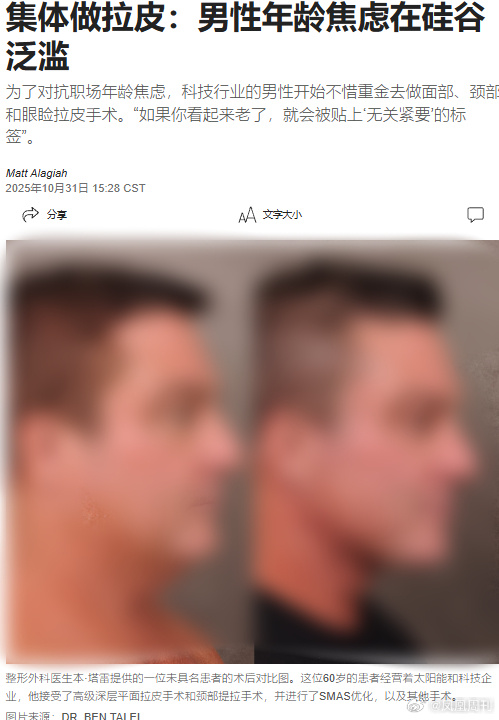
The magazine also found the mirror of the trend abroad, reproducing a Silicon Valley report on tech workers getting facelifts against ageism in hiring.
The driver, according to everything written about the trio, is not vanity but the job market. As one trending summary put it, workplace pressure is intensifying and the demographic dividend that once made middle-aged men the default face of authority is retreating; looking spent now reads as being spent. The same anxiety about appearances and authenticity runs through China's long argument over beauty filters — but that debate assumed a female subject. What is changing in 2026 is that the anti-ageing industry has found its second customer, and he is more willing to pay and less willing to name what he bought.
Commenters on the feature were divided on whether this is progress or just more conscripts for the same war. "Middle-aged men, once they start managing themselves, have terrifying execution," one wrote approvingly — and that, perhaps, is the most Chinese detail in the whole package: even self-care is praised as discipline.