The Do-Not-Buy List: How China's Shoppers Turned AI on Double 11
As China's biggest online shopping festival opens its pre-sales, the most shared advice on Weibo is not where the discounts are but how to escape them: paste your cart into a chatbot and let it write a do-not-buy list. The platforms, meanwhile, are answering with AI-made dramas and AI livestream hosts of their own.
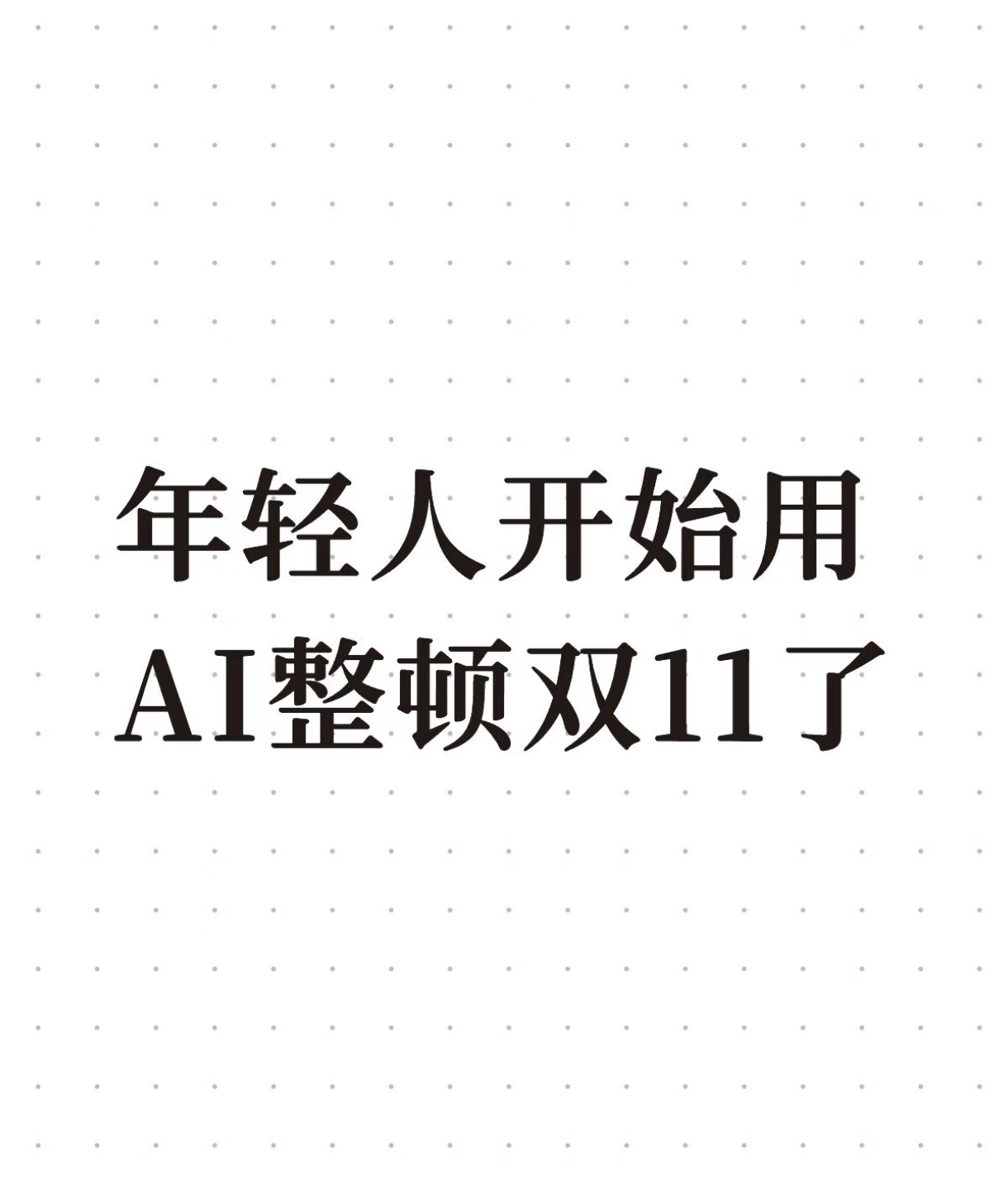
As China's biggest online shopping festival opened its pre-sales this week, the most shared shopping advice on Weibo was not where the discounts are, but how to escape them. A trending phrase — "young people have started using AI to put Double 11 in order" (年轻人开始用AI整顿双11了) — marks a small consumer mutiny: shoppers emptying their overloaded carts into a chatbot and asking it to decide what should never be bought. The verb 整顿, "to rectify", is the one Chinese internet culture reaches for when a powerless group suddenly imposes discipline on a powerful one; this time the target is the festival's own fine print.
The method is simple enough to circulate as a template. A widely reposted guide from the Weibo user Ganllea walks through three steps: copy the item names and prices out of your shopping cart — leaving out the address and phone number — paste them into any AI assistant, and let it score every item on three questions. How many times has it actually been used in the past 30 days? Is there already a substitute at home? What really happens if you don't buy it? Two "won't use it" answers, the template concludes, and the item comes off the list on the spot.
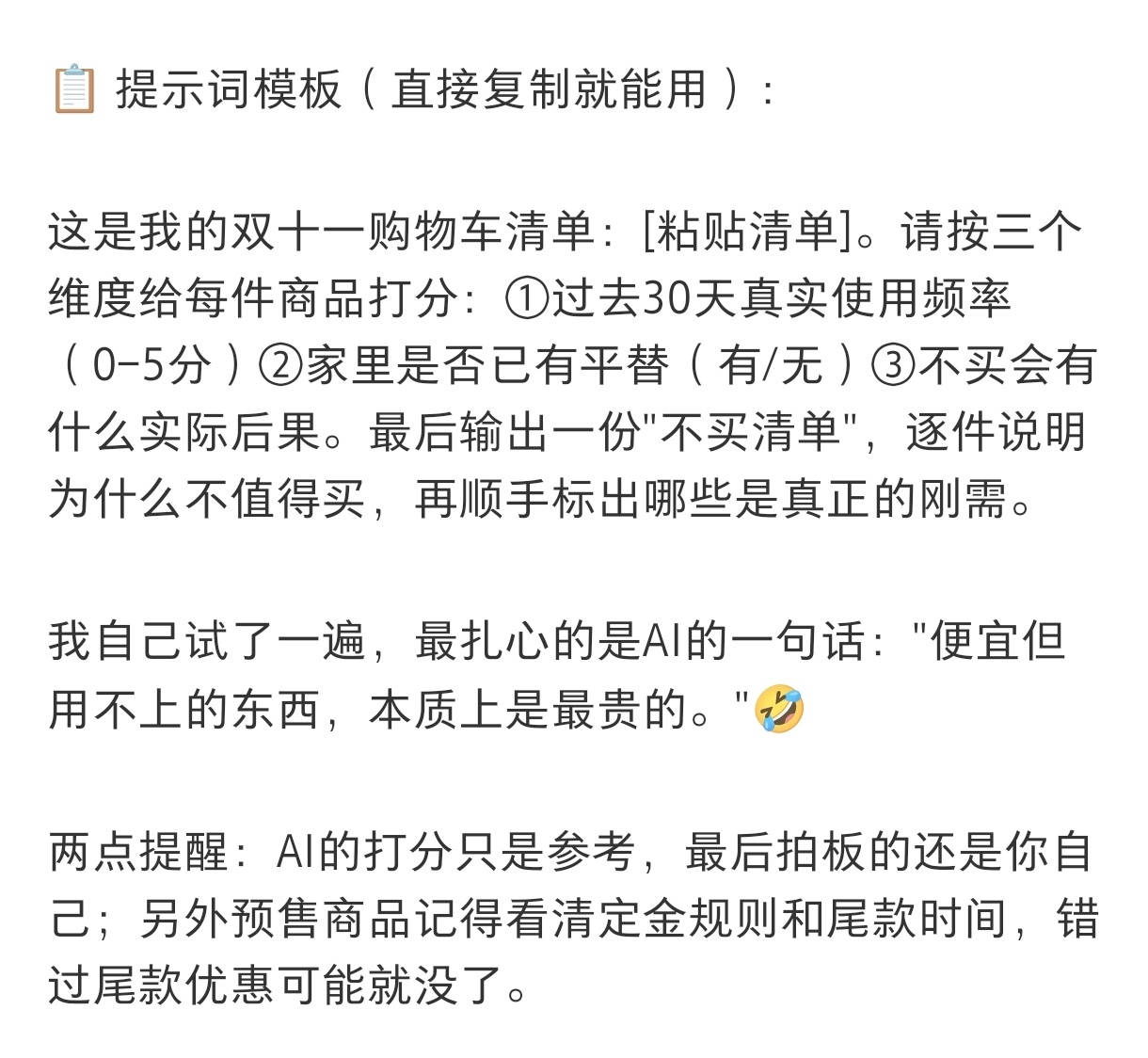
The template's sharpest line has already detached itself and travelled on its own: "Things that are cheap but you never use are, in essence, the most expensive." Its author's credentials are confessional. Last year, seven orders went out in a single sale-night frenzy; three of the boxes were never opened. The money, the post calculates, would have bought a decent tablet. This year, the cart goes to the AI first.
What the machine is being asked to referee is a sale with habits. In one widely circulated rant, a user catalogued the festival's moves like a grievance ledger: discount rules that read like calculus, a washing machine listed at 2,188 yuan that had drifted to 2,498 within a single page refresh, and different prices served to different phones on the same account. Double 11 began in 2009 as a one-day discount event; it is now a weeks-long season of deposits, red envelopes and cross-store arithmetic that many households treat as part-time work. The platforms have heard the complaint — this year JD.com opened its sales on October 12, Tmall has moved away from the cross-store discount arithmetic, and the festival stretches to November 13, longer and plainer than it has been in years.
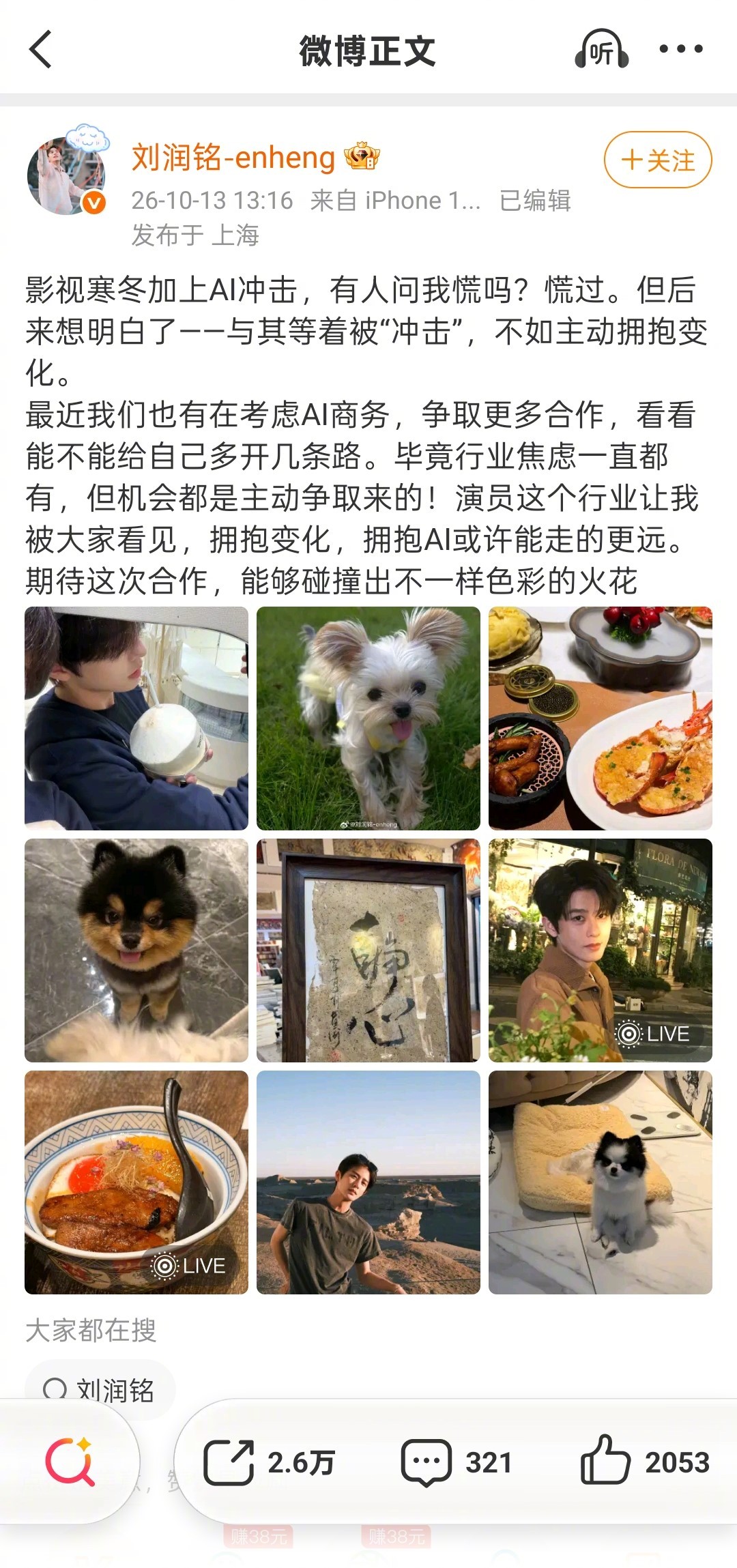
The arms race, though, runs in both directions. Tmall's own festival campaign includes an AI-made short drama built on the licensed, AI-generated likenesses of well-known influencers, and the short-drama star Liu Runming has leased a digital twin of himself to host a brand's "AI-dol" livestream gala during the festival — part of the same synthetic-performer wave that has been displacing human actors in China's micro-drama industry.
Tmall's president, Jia Luo, framed the platform's side of the bargain at the festival's launch: in the AI era, brand competition shifts from meeting demand to creating demand. Shoppers have drawn the symmetric conclusion and enlisted the same technology for the opposite purpose — about a million brands and 72 million products are competing for their attention this year, and a machine referee costs nothing per use.
The second phrase trending beside the first called this the "AI outsourcing era" of Double 11 (双十一进入AI外包时代). The template itself, fittingly, ends not with victory but with disclaimers: the AI's scores are advisory and the final call is yours, and for pre-sale items, check the deposit rules — miss the final-payment window, and the discount is gone.