A Doctor's One-Line Advice Caught a Six-Millimetre Breast Cancer Two Hospitals Missed
A Beijing ultrasound doctor who spotted a pea-sized nodule told her patient to name its exact location at the next hospital. Two top hospitals failed to find the lesion until she did — it was early breast cancer, and China's annual-checkup system is taking the lesson.
The instruction fit in one sentence. At a checkup clinic in Beijing's Fengtai district, ultrasound doctor Xu Lei found a nodule about six millimetres across — pea-sized, she said — in a patient surnamed Wang, and told her to insist on a follow-up at a top-tier hospital. If the doctor there says he can't find it, tell him where it is, and make him scan that exact spot again, she said, according to the Henan newspaper Dahe Bao's report, which has been liked more than 15,000 times.
Wang then did something that turned a routine scare into a trending topic: at two top-tier Beijing hospitals, initial scans failed to locate the lesion. Both times she repeated Xu's instruction, asked the doctor to search the named position repeatedly, and the second round of targeted scanning locked onto it. The diagnosis was early-stage breast cancer. Surgery went smoothly and her recovery has been good, Dahe Bao reports.
Xu's explanation of the misses is the reason the story travelled. Micro-nodules are the easiest thing in ultrasound to miss, she told the paper: they are tiny, some patients have dense glandular tissue that camouflages them, some sit in awkward positions, and equipment and operator experience vary. Without a targeted, repeated scan at a known location, an early tumour can simply never appear in the image — until it is large enough to find too late.
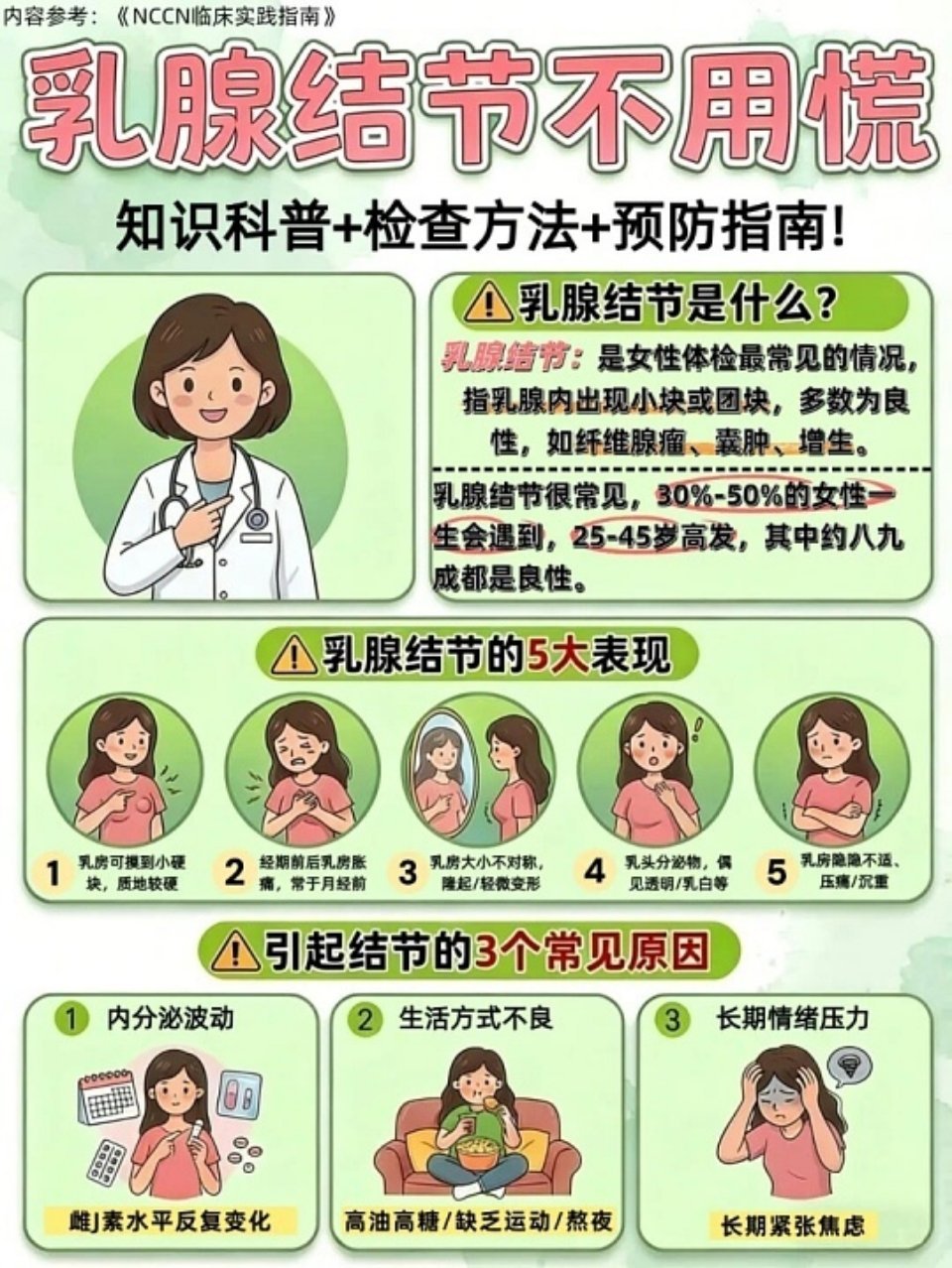
The story landed in the middle of a long-running Chinese argument about the annual-checkup system, whose private体检 clinics are alternately praised for catching things and accused of overselling scans. The trending doctor-response topic answered the accusation that a missed nodule means sloppy work: as one widely shared explainer put it, the miss was not carelessness but a real difficulty of the imaging. Health accounts on Weibo followed up with sober framing — one explainer walked readers through the standard risk grading used in nodule reports, noting that most nodules are benign but that a "probably benign" grade still means a six-month follow-up, not a shrug. The tone across the topic was deliberately anti-panic: don't spiral over a small nodule, and don't ignore one either.
The detail readers are passing on, though, is the sentence Xu gave her patient. In the replies, commenters said they had screenshotted the advice to send to family group chats — turn yourself into the advocate at the next scan, and make the doctor look where the last doctor looked. One put the underlying rule plainly: size is never the only standard, and a nodule nobody can find is more dangerous than one everybody is watching. A routine checkup did its job this time because a patient carried one doctor's sentence with her until the system caught up.