China and North Korea Set to Open the Yalu River Bridge, a Decade After It Was Built
After standing structurally complete but unused for roughly a decade, the new road-and-rail bridge across the Yalu River between Dandong and Sinuiju opens on October 15 — the first crossing built over the river since 1943, and a signal of how much has changed on both banks.
The announcement took two sentences. By mutual agreement between China and North Korea, the new Yalu River Bridge will officially open on October 15, with an opening ceremony held jointly that day. Xinhua moved it as a brief on Wednesday morning, CCTV and People's Daily pushed announcement cards within minutes, and by mid-morning the story sat fifth on Baidu's hot list with a score above 7.5 million. On Weibo it charted at number eleven — and stayed there, almost without comment. China's loudest platform, presented with the first new bridge between the two countries since 1943, had remarkably little to say about it.

The quiet has a history behind it. The bridge is a roughly three-kilometre cable-stayed span with two tall H-shaped towers, built from 2011 with Chinese financing at a reported cost of around 2 billion yuan. Its main structure was finished around 2014 — and then nothing happened. Approach infrastructure on the Sinuiju side was never completed, successive rounds of UN sanctions after North Korea's nuclear tests cut off much of the trade it was designed to carry, and the pandemic then sealed the border for nearly four years. For the better part of a decade the "bridge to nowhere" sat next to the 1943 Sino-Korean Friendship Bridge, which continued to carry effectively all cross-border traffic on its own.
Both sides have reasons to change that now. For China, the bridge gives Dandong and the northeastern provinces a modern freight gateway and a stake in whatever North Korea's cautious post-pandemic economy becomes. For North Korea, it is hard currency and leverage — a valve it can open when trade suits it and close when control matters more. Dandong, a city that brands everything from snacks to sightseeing boats with the river's name, has long lived on precisely that ambiguity.
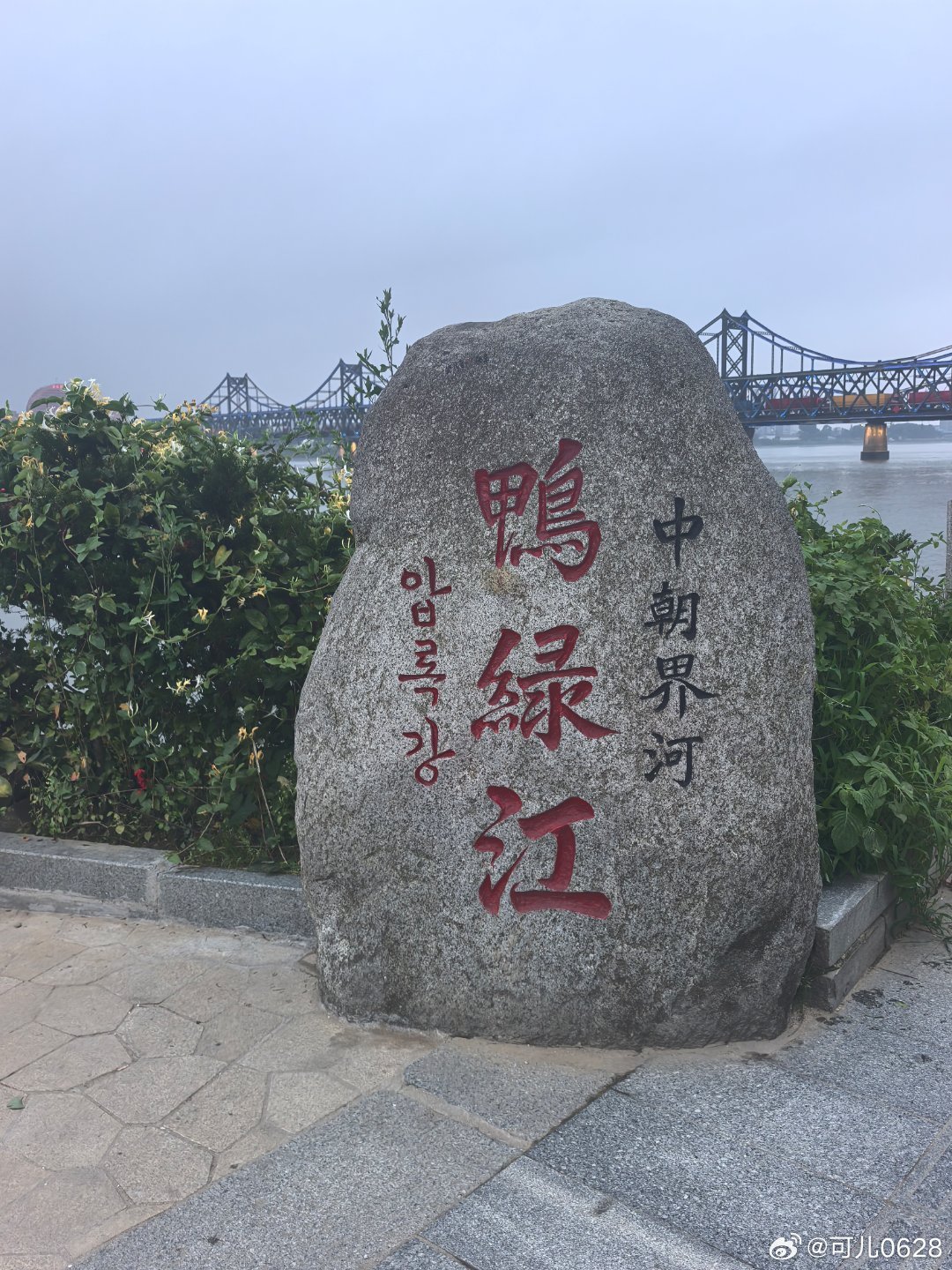
The Weibo posts that did surface came from the tourist front rather than the trading one. The riverside stone marker reading "Yalu River — Sino-Korean border river" still draws queues for photographs with the old truss bridge behind it, as in one Dandong visitor's photo post this week. A military-affairs commentator, meanwhile, walked followers through the protocol of Kim Jong-un's September train crossing into China over the Friendship Bridge — the twenty-minute halt at Dandong station, the swap to a Chinese locomotive — reading the old route like a rehearsal for the new one. A commentator's post on the border-crossing ritual was among the few attempts on the platform to think the opening through.
What to watch is not the ribbon-cutting but the logistics that follow: how quickly customs, rail arrangements and truck traffic scale up, and whether the crossing moves consumer goods or mostly strategic materials — a question Chinese commentators have learned to ask whenever North Korean trade appears in the feed. The bridge was never really an engineering story; the ceremony will be a statement about how much of the old trading relationship both sides want back.