China's First National Standard for Hospital Escorts Takes Effect Next Month
A job that barely existed a decade ago — the paid companion who walks elderly patients through China's digital-first hospitals — gets its first national rulebook on November 1, as Didi's orange-uniformed escorts roll out in Hangzhou and an ageing country reckons with how many medical visits now happen alone.
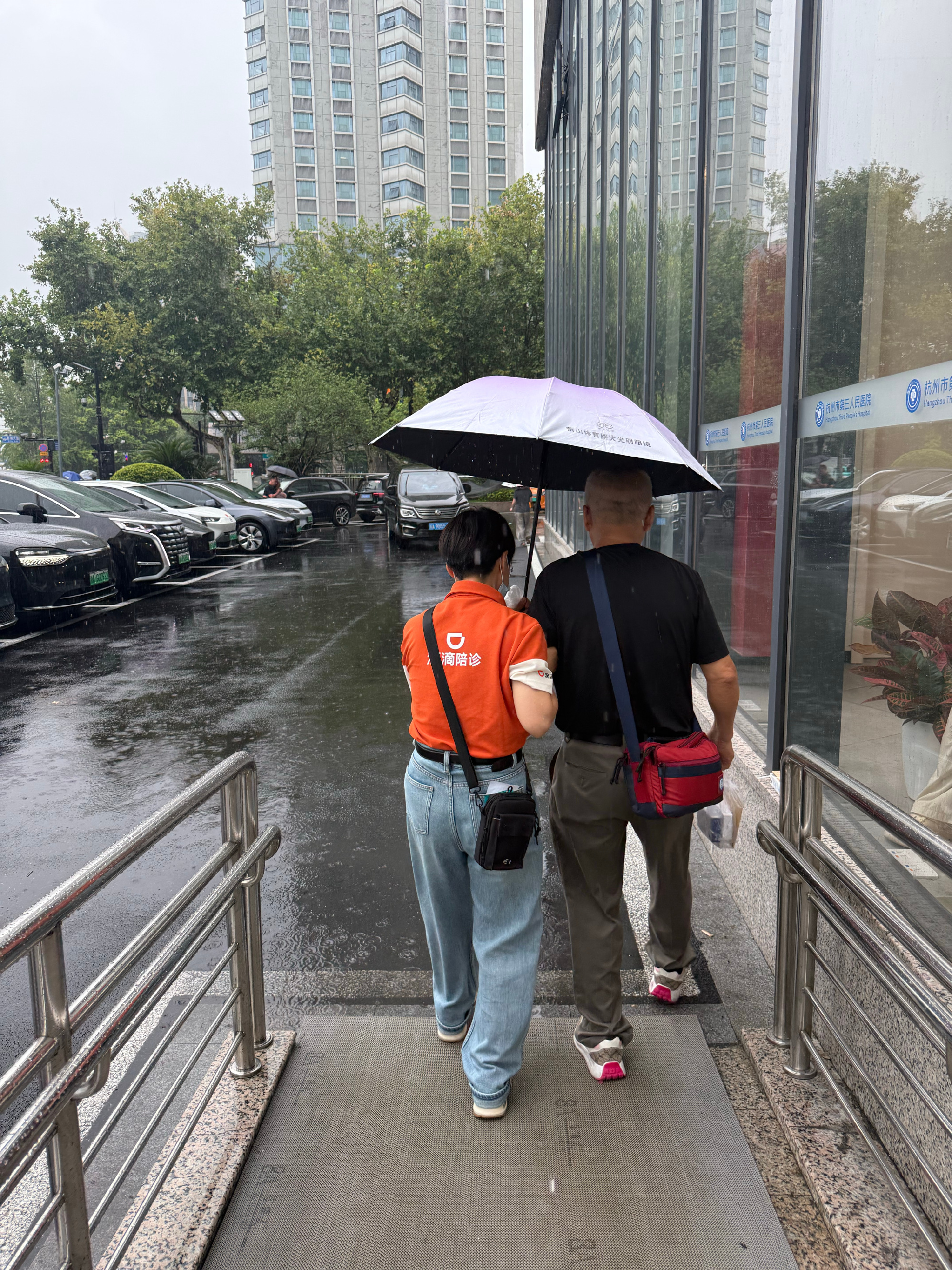
For millions of older Chinese, the hardest part of seeing a doctor is not the treatment — it is getting through the door. A hospital visit means registering on an app, queuing at a machine that assumes you own a smartphone, finding the right consulting room among several buildings, then holding a doctor's words in memory long enough to collect the medicine. China's first national standard for the people increasingly paid to shepherd patients through that routine — the 陪诊师, or hospital escort — takes effect on November 1, giving formal shape to a profession that has grown up almost entirely off the books.
The job barely existed a decade ago. As Chinese hospitals digitized — appointments, payments, test results all routed through apps — the patients most likely to be left standing at the door were the elderly, often far from their children, who work in other cities. The escorts who emerged to fill the gap are informal guides and errand-runners: they register, queue, translate doctor-speak into plain language, carry bags, and sit with patients who have nobody else beside them. A broadcaster's viral post announcing the standard put it bluntly: "Hospital escorting is not 'anything goes'" (陪诊不是"啥都能干"). That is the line the standard draws — around a role that has meant everything and nothing, performed by self-trained freelancers with no credential, no insurance and no rulebook.
How fast the space has filled is visible in who is entering it. Didi, the ride-hailing giant, now staffs a branded escort service in Hangzhou, where an orange polo shirt stamped with "滴滴陪诊" — Didi Medical Escort — has become a recognizable sight outside hospital gates. One Hangzhou resident photographed an escort walking arm in arm with an elderly man under an umbrella toward the Third People's Hospital, and noted that the mini-program offering the service covers Hangzhou only, so far. She also recounted a friend who, facing minor surgery alone, hired an informal escort privately — an anecdote that captures the industry's awkward position: demand is already there, organized supply barely is. The service, she wrote, has been "growing wild for too long."

The standard arrives in a country now planning, openly, around old age. A fifth of the population is over 60, and the patients these escorts serve are the same people navigating life alone that this site has covered from a Shanghai woman arranging a retirement with no heirs to look after her. A national rulebook legitimizes the profession — but it also raises the questions the freelancers have long worked without answering: who trains and certifies them, what they may legally do inside a clinic, and who pays. What the standard settles is scope. What it leaves open is scale, because a service one ride-hailing app runs in one city, however photogenic, is still a long way from the size of the problem it is answering.