Sichuan's Night Rest Rule Leaves Truckers Nowhere Legal to Stop
A rule meant to keep heavy trucks safe on Sichuan's night roads requires drivers to stop 20 minutes every two hours — on two-lane highways where, drivers told the provincial government, there is nowhere to stop but the traffic lane itself.
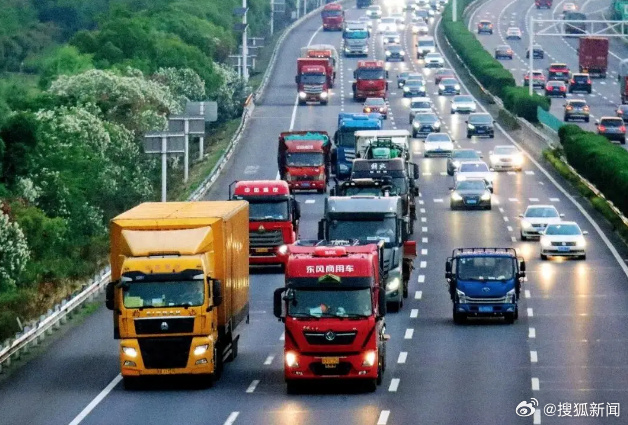
Sichuan requires heavy-truck drivers to stop for at least 20 minutes for every two hours of driving between 10 p.m. and 6 a.m. The rule exists for road safety. Its effect, drivers told the provincial government this month, is to park them in traffic lanes on some of the country's most exposed roads.
Writing on Liuyan Sichuan, the province's official petition platform, a Chengdu driver laid out the mismatch: the national, provincial and county trunk roads his routes follow are mostly two-lane carriageways shared with pedestrians and e-bikes, where "you can drive dozens or even a hundred kilometres without finding a spot fit for a heavy truck." A driver who obeys the two-hour rule ends up stopped on the roadway itself — and when a vehicle behind fails to brake in time, the parked truck is routinely assigned full liability, he wrote. The rest rule, meant to prevent accidents, ends up billing the driver for one.
Sohu News followed the complaint with the arithmetic of a real night shift (@搜狐新闻). Wei Long, a long-haul driver on Sichuan runs, departs at 6 p.m. By 9 he is scouting where the next legal stop will be; the night window opens at 10, and from then his driving time comes in two-hour segments, each ending in a 20-minute rest. Because a stop must be found before it is needed, he starts hunting a parking spot about an hour into each segment — five or six times a night, by his count.
The transport department's reply, posted on the same platform on October 8, did not dispute the picture. The two-hour rule is written into Sichuan's road transport regulations, it said; a legislative revision is underway that focuses on aligning the provisions with national rules, and the driver's suggestion will receive attention in that process. National policy, meanwhile, has moved the other way: since June 1, fatigue recognition no longer leans on the old four-hour yardstick alone but reads driving behavior, physiology and trip patterns for evidence of drowsiness — the shift that stirred a national argument after a motorist filmed himself asleep with his car's "smart driving" mode engaged (A Driver Fell Asleep With His Car's 'Smart Driving' On). Stricter enforcement makes every missing parking bay costlier.
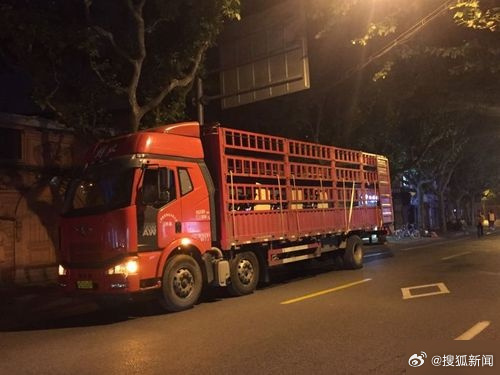
The plight has traveled well beyond Sichuan's inboxes: it sits on Baidu's trending board as "truck drivers' parking-rest predicament" (Baidu), and Sohu's explainer ran under the headline "their parking plight deserves to be seen" (@搜狐新闻). The regulation is being rewritten. Where the trucks will legally stop while it is — the shoulders and lay-bys that largely do not exist — is the part of the question still open, on twenty-minute increments, every night.