The 140th Canton Fair Puts China's Export Upgrade on Display
The world's largest trade fair opened its 140th edition in Guangzhou this week, expecting roughly 340,000 overseas buyers — and the goods on show are changing as fast as the customers. New products make up a record share of exhibits, the first dedicated launch zone has hosted 700-plus debuts, and the booths drawing crowds are selling exoskeleton robots and 3D printers rather than the toys and textiles of the fair's memory.
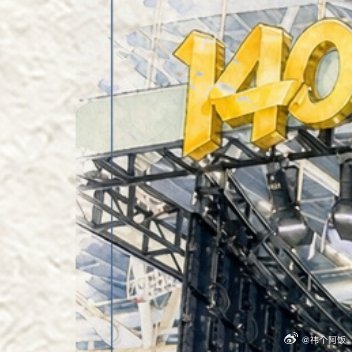
The Canton Fair has been running since 1957, long enough that its 140th edition, which opened in Guangzhou on October 15, is itself the news: roughly 340,000 overseas buyers are expected across the fair's phases, according to coverage carried by Huanqiu. But the livelier conversation on Chinese social media — under a hashtag asking what the 140th fair's "new highlights" are — is about what is actually on the booths, and how little of it looks like the China Trade Week of popular memory.
The fair's own numbers make the point. At this edition, new products account for about 23.2% of exhibits and green products about 26%, both records, Dong Cong, an associate professor of international trade at the University of International Business and Economics, told CCTV. For the first time the fair has a dedicated zone for product debuts, hosting more than 700 launch events — a 15% increase on last spring — and trade has shifted too, he noted, with goods and services increasingly sold together and Chinese firms following their products downstream into the supply chain.
The booths with the queues
What is drawing actual crowds reads like a different export economy. Zhejiang Taixi Intelligent's exoskeleton robot — the one that went viral abroad last spring after letting an Argentine man who had used a wheelchair for ten years stand and walk — is back on the floor, part of a wave of high-tech products the fair now actively recruits rather than merely admits. At the 3D-printing stands, Economic Daily reported, buyers were pressing in to watch a machine print a detailed miniature of Guangzhou in two to three hours. Zhejiang alone sent more than 7,700 firms.
The fair's official theme exhibit, "Canton Fair Connects the World for 70 Years," stages the contrast deliberately: one display case holds a participant badge from the 89th fair — the spring 2001 edition, the last before China joined the WTO and the export boom it powered. Beside the sorts of goods that filled the halls then sit the robots that fill them now.
Not all the encounters are newfangled. On the fair's first day, in the consumer-electronics hall, Pan Hongqiang, a sales director at Guangzhou Chengzhi Intelligent, finally met in person the Brazilian buyer he had dealt with only online — "Weini, hello, we finally meet!" he greeted him, in a detail Baidu's search board picked up under the heading "meeting your internet friend at the Canton Fair." After years of trading across a screen, the handshake at a booth is still what the fair is for; what has changed is what is on the table when it happens.