Tesla's Roadster Debuts by Hovering Off the Ground
At its long-delayed Roadster launch on October 16, Tesla showed a supercar that lifts briefly off the ground on SpaceX-derived cold-gas thrusters — and Chinese car watchers, who pushed the demo up three separate trending boards, spent the day working out what it can actually do.
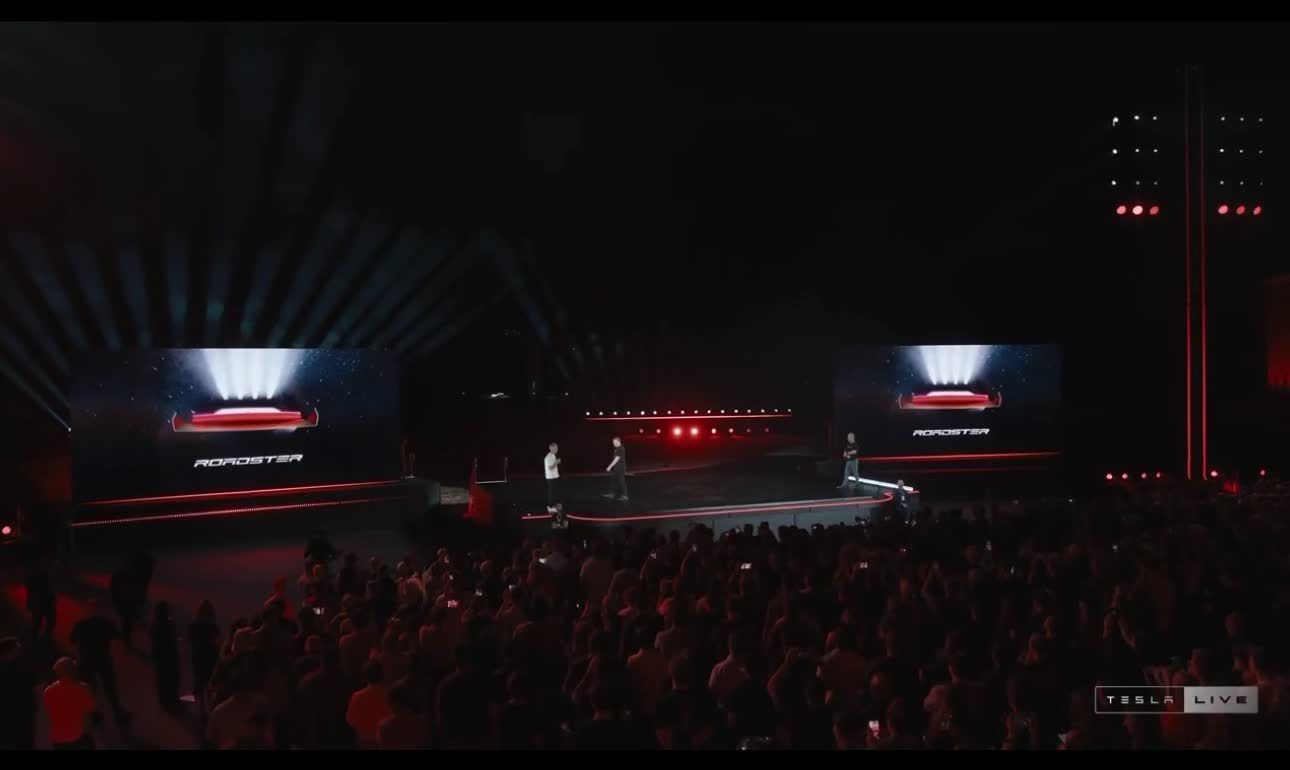
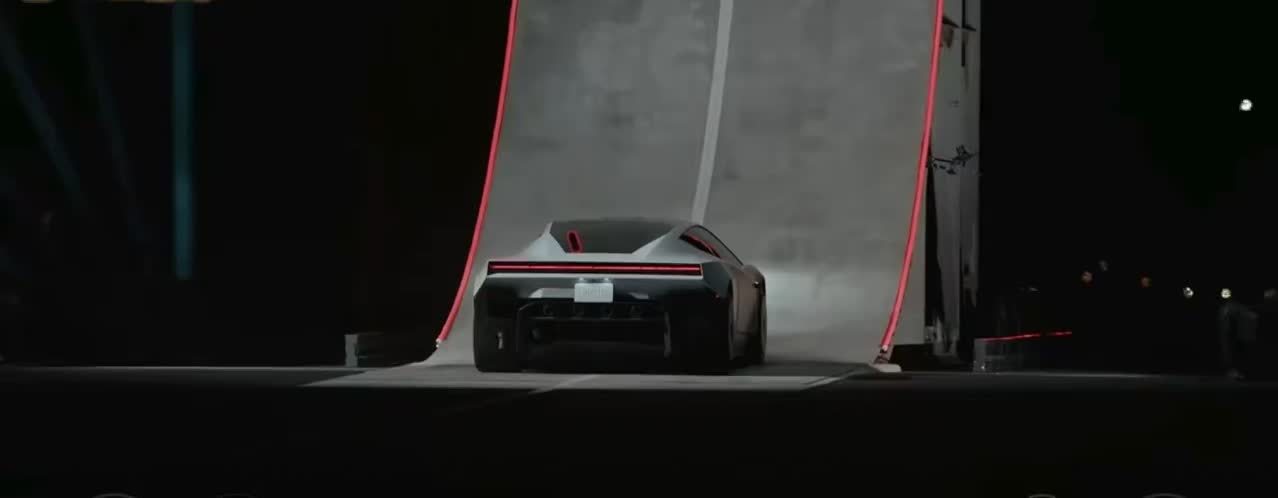
At Tesla's global launch event for the Roadster on October 16, the sports car rose off the ground, turned in the air under its own power, and set itself down again. The manoeuvre relied on a cold-gas propulsion system the company ties to its rocket programme: compressed-gas thrusters that let the car briefly leave the ground, adjust its attitude mid-air and land — completing, in one demonstration, a ramp flip. As one explainer post put it once the clips spread, the car "can't stay airborne for long; think short hops rather than flight," with the same thrusters pressing the body down to sharpen braking and cornering.
Chinese car watchers had three hashtags going by evening — the launch itself, "the Roadster really can fly," and "Roadster 2" — and the story climbed Baidu's trending board too, where it ran as "Tesla's new car really can fly." The design account SugarDesign posted photos from the reveal with a one-line verdict that travelled on its own: "It really can fly — and on jets, no less!"
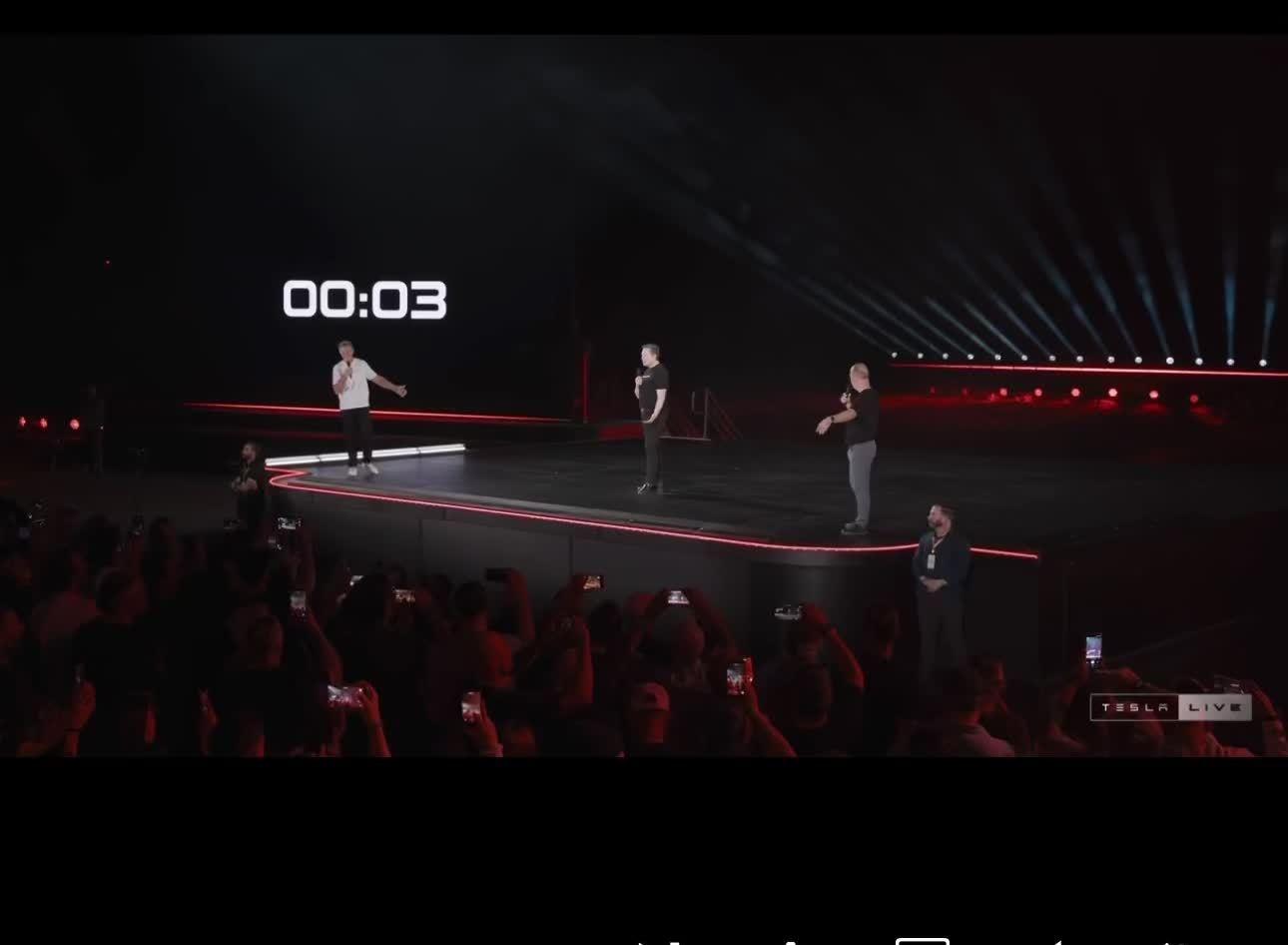
The configuration sheet doing the rounds reads like an escalation of jokes. The Performance trim is road-ready and seats two, with active aerodynamics and a multi-mode suction system. The Propulsion trim adds a rear-mounted cold-gas thruster and a zero-to-60 mph time under one second; it is track-ready and seats two. The Rocket trim — "flight-ready," per the spec summary circulating on Weibo — seats one, surrounds the body with thrusters, and supports acceleration up, down, forwards and sideways, rotation included. The account's own conclusion: "So... yes. It can fly."
The Roadster is an old promise finally kept on a stage, if not yet in driveways. Unveiled as a concept in 2017 with delivery promised for 2020, it slipped year after year while Tesla built other cars; the company now says production begins in 2028. In China — Tesla's second-largest market, and one where domestic EV makers compete on lap times and lidar arrays — the arrival was treated less as a product launch than a benchmark: within hours the trim table had become the reference summary passed around car chat groups.
What the demo actually proved is narrower than the hashtags suggest. The flying version seats one, is rated for the track rather than the road, and exists so far only in a spec sheet. Between now and 2028, the hovering has to survive the transition from stage floor to street — the one test none of the launch footage covers.