A Wuhan Compound Barred a Courier Who Asked a Resident Whether She Was Married
A Wuhan courier has been shut out of the gated compound he served after asking a resident about her job and marital status over WeChat — a ban he calls defamation and plans to fight in court, in a case that has China arguing over boundaries, gatekeepers and gig-work access.
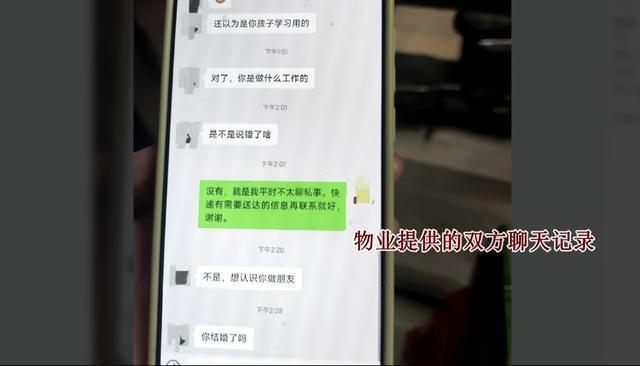
"Master Qin" had run a parcel station outside a gated compound in Wuhan for seven or eight years, and delivered for it as a side job. In August, a young woman living in the compound added him on WeChat and asked him to bring parcels up to her door. In the chat that followed, he asked what work she did, then whether she was married, then whether they could get to know each other as friends. She blocked him and complained to the property management. From August 27 he was barred from the compound; when he tried to enter again on September 1, the police were called. He is now preparing to sue the property firm, saying the word "harassment" has defamed him and cost him his work.
The exchange, shown in the broadcaster Hubei Jingshi's report, turns on a single reply. Asked "did I say something wrong?", the resident wrote: "No — I just don't chat about personal matters. Only contact me if there's delivery information, thanks." His next message: "No, I want to get to know you and be friends," followed by the marriage question.
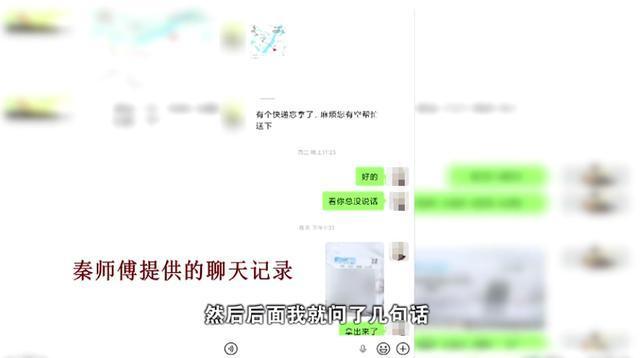
His defence is that the questions were curiosity, not pursuit: he had no physical contact with her, he says, and his words "don't constitute harassment in the legal sense." He telephoned her mother to apologise the same day. "We're at least ordinary friends, that's why I'd fetch your parcels," he told the reporter. "If we're not even friends, what parcels would I fetch for you?" The property management's account is starker: after she blocked him, he kept turning up at her door, and the woman — newly graduated, living alone — was frightened to tears, so barring him was a safety measure it had no choice but to take. Other couriers and food riders enter the compound normally; his family deputises for him at the gate.
Weibo read the contradiction in his own account almost immediately. "The funny part is he's shouting 'I didn't harass anyone' while admitting he asked whether she was married and whether they could be friends — and after she blocked him, he went and knocked on her door," one widely shared comment began, before landing on the part that made the case travel: "This is 'I've decided I did nothing wrong, therefore you must accept it.'" To many readers the substance wasn't the three questions but the persistence after a clear no — and the assumption that a delivery channel was also a matchmaking opportunity.
The case has become an argument about the gatekeepers. China's residential compounds are walled and watched by 物业 — property-management firms that hold day-to-day power over who comes in. For the couriers who serve them, access is the livelihood: a platform may promise door delivery, but the last hundred metres run through a guard booth and a complaint form. A lawyer quoted in the report sketched both sides: continued contact after a clear refusal is "clearly offensive and over the line" even if it may not meet the legal bar for harassment, yet an indefinite, compound-wide ban imposed on one resident's complaint lacks factual basis and due process, and may itself improperly restrict a worker's business and labour rights. Her suggested route — fix the WeChat records and the property notices, mediate through the neighbourhood committee, police or postal regulator, and only then litigate — is now effectively his to-do list.
What the compound never had was a forum for deciding it. One woman's "no more" ended a seven-year relationship between a station and its neighbourhood, and the arbitration is being left to a lawsuit.