Half of China's AI Compute Is Busy Making Short Dramas
A token-consumption disclosure showing 55% of China's AI compute going to short dramas and video generation, against 15% to research, has set off a national argument about what the country's artificial intelligence is for — and investors are backing the dramas.
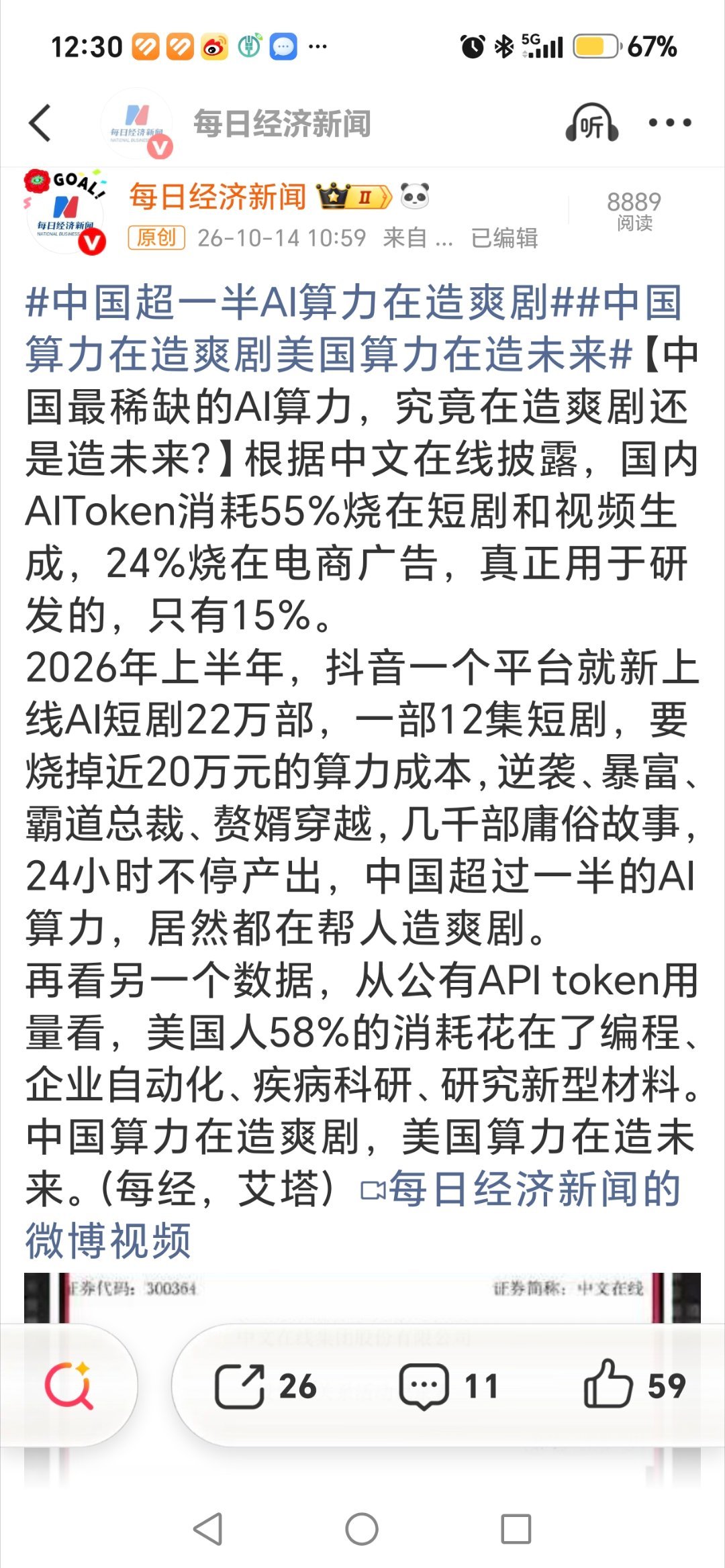
A disclosure from one company has set off the week's sharpest argument about what China's artificial intelligence is for. Chinese Online (中文在线), the digital-reading firm turned AI-drama producer, revealed that of the AI tokens consumed in China, 55% go to short dramas and video generation and 24% to e-commerce advertising — while just 15% goes to research and development. The figures, spread by the Daily Economic News under the hashtag "China's AI compute is busy making feel-good dramas," sat at No. 30 on Baidu's trending board by evening.
The volume behind the percentage is the striking part. In the first half of 2026, Douyin alone launched about 220,000 AI-made short dramas; nationwide, some 430,000 micro-dramas of all kinds went online in the first eight months of the year. A single twelve-episode AI production burns close to 200,000 yuan of compute. And the demand is not slackening: China's weekly call volume on its large language models has led the United States' for twenty-four straight weeks — an infrastructure running flat out, with more than half its fuel going to melodrama.
The post that carried the numbers paired them with a second list: of tokens consumed through public APIs in the United States, 58% goes to programming, enterprise automation, disease research and new materials. From that pairing came the hashtag doing the most damage — "China's compute makes the dramas, America's makes the future" — and with it the pushback. The two figures are not measured the same way: one describes all domestic consumption, the other public API usage only, and critics in the threads were quick to note that a country's token mix says as much about its business models as its ambitions. Others defended the dramas outright as an export industry that pays for itself. The bluntest response came from a finance commentator who dismissed the whole genre as "poison for children's health" — a minority view, by the look of the consumption data.
What is not disputed is that the audience chooses it. On Zhihu, the day's most-answered question on the genre was why viewers who binge AI-made dramas no longer enjoy the human-acted kind — the uncanny-valley faces read as a feature, not a flaw, when the plot delivers a vindication every forty seconds. This site has followed the genre's economics for weeks: its human actors are already feeling the squeeze, and Tencent pushed short dramas into Wechat this week to contest ByteDance's Hongguo app, whose name became a byword for content you cannot stop watching.
The market, for its part, has stopped arguing and started buying. Short-drama concept stocks led by Guomai Culture (果麦文化), which jumped more than 10%, rallied on the exchange's tape the same day the token figures spread — investors pricing in precisely the compute demand the debate questions. Chinese Online, the company whose disclosure started it, makes the dramas as well as the measurement. Whether its 15% for research is a national embarrassment or simply what a market pays for is the argument China is still having; the dramas, meanwhile, keep rendering.