Three Ministries Open a Joint Investigation Into Zunjie's Brake-Pedal Failures
China's industry, cyberspace and market-regulator ministries have formed a joint investigation group into the Zunjie V800, whose brake-pedal bracket snapped in independent testing — turning a carmaker's damage-control exercise into a nationally supervised safety case.
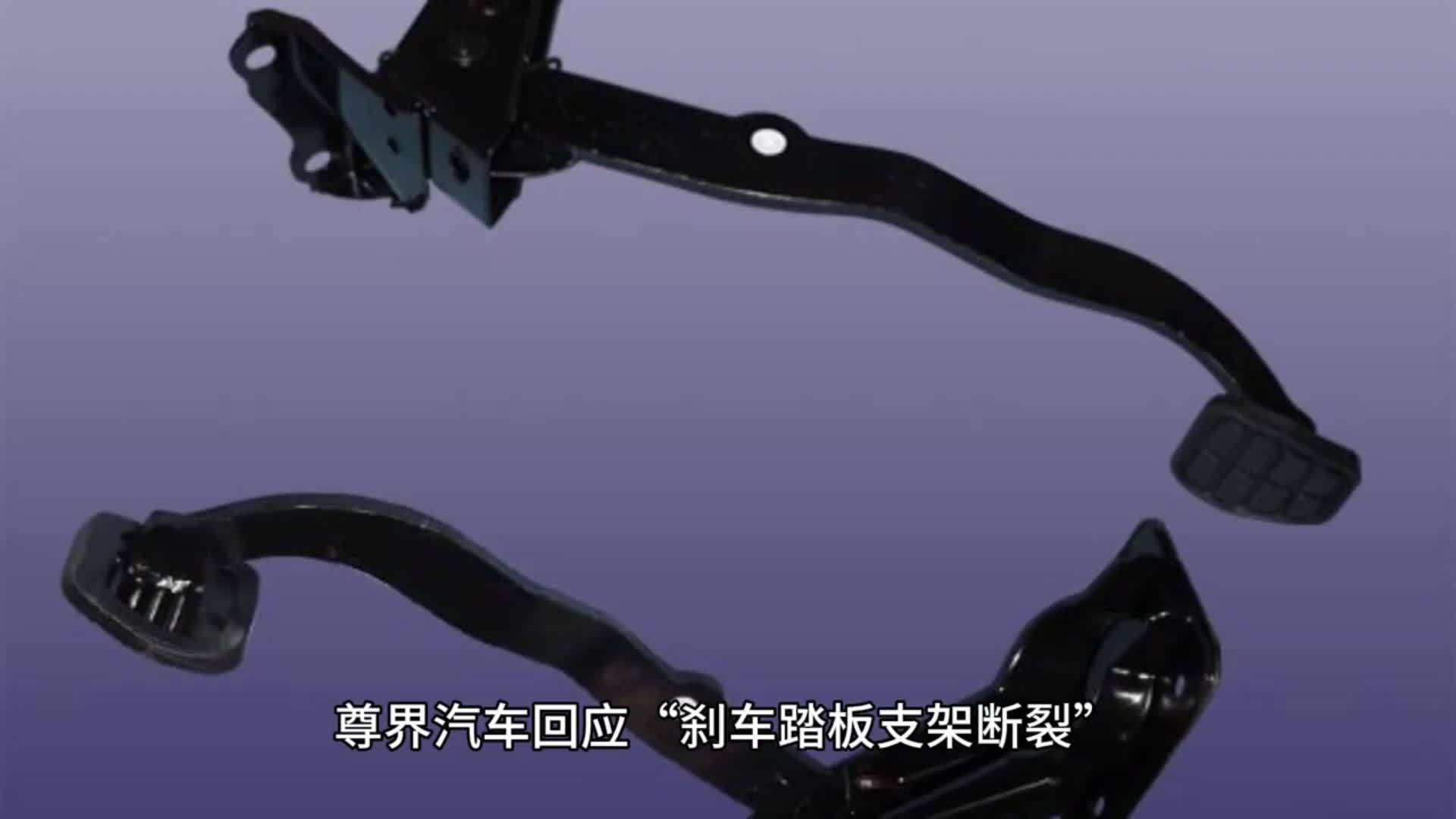
China's ministries of industry, cyberspace affairs and market regulation announced a joint investigation group on October 15 to look into brake-pedal bracket fractures on the Zunjie V800, the flagship sedan that Huawei builds with automaker JAC. The announcement, carried by CCTV and every financial wire, went straight to the top of Baidu and Zhihu's boards — an unusually forceful response to a dispute that began as one outlet's test video.
The test, published by the car platform Dongchedi, put three Zunjie V800s through emergency braking from 100 km/h. In all three cars the pedal's bracket base snapped — the fracture registered around 1,612 newtons — while eight other models tested the same way, six hard stops each, broke nothing. Shares in JAC fell by their daily limit the same day. For a brand whose pitch is that Huawei's quality discipline has reached the car industry, the images were the damage.
Zunjie's first response, issued on the night of October 8, ran the familiar playbook. Its braking system, the company said, had been developed and verified above national standards GB 21670-2025 and GB 7258-2026; no bracket failure had ever occurred in real-world use; the test constituted a "non-standard extreme condition." It promised to optimize the part and give every delivered owner a free upgrade.
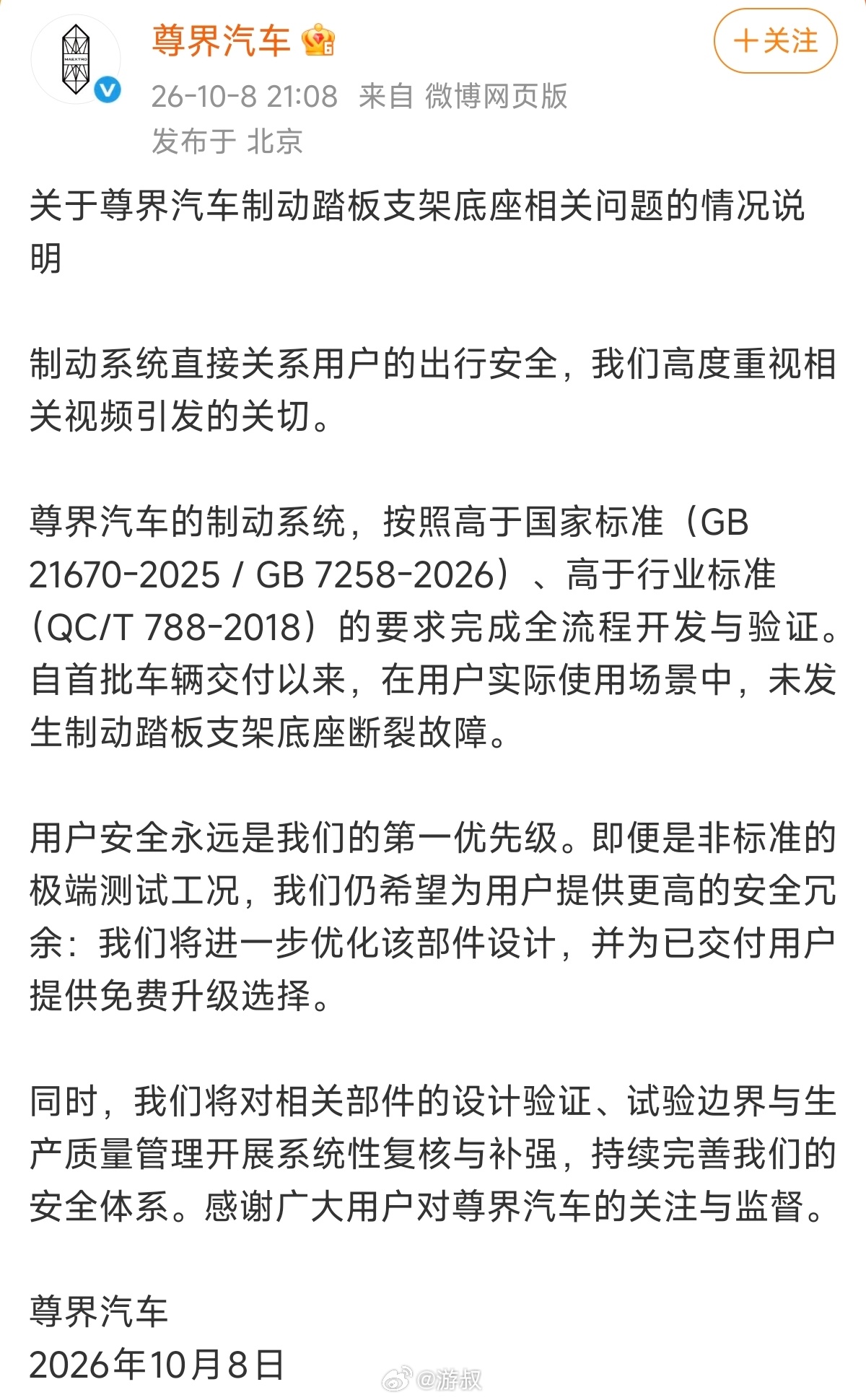
That wording drew the closest scrutiny. As 21st Century Business Herald's car columnist unpacked, a free "upgrade" and a "recall" are legally different objects in China: recall means filing a defect with regulators, publishing the affected range, and accepting a mandatory process, while an upgrade is discretionary goodwill. Commenters also reached for an earlier template — the food chain Xibei's defence of its kitchens — as the pattern of "we meet the standard, your test is extreme, we will improve anyway" repeated itself. One widely shared post put it plainly: the statement "reminded me of Jia Guolong."
Regulators then did what companies cannot control: on October 15 the three agencies said that, building on preliminary work, they had formed a joint investigation group to verify the matter and handle it "according to law." Zunjie answered within hours that it would "respond actively, obey completely and cooperate fully," per its statement carried by Yicai.
What the investigation decides is bigger than one bracket. Huawei's car alliance has staked its premium future on the claim that its manufacturing standards outclass the industry's, and the probe will now put that claim through a state-supervised examination. The finding everyone is waiting for is narrower and just as consequential: whether an emergency stop from highway speed — the maneuver every driver eventually makes — counts as a "standard condition" a brake part must survive.