Japan's First-Ever Cancelled Quake Alert Overshot a Real Earthquake by Three Magnitudes
On Friday noon, Japan's Meteorological Agency told millions to brace for a magnitude-9.9 earthquake — stronger than any ever recorded — then withdrew the alert eight minutes later. The real quake, near Russia's Kamchatka Peninsula, was a 6.9. The withdrawal was the first of its kind in the history of Japan's alert system, and the spectacle became one of the day's biggest conversations on Chinese social media.
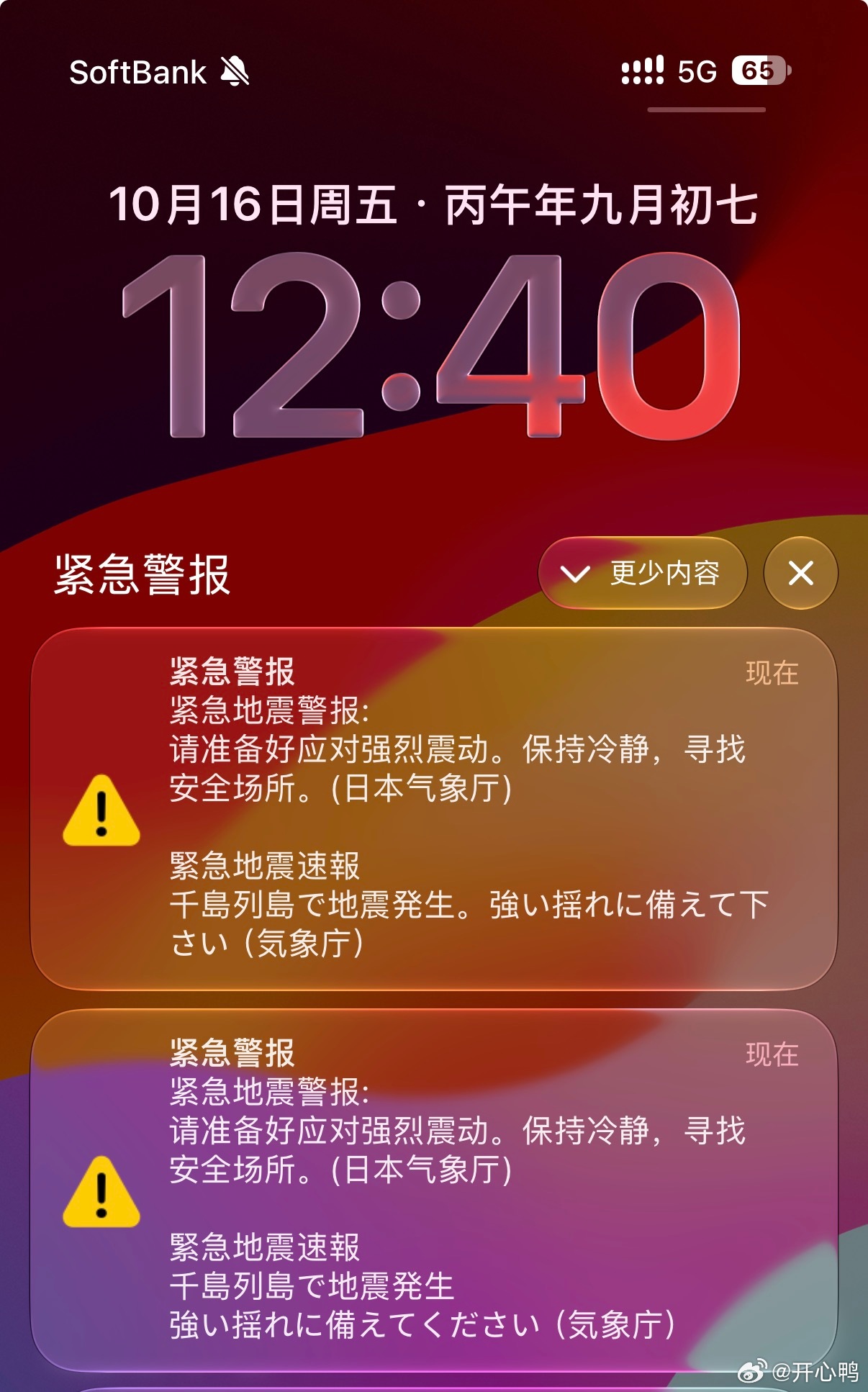
At 12:40 on Friday, phones across Japan sounded with the most urgent earthquake warning the country's system can issue: a magnitude-9.9 event in the Kuril Islands, with shaking expected to reach 7 — the top of Japan's ten-step intensity scale — across Hokkaido and beyond. Eight minutes later, the same system told everyone to stand down. The Japan Meteorological Agency had overestimated the quake: the real event, centred near the Kamchatka Peninsula in Russia's far east, registered magnitude 6.9, and no strong shaking was recorded anywhere in Japan.
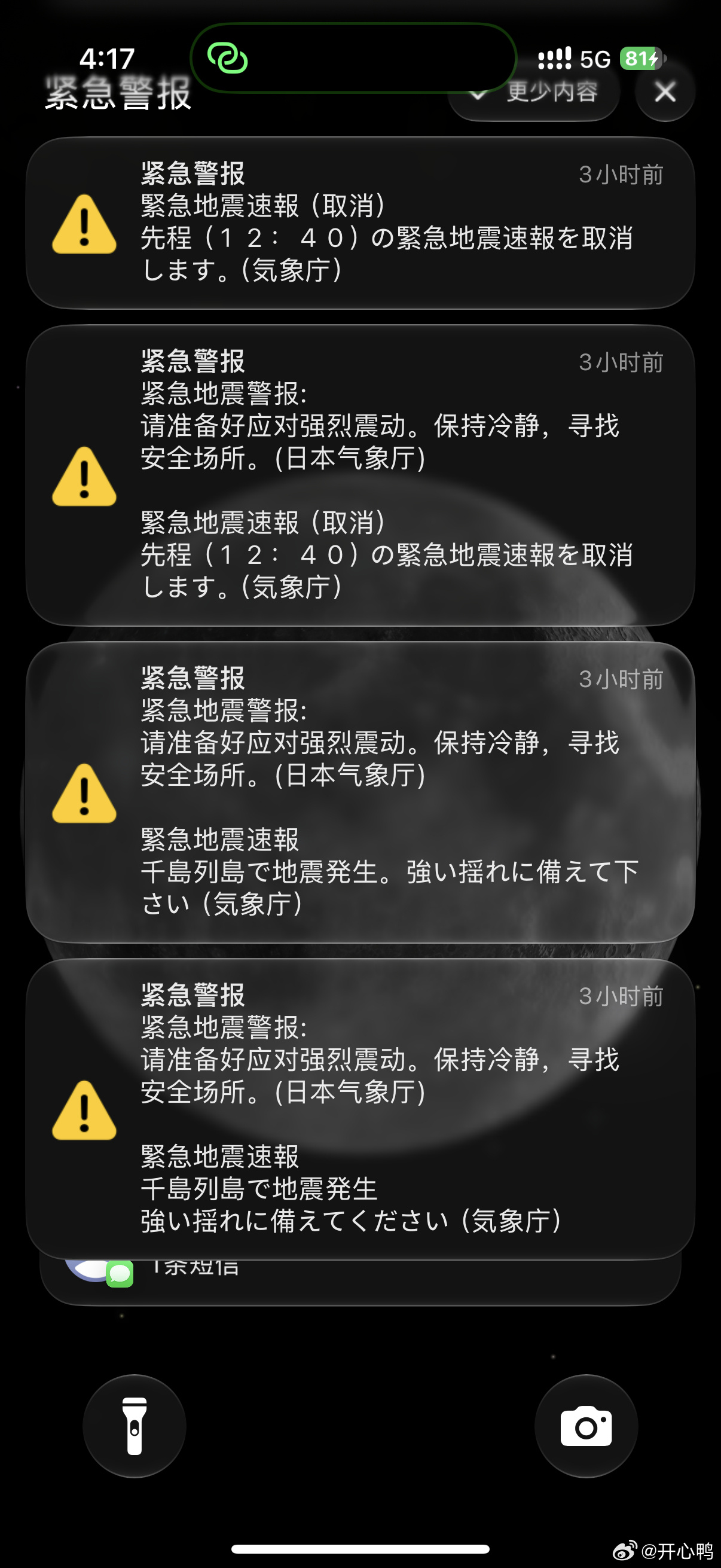
The cancellation itself made history. According to CCTV International's account, this was the first time since Japan's Emergency Earthquake Warning system was introduced that an alert at the highest "warning" tier was issued and then withdrawn. The system is built to act fast on the first seconds of shaking and err on the side of alarm; on Friday it erred by three full magnitudes.
Life stopped briefly anyway. East Japan Railway halted the Nemuro Line in Hokkaido for safety checks, delaying trains by up to about 40 minutes, and an athletics meet at Japan's national sports festival in Aomori was interrupted. One Weibo user posted from Tokyo, where her phone lit up along with everyone else's on the street: "The driver said it's fine, no need to worry. Everyone's phones went off, people looked at them and carried on" — and then, she wrote, came the cancellation notice.
A number too big to ignore
Part of what seized attention on Chinese social media was simply the number. A magnitude-9.9 earthquake would have exceeded the strongest ever recorded by instruments — the 9.5 that struck Chile in 1960. One widely shared post put the two side by side, and Baidu's search board turned the false alert into a de facto seismology lesson, with "what does a magnitude-9.9 earthquake mean?" among the day's top queries. For a few minutes, commenters noted, the alert had described a disaster beyond anything in the historical record.
Eight minutes, two press conferences
The agency spent the afternoon explaining itself. At an initial briefing, the head of its earthquake and tsunami monitoring division bowed and apologised, saying the magnitude had been estimated too high and the alert's content was "overly serious," causing great trouble. A second briefing followed, and clips of the apologies circulated widely on Weibo. Officials ruled out a cyberattack, attributing the false alarm to a misjudgment in the automated information-processing pipeline, with the precise cause still under investigation.
The Kamchatka earthquake itself was real but modest — China's Earthquake Networks Center measured it at 6.9, at a depth of 150 kilometres, deep enough that even an accurate alert would likely have spared Japan significant shaking. What the episode leaves open is the question the agency has promised to answer: how a system designed to warn first and verify later should account for the eight minutes it got spectacularly wrong.