Kindergarten Operator Sentenced to Life for Lead-Poisoning 247 Children
A court in Gansu has sentenced the operator of a Tianshui kindergarten to life in prison for adding paint pigment to school meals, the first-instance verdict in a case that left 247 children with elevated blood lead and horrified the country last summer.
A court in northwest China has handed down life imprisonment to the woman who ran a Tianshui kindergarten whose kitchen stirred paint pigment into school meals — the first-instance verdict in one of the most disturbing food-safety cases China has seen in years.
On Thursday afternoon, the Intermediate People's Court in Lanzhou, capital of Gansu Province, convicted Li Huifang of producing and selling toxic and harmful food. Li, the actual operator of the Peixin kindergarten in Tianshui's Maiji district, was sentenced to life in prison, stripped of political rights for life, and had 500,000 yuan of personal property confiscated. Zhu Jinglin, the kindergarten's executive principal, received fifteen years and a 300,000 yuan fine. Four kitchen workers — Niu Aiyuan, Wen Yafang, He Xuxia and An Chunling — were given six to eight years each.
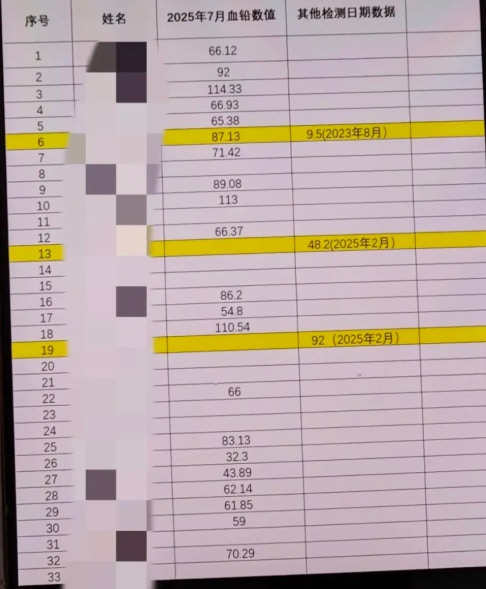
The case broke in July 2025, when testing found 247 children and several teachers at the school with abnormal blood-lead levels. Investigators concluded that, to make the kitchen's pastries more colorful — and, prosecutors said, to attract more enrolled children and more revenue — the staff had bought painting pigment online that was explicitly labeled "not for consumption" and mixed it into food eaten daily by pupils and teachers alike.
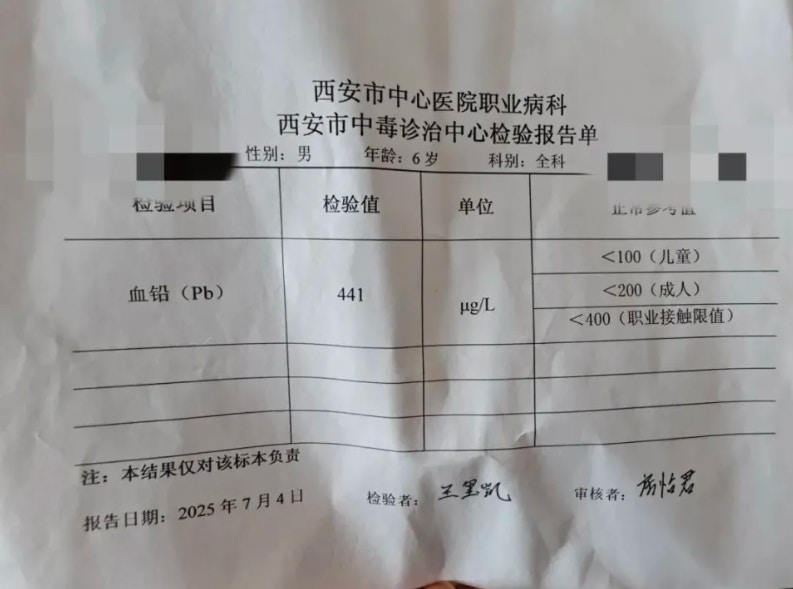
A hospital report that circulated with the summer's coverage gives the scale of the exposure: a six-year-old boy tested at Xi'an Central Hospital's poisoning center recorded a blood-lead value of 441 micrograms per litre, more than four times the reference level for children. Lead poisoning in young children is cumulative and affects neurological development, which is why the case produced a depth of anger unusual even for China's food-safety scandals.
The verdict dominated platforms well beyond Weibo, where the story never even charted. It sat twice in Baidu's top thirty searches, drew a dedicated explainer from Hong Kong's HK01, and was put to Zhihu, China's Quora-like site, as a question about how to read the sentences "from a legal angle." People's Daily's opinion column ran a same-day editorial demanding "zero tolerance" for food-safety crimes, writing that the case "severely breached the bottom line of food safety" and calling for 严惩不贷 — punishment without mercy.
Children's food has been a recurring flashpoint: last year a toddler's mercury poisoning put imported "children's silver cod" on notice across the country. What distinguishes the Tianshui case is the setting — a kindergarten kitchen answering to nobody but the woman who ran it, with a commercial incentive to make food look better and no one checking what went into it. As China News Weekly noted in its verdict dispatch, the court found that Li had "instructed and arranged" the kitchen staff to mix in the toxic ingredient, making the school's management structure itself part of the crime.
The sentences are first-instance and can still be appealed. For the 247 families, the courtroom outcome closes the criminal file; the longer question — who watches a kindergarten kitchen between inspections — is the one the Zhihu debate keeps circling back to, and the one no verdict can close.