Xi Jinping Tours Ulanqab, the Wind-Powered Edge of China's AI Computing Map
The president's inspection tour of an Inner Mongolia prefecture put a spotlight on the coal-and-grassland region rebranding itself as China's green data-center belt, where wind power and cold air are meant to run the country's AI.
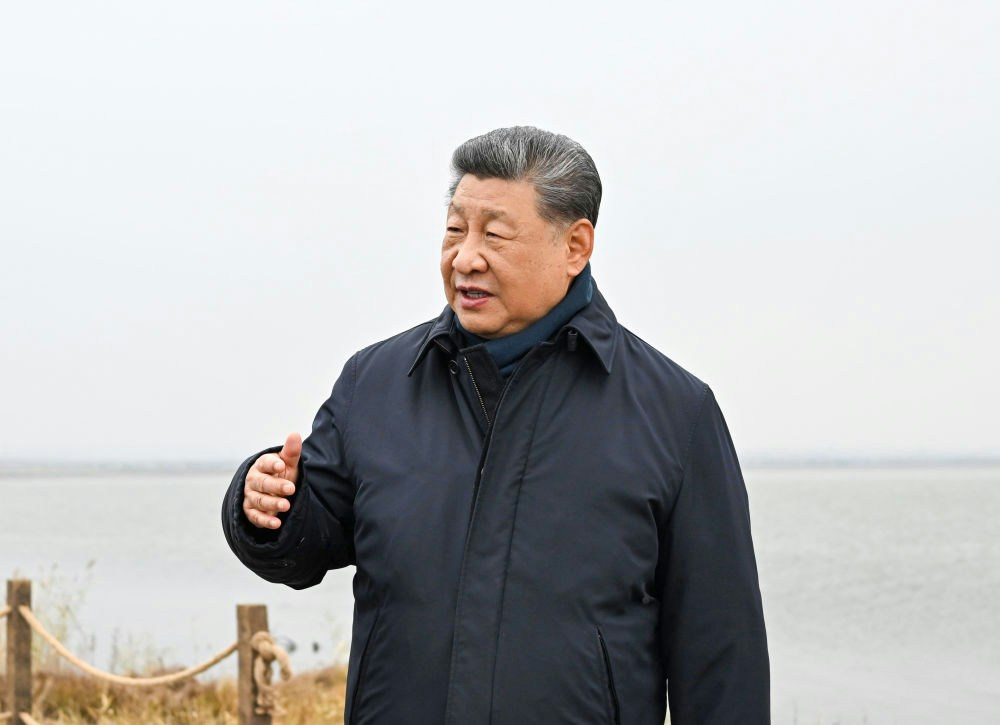
On Friday morning, Xi Jinping spent his inspection tour not in a tech hub but in Ulanqab, an Inner Mongolia prefecture of grasslands and winters better known to outsiders as a place to escape Beijing's summer heat. The two stops the state media cams were allowed to film made a deliberate pairing: a salt lake brought back from near-drought, and an exhibition hall for the computing industry.
The second stop is the one with national weight. CCTV's report from the hall laid out Ulanqab's pitch for why heavy computing belongs on the steppe: low temperatures that cut the cost of cooling server halls, green electricity from wind and solar, and proximity to Beijing, a few hundred kilometers away. It is the local face of "East Data, West Computing" (东数西算), the national project launched in 2022 to steer China's computing demand away from coastal power-hungry cities toward inland regions where renewable power is abundant and land is cheap — China's structural answer to the energy bill of the AI boom.
The hall's figures, relayed by CCTV, describe an industry arriving fast: 109 signed data-center projects, rack capacity the local government puts above seven million racks, and 5.68 billion yuan of revenue in the first eight months of 2026, up 40.3 percent year on year. Xi used the visit to endorse the direction, calling the computing network one of the six national networks China is planning and urging the industry to serve the development of "new quality productive forces" — his signature term for the high-tech growth model he wants China's economy to run on.
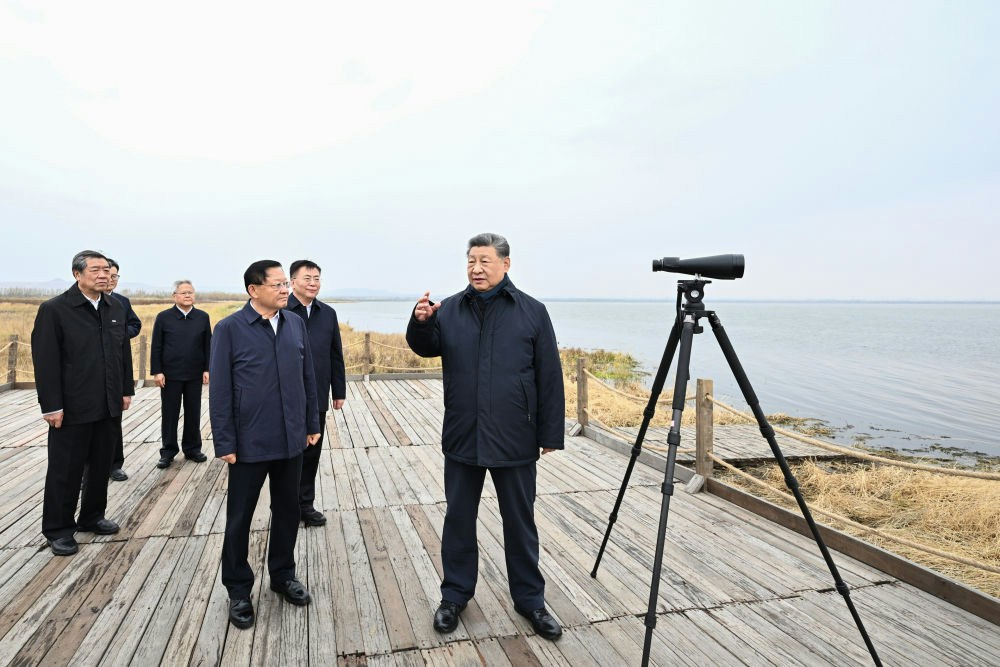
The first stop made the political point by geography. Huangqihai is a closed inland lake that spent years shrinking toward a salt flat before a two-decade restoration program — a protection reserve since 1993, refilled and reeded in stages — brought back its water and its birds. The pairing was the message Xi has made central since his earliest years in office: development and protection are to be "coordinated," with green development "the proper meaning of high-quality development." A data-center belt powered by wind, set beside a resurrected lake, is that slogan in landscape form.
For an international reader, the visit is a marker of where China's AI infrastructure is headed: compute treated as strategic infrastructure, sited for energy and climate the way dams once were, and signaled at the highest level. Whether the demand shows up is the practical question — after all, half of China's AI compute is already said to be busy rendering short dramas. Ulanqab's bet is that the models of the next decade will be trained where the wind blows. The racks, for now, are still being built.