Why a Proposal to Pay for a Classroom Cleaner Set Off China's Parent Group Chats
In a first-grade parent group chat in Xichang, Sichuan, one family proposed chipping in 600 yuan a month for a classroom cleaner — and the parent who asked "why not two nannies while we're at it?" found herself muted by the teacher. The education bureau is now investigating.
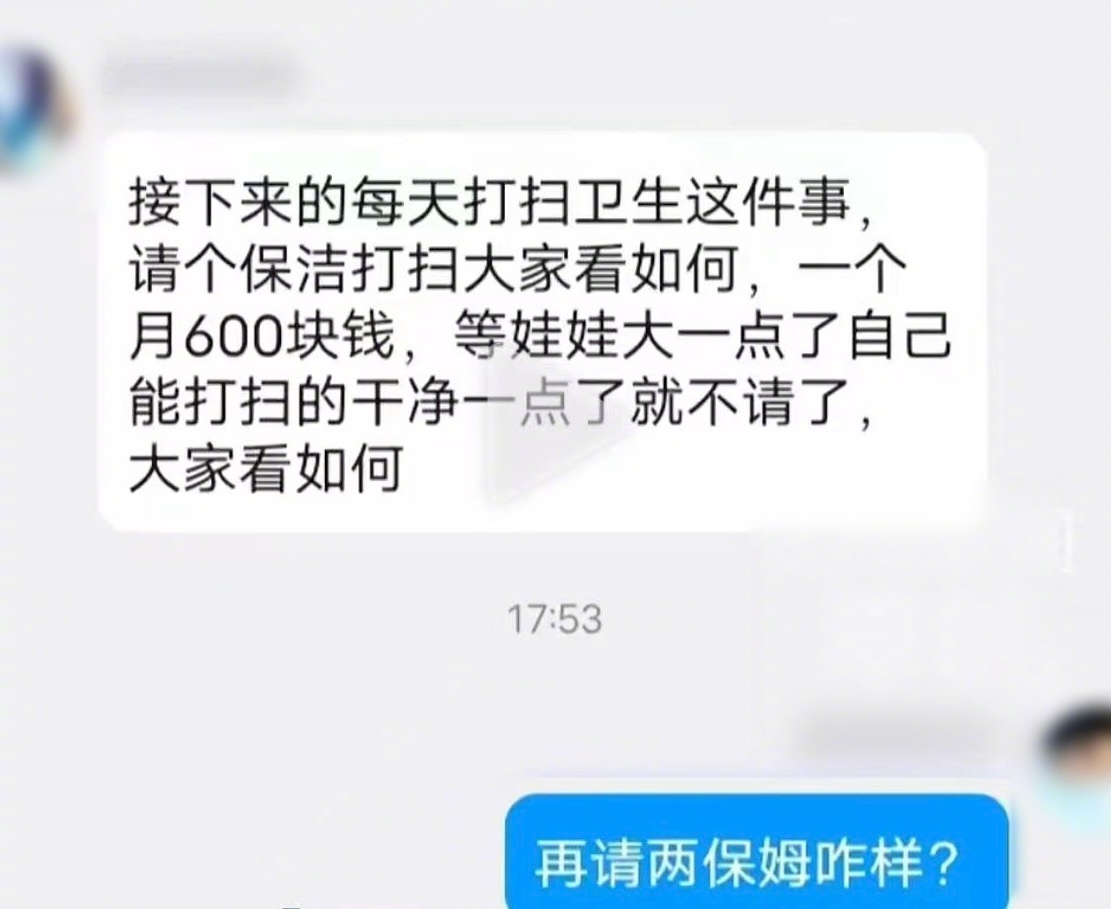
The screenshot that set off this week's argument is only two lines long. In a first-grade parent group chat at a primary school in Xichang, Sichuan, a parent proposed that the class chip in 600 yuan a month to hire a cleaner for the children's classroom: "Once the kids are a bit older and can clean properly themselves, we won't hire one anymore. How does everyone see it?" The reply came from another mother: "How about hiring two more nannies while we're at it?"
Within hours the exchange had escaped the group chat. The dissenting parent was muted by whoever administers the chat — the class teacher, most reports assume — and promptly took her grievance public, telling reporters that her income is modest and that she feared the children of parents who did not pay would be treated differently. On Tuesday the topic reached Weibo's hot list, and the local education and sports bureau said it had stepped in to verify the case and would examine the teacher's conduct. The school, contacted by China News Weekly, confirmed only that an inquiry was under way.
What turned a small-town squabble into a national talking point is what each side is assumed to believe. To the parent who proposed the cleaner, six-year-olds mopping floors is a chore best outsourced. To her critics — and most of the internet weighed in on their side — she was missing what classroom cleaning is for. China's schools have long assigned pupils to sweep their own classrooms, and since 2020 the Ministry of Education has formally made cleaning, cooking and farm work part of the compulsory "labor education" curriculum. "Classroom cleaning is itself part of labor education," one commentary shared thousands of times put it; outsourced, it strips children of the practice while saddling every family with a silent subscription fee. On Zhihu, where the question drew its own debate thread, commenters asked plainly whether parents should be interfering with pupils' classroom labor at all.
The mute button is the second character in the story. Parent group chats — where teachers post homework, solicit volunteers and, families suspect, monitor loyalty — have become the defining nerve-ending of Chinese school life, so much so that parents carry them onto university campuses. Being unilaterally muted for a sarcastic question struck a nerve precisely because it is a familiar power move: the teacher mediates not just what children learn but what parents are allowed to say.
The bureau's inquiry, announced Monday, covers both the fundraising proposal and the muting. No decision has been announced, and the 600 yuan has not been collected. The question the chat could not settle — who cleans a Chinese classroom — now belongs to the local government.