Zhu Kai
The world of Chinese e-sports has been abuzz with excitement and controversy in recent weeks, as teams battle it out for dominance on the virtual playing fields. At the center of it all is the story of Zhu Kaiwei, a coach who led his team to victory in the S-tournament champion. But this was not Zhu's first rodeo - he had previously led a losing team at RNG and was already known for his stinky tactics.
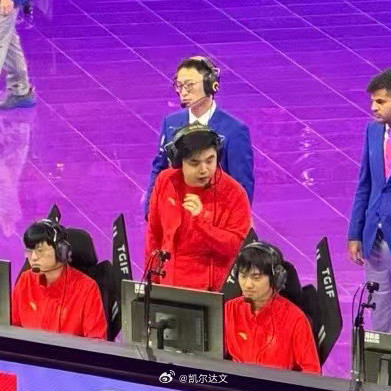
The drama began when South Korea's E-sports powerhouse, Honor of the Loft, failed to appear on the final match of a full set in the championship, causing an uproar among fans. This disappointment was compounded by China's victory in the championship, thanks to Zhu's leadership.
Zhu Kaiwei's journey to success is a story full of twists and turns. Before joining EDG's S-tournament champion team, he had already resigned from E-Dragon (EDG), which was not officially announced until now. Despite this, Zhu's tactics proved effective in the championship match, leading to a victory that has left many fans questioning his methods.
Weibo netizens have been flooding the platform with comments both praising and criticizing Zhu's coaching style. Some believe that his unconventional tactics were exactly what EDG needed to win the championship, while others are more critical, labeling him a "stinky" coach who only succeeds with teams that have suitable team members and Tabi.
Inflammatory remarks by some netizens have only added fuel to the fire. One user compared Zhu to a person trying to drill a porcelain vase without a diamond drill, while another labeled him an "uncle" who can't succeed without cheating or taking shortcuts. These comments reflect a growing discontent among fans who feel that Zhu's methods are not ethical and do not promote fair play in the e-sports community.
The controversy surrounding Zhu Kaiwei is also mirrored in other e-sports communities, such as football and basketball, where there has been a decline in team relationships in recent years. This trend extends to Hero Alliance games, where coaches are increasingly leaving their own teams to join national teams.
In conclusion, the story of Zhu Kaiwei is one of triumph over adversity and raises important questions about the nature of success in e-sports. While his methods have proven effective, they also highlight the need for fair play and ethical coaching practices in the industry. As e-sports continues to grow and evolve, it will be interesting to see how these issues are addressed and what changes come as a result.