Musk Is Cheering a Chinese Robot That Just Ran 400m in 39.45 Seconds
At the second World Humanoid Robot Games, Honor's 'Lightning' robot followed its Bolt-beating 100m sprint with a 39.45-second 400m and a 2:30.22 1500m — both faster than human world records — and Elon Musk is among the people reposting the footage.
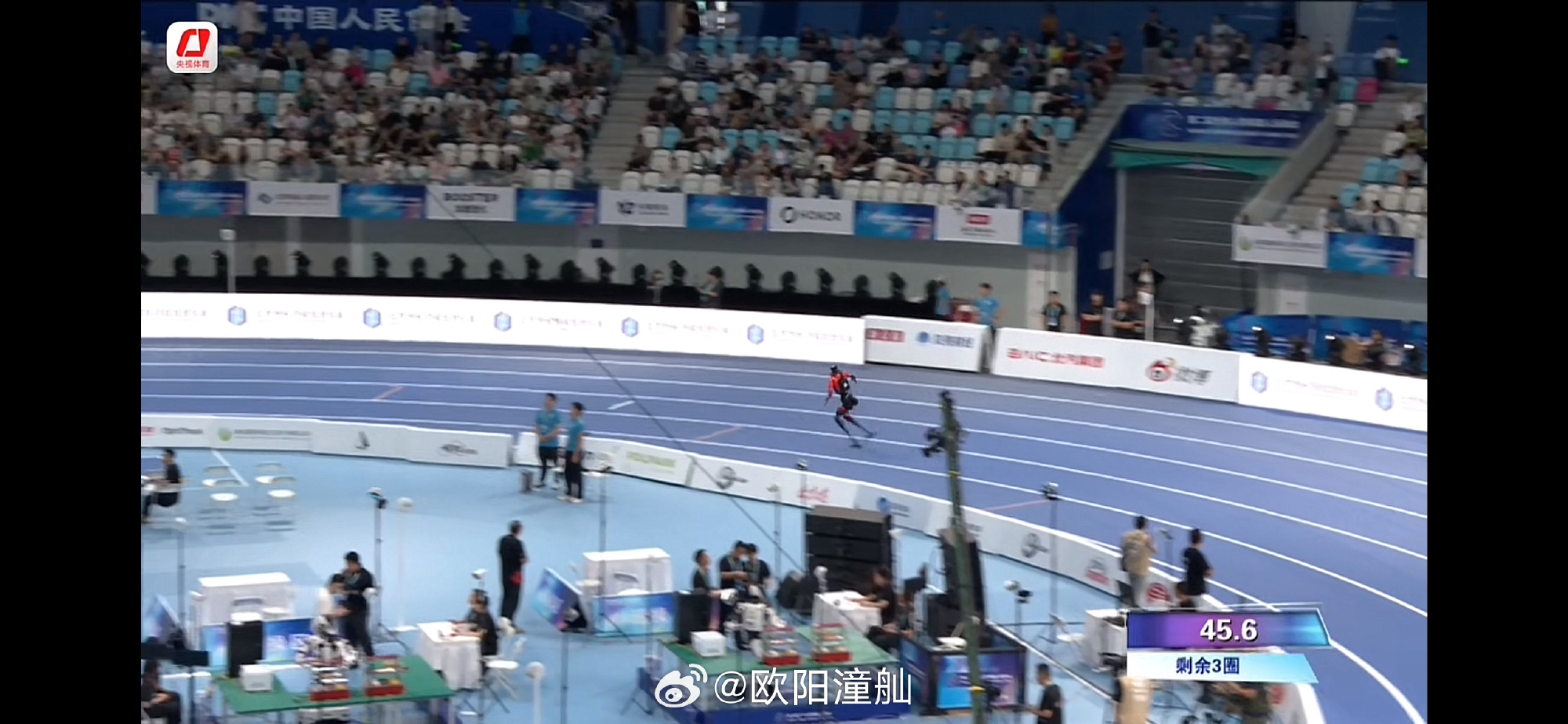
The headline from the first World Humanoid Robot Games, when a Chinese robot out-sprinted Usain Bolt's 100m mark, was that a machine had covered nine seconds of ground faster than any human ever has. This weekend the same machine, Honor's red-black "Lightning," stopped being a sprinter and started being a middle-distance runner.
In the 400m final of the games' second edition, Lightning crossed the line in 39.45 seconds, quicker than Wayde van Niekerk's 43.03 at the Rio Olympics, and went on to clock 2:30.22 over 1,500m — comfortably inside Hicham El Guerrouj's 3:26.00 human world record from 1998. The comparisons are category errors, of course: a humanoid machine does not feel lactic acid, and these games are an engineering demo rather than a head-to-head with athletes. But the numbers are the point. Two years ago a bipedal robot finishing any race upright was the story; now the story is the time.
Elon Musk gave the performance his own amplification. After the earlier 9.32-second 100m run, Musk reposted a clip and noted, with the ambivalence of a man who both sells humanoid robots and worries about them, that the machine hit a safety wall at full speed and "still didn't fall apart." The line keeps circulating because it lands on the real question: China is testing these machines by making them run races, and the races are getting fast. Baidu's trending list distilled the spectacle into three words — "real-life Iron Man" (现实版钢铁侠).
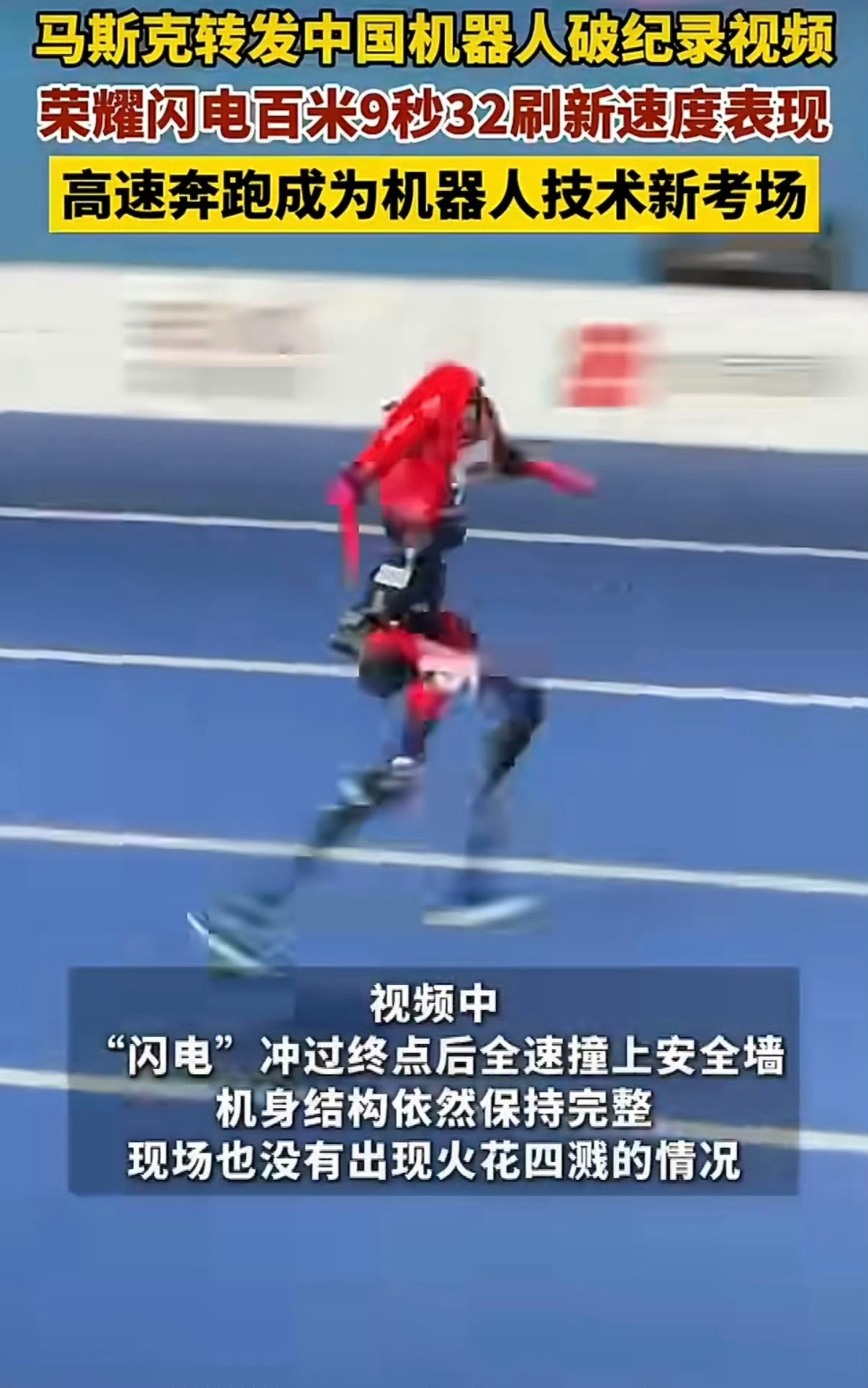
The running is also a stress test wearing a bib number. Honor, the phone maker, has been explicit that Lightning's race-day hardware is repurposed consumer tech: its Qinghai Lake battery chemistry for endurance, phonemaking motor tech shrunk into joint actuators, and liquid cooling borrowed from its flagship handsets to keep the robot from overheating through a 1,500m race. The 100m proved peak speed; the 400m and 1,500m prove it can hold that speed while balancing in a turn and managing heat. One Weibo account put the progression bluntly: the short sprint is raw burst, while the longer distances test "cornering control, rhythm management, sustained power and full-body cooling."
The spectacle has already outgrown the tournament. Footage of the robot mid-stride, orange torso and race number 602, has become the latest Chinese technology demonstration aimed squarely at a global audience, Musk's retweet included. The earlier games were a novelty; this edition is being watched as a progress report.
Not every record will survive the week. The tournament's format is loose and the timing methods are the organizers' own, and nobody is claiming Lightning would hold its 39.45 in an actual athletics meet. What the weekend changed is the scale of the ambition: a phone company is now using a televised track meet to market batteries, liquid cooling and actuators, and the internet is watching a robot's split times the way it once watched a celebrity's workout. The next obvious question is how far down the program Lightning goes.