SpaceX Catches a Starship Returning From Orbit for the First Time — China Was Watching
SpaceX's tower 'chopsticks' caught the Starship upper stage after 14 full orbits — the first recovery of a spacecraft returning from orbit — while the booster splashdown left full reusability unfinished, a gap China's own reusable-rocket programme is racing to close.

The catch happened over the Texas coast on Saturday morning Beijing time: SpaceX's Starship, having flown roughly 14 full orbits of the Earth and deployed 26 next-generation Starlink satellites, re-entered the atmosphere, relit its engines, flipped itself upright — and settled into the mechanical arms of the launch tower, which gripped the ship the way its "chopsticks" caught the booster on previous flights. It is the first time any spacecraft has been recovered intact after returning from orbit, and the phrase Chinese social media seized on is the literal one: 筷子夹飞船, "chopsticks catching a spaceship."
The achievement is real but incomplete, and Chinese coverage was careful about the distinction. The flight tested the second-stage ship; the Super Heavy booster, the rocket's first stage, failed to return to the launch site and made a controlled splashdown in the Gulf of Mexico instead. So while the ship proved it can come back from orbit and be caught, the mission did not achieve full two-stage reusability — the goal that would turn Starship from a spectacular launch vehicle into a rapidly reflyable one. The whole flight lasted about 22.5 hours, a new endurance record for the vehicle.
State and commercial media ran the story straight. CCTV carried the catch on its science desk, The Paper filed three separate pieces within hours, and Baidu's trending board put the topic at number three. On Zhihu, the top question asks readers to interpret what the result means — an unusually analytical framing for a trending topic.
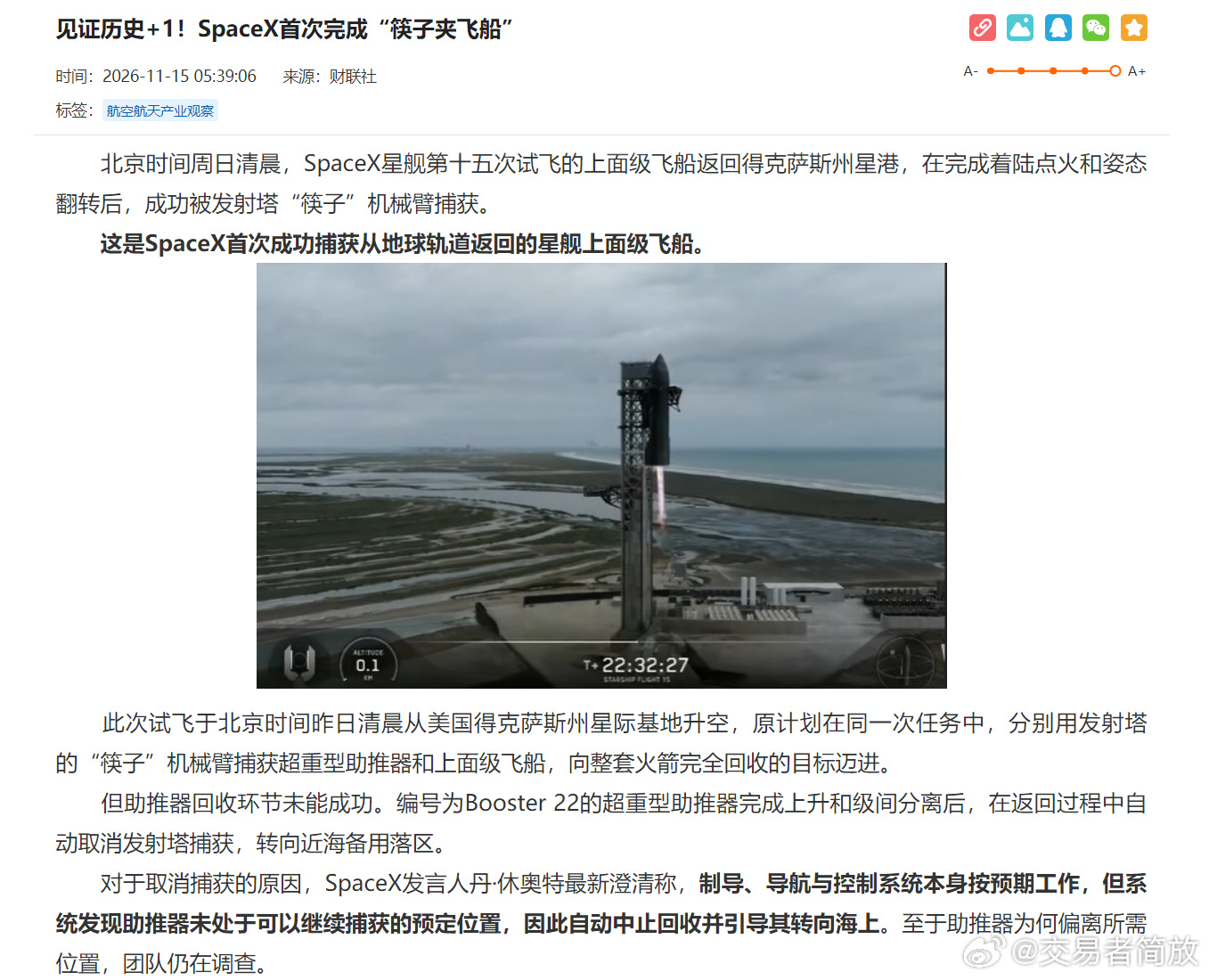
The reason a US company's test flight trends this hard in China is competitive, not sentimental. China's own reusable-rocket programme has been advancing quickly — a modular "constellation" rocket put 18 satellites in orbit earlier this month on only its second flight. Starship's catch is read against that backdrop: each success raises the bar for the landings Chinese private launch firms are attempting, and each Starship iteration widens the capability gap that makes the race worth watching.
For SpaceX, the next milestone is unambiguous: bring a Super Heavy booster back to the tower in the same mission as a ship catch. Until both halves of the rocket return, "fully reusable" remains an aspiration — one that Saturday's catch moved measurably closer to.