China's humanoid robots open their own Olympics and beat Usain Bolt's 100m record
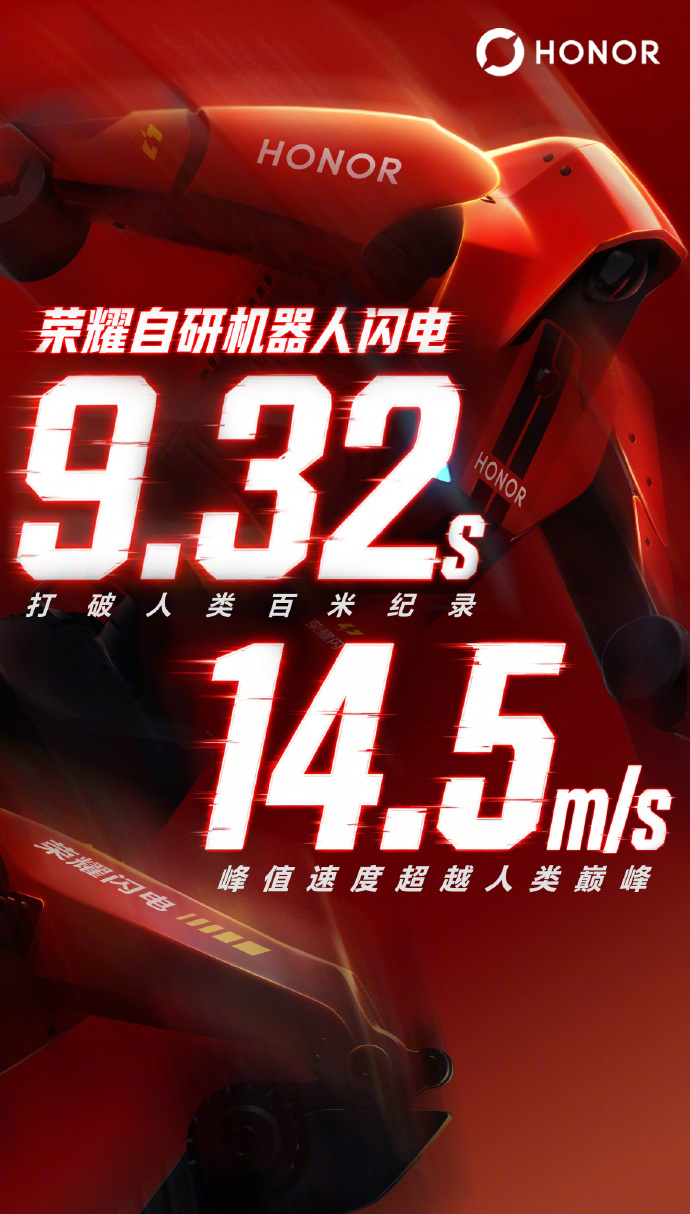
At the second World Humanoid Robot Games in Beijing, Honor's 'Lightning' robot reportedly clocked 9.32 seconds over 100 meters — faster than Usain Bolt's 9.58 — as 2,056 robots from 16 countries took over the National Speed Skating Oval.
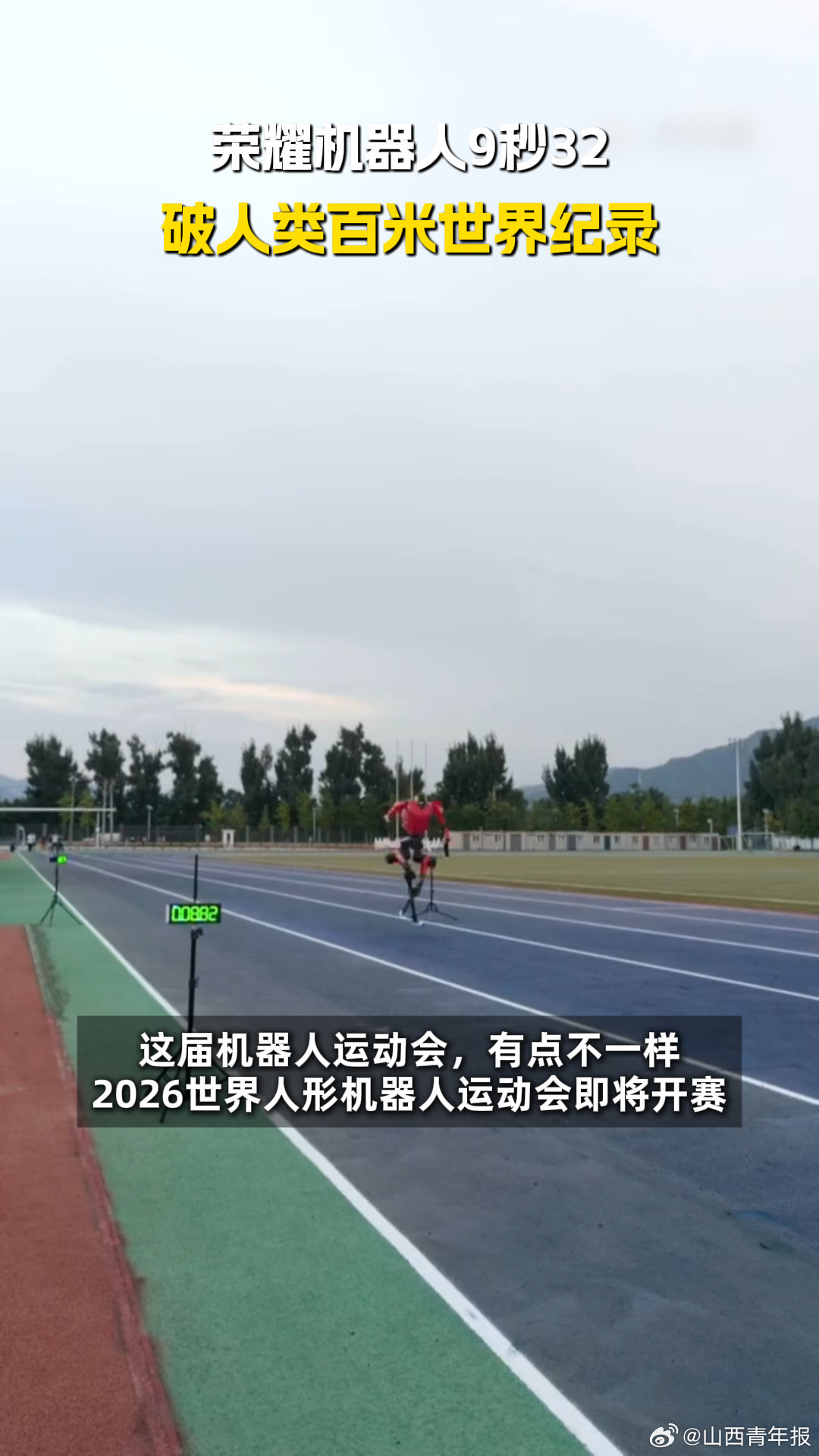
The Weibo hot search read like science fiction: #荣耀机器人9秒32破人类百米世界纪录# ("Honor robot breaks the human 100m world record with 9.32 seconds").
On Friday, the second World Humanoid Robot Games opened at Beijing's "Ice Ribbon" National Speed Skating Oval, and the viral highlight was a test run in which Honor's self-developed robot, Lightning (闪电), covered 100 meters in 9.32 seconds — shattering Usain Bolt's 9.58-second human record that has stood since 2009.
State broadcaster CCTV framed the moment as one line on a much bigger scoreboard. A post from 央视频 (980 reposts, 3,266 likes) reported: "Over five days, 666 teams and 2,056 robots from 16 countries across six continents will compete." The post added that the 100m and 400m large-robot preliminaries kicked off that evening in the speed-skating venue.
The most-shared framing came from 山西晚报 (1,300 reposts, 1,661 likes): "If the history of human athletics is a marathon, Bolt's 9.58 is the most eye-catching milestone, and for 17 years people looked up to it but no one surpassed it. Honor's self-developed Lightning ran 9.32 in a test, leaving that milestone behind." The post captured the mood with a line about going from "just finishing the race is a victory" to "crushing the limits of humans" in a single year.
Another widely-circulated post from 山西青年报 (920 reposts, 1,322 likes) explained the technology transfer: "Honor's liquid-cooling heat dissipation, precision structural engineering, and high-energy-density batteries were not designed for robots, but they can all be used in robots." The phone maker's accumulated hardware expertise, it argued, had been transplanted directly onto the track.
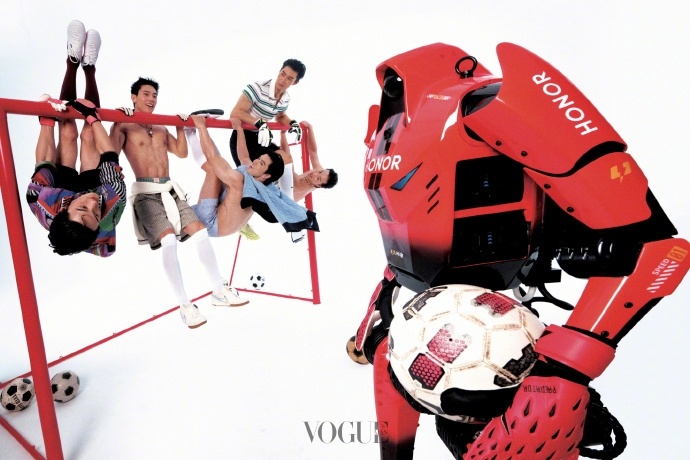
The robot games also featured a notably human touch: a 央视新闻 opening-ceremony post (3,677 reposts, 50,444 likes) touted tennis, football, and boxing demonstrations where celebrities such as 刘雨昕, 魏晨, and 希林娜依高 shared the stage with machines, while "a thousand Chinese robots appeared together."
The story was not confined to Weibo. On Baidu's hot search list, robot entries multiplied — from "China E-bikes go viral abroad" to "embodied AI robots accelerate toward application," "World Humanoid Robot Games," and "Chinese robots can fly" — with one entry noting a 9.39-second time in the actual robot "100m final." Either way, the human record was left behind.
For international observers, the visual of humanoid robots sprinting, jumping, and marching in formation is the clearest signal yet of where Beijing's "embodied intelligence" push is heading: less a novelty demo, more a televised national sport of machines.