Angela Zhang Took Oxygen Mid-Concert, Then Told the Crowd She'd Be the One to Stop
Midway through a Chengdu concert, Angela Zhang needed oxygen, a blood-pressure check and a cool-down from staff — then she returned after three minutes and finished the set. Her explanation afterward was unglamorous: the heat plus a heavy costume were too much for her heart.
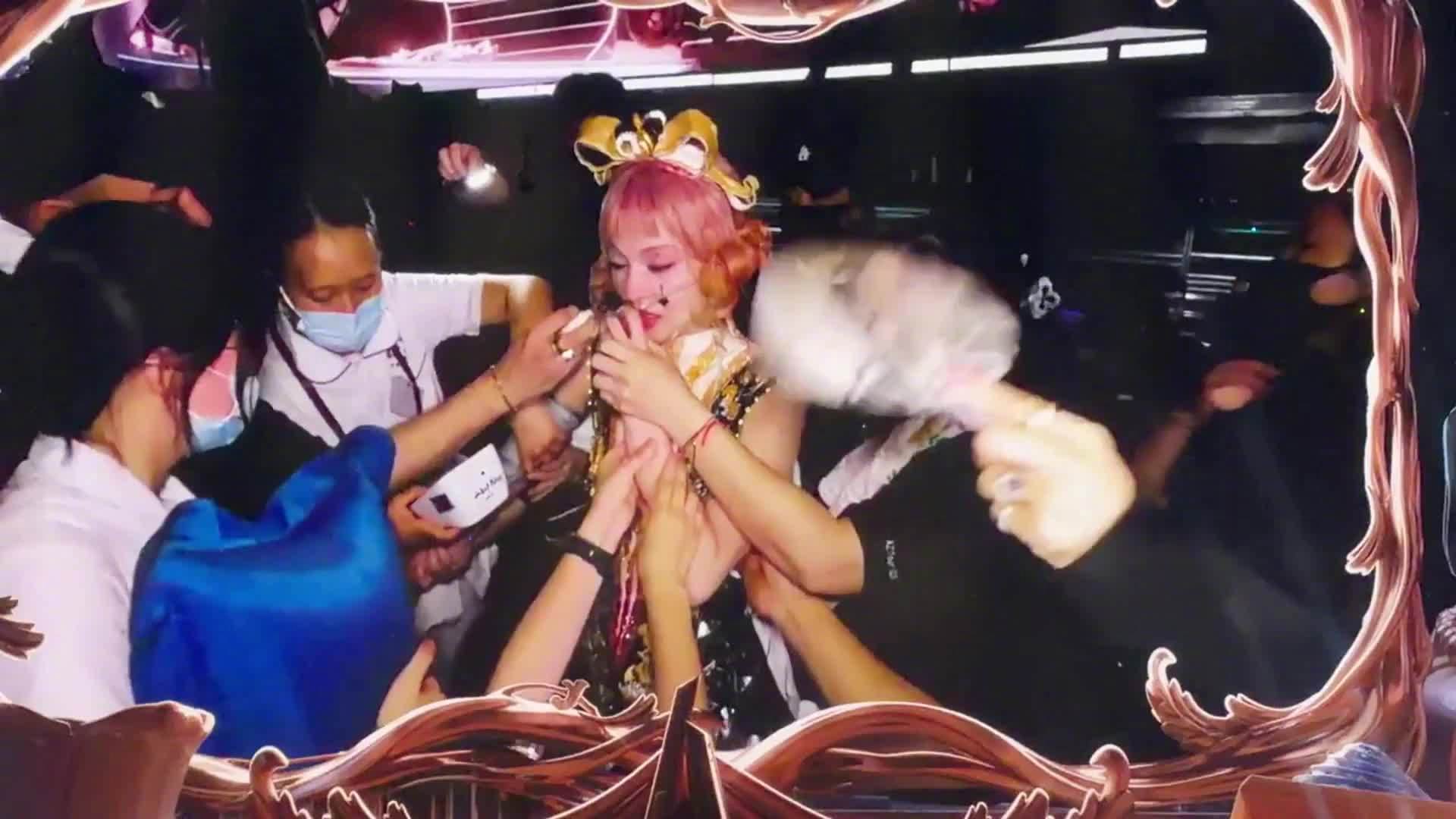
Angela Zhang was mid-set at a Chengdu concert when the show quietly became a different kind of performance. Fan footage shows staff surrounding her on the darkened stage: one holds an oxygen mask to her face, another checks her blood pressure, someone mops at her with a towel. The set pauses and the phones in the crowd stay up. Then, three minutes later, she comes back and keeps going.
The explanation she gave afterward was unglamorous. After changing into one particular outfit, Zhang said, her "heart was having trouble keeping up" (心脏有点负荷不了) — "maybe because of the heat, maybe because the costume was heavy." She apologized for the wait, for leaving the audience sitting there not knowing what was happening. And then she set the rule for the rest of the show: "If I can't go on, don't worry — I'll be the one to stop."
For anyone who knows Zhang's career, the moment reads as a continuation rather than a surprise. She is the voice of "Invisible Wings" (隐形的翅膀), the 2006 ballad that became a classroom anthem and karaoke staple, and she has spent years being treated as a singer who endures: a comeback after very public family and financial trouble, a voice that keeps outlasting the headlines. Chinese audiences expect Zhang to push through. On this particular night the expectation collided with a veteran performer's body under hot lights and a heavy costume, and for three minutes the costume won.
The fan reaction is what carried the story beyond the venue. The two words people kept repeating — "heartbreaking, and so professional" (好心疼好敬业) — capture the strange economy of Chinese pop fandom, where witnessing a performer's limit becomes proof of their dedication. The underlying worry was real: here was a singer pausing her own concert to be checked out, while the standing audience filmed the whole medical moment as content. One clip shows the disruption from the back of the hall, the live feed on the big screen confirming what the crowd could barely see: the oxygen mask, the staff hands, the title of the moment.

There is no villain in this story, only arithmetic. The same concert economy that has kept veteran Chinese and Taiwanese singers touring at full volume also schedules them into summer dates where the stage itself becomes part of the endurance test. Zhang finished the show, and her postscript left nobody else in charge of the decision. The heat and the costume were the explanation. The oxygen was the workaround. The line that did the real work was the last one: if she needed to stop, she would say so herself.